

Aphorisms and Idioms: Good Fences Make Good Neighbors
 G
G
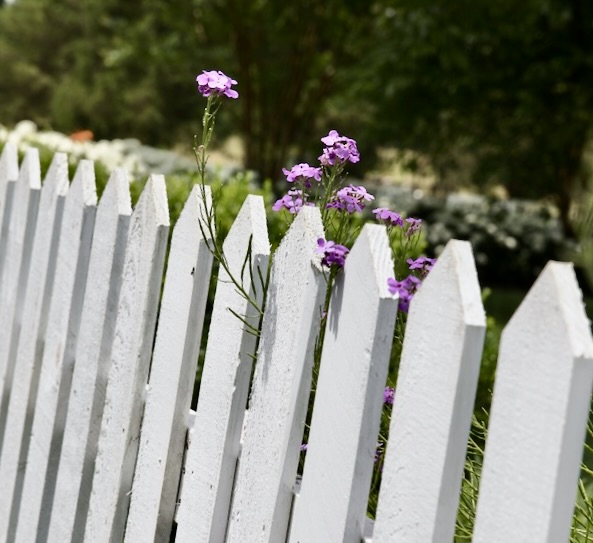
ood fences make good neighbors. It’s true that a good sturdy fence will prevent my dog from digging up my neighbor’s rose garden. And back in the day, a dry-stack stone wall would keep my cows where they belong.
But these days, this aphorism is commonly understood metaphorically, to mean people get along better when their privacy and personal space are respected. And it’s typically uttered as a round-about way of advising someone to mind their own business.
What’s The Origin Of
Good Fences Make Good Neighbors?
The origin of “good fences make good neighbors” is likely a letter that Reverend Ezekiel Rogers of Rowley, Massachusetts wrote to Governor John Winthrop in 1640:
Touching the buisinesse of the Bounds, which we haue now in agitation;
I haue thought, that a good fence helpeth to keepe peace betweene neighbours;
but let vs take heede that we make not a high stone wall, to keepe vs from
meeting.[1]
Benjamin Franklin, a figure known for dispensing pearls of wisdom, included the following version of this aphorism in his Poor Richard’s Almanac for the year 1754:
Love thy Neighbour; yet don’t pull down your Hedge.[2]
And the first printed appearance of the precise phrase we use today occurred in Blum’s Farmer’s and Planter’s Almanac for 1850.[3] But it was Robert Frost’s poem Mending Wall in 1914 that put the hitherto infrequently invoked aphorism on the map, so to speak.[4]

Frost Trips The Reader
Into The Boundless
Robert Frost’s poetry can be tricky. And that’s no accident. Commenting on his poems in a letter from 1927, Frost is keen to acknowledge his “innate mischievousness.” As well as the fact that he employs it to “trip the reader head foremost into the boundless… Forward, you understand, and in the dark.”[5]
We see this waggishness in his work “The Road not Taken,” which he wrote as a joke for his friend Edward Thomas. It’s also at play in Mending Wall. This poem’s narrative is deceptively simple. But don’t let that fool you.
It’s about two neighbors who come together every spring to mend the wall between their two properties. The wall is in need of repair after winter snows have taken their toll and hunters have disrupted its stones in an effort to flush rabbits out of hiding.
The narrator and his neighbor begin replacing fallen stones, and mending the gaps that have formed in the wall over the winter. As they do so, the narrator appears to be trying to convince his neighbor that they don’t really need the wall:
My apple trees will never get across
And eat the cones under his pines, I tell him.
He only says, “Good fences make good neighbors.”
What the narrator says next reveals the key to reading this poem. Stop and ask yourself, in whose head does the mischievous Frost hope to plant this notion?
Spring is the mischief in me, and I wonder
If I could put a notion in his head:
“Why do they make good neighbors?
But his neighbor continues the task of replacing the wall’s missing stones. And the poem closes with the lines:
He will not go behind his father’s saying,
And he likes having thought of it so well
He says again, “Good fences make good neighbors.”

Keep Frost’s
Love Of Irony In Mind
Robert Frost’s poetry is loaded with irony. And the incongruity at the heart of Mending Wall lies in the fact that a structure whose purpose is to separate, is the very thing that calls the narrator and his neighbor out of their respective dwellings following winter’s thaw. Bringing them together to engage in what sounds rather like a game, or at the very least a tradition:
And on a day we meet to walk the line
And set the wall between us once again.
We keep the wall between us as we go.
So, why do good fences make good neighbors in Robert Frost’s poem Mending Wall? Not because they maintain boundaries. Rather, because they bring folks like the narrator and his neighbor together. And that’s quite the ironic twist on an aphorism typically invoked to mean the exact opposite.
Mending Wall
In Its Entirety
Pair this with
Be Sure To Check Out More
Aphorisms And Idioms Here.
Aphorisms And Idioms Here.

Share This Post, Choose a Platform!
Endnotes:
[1] [Winthrop, John. Winthrop Papers. 5 vols. Boston, Mass.: Massachusetts Historical Society, 1929-47. Vol 4. Pg 282.
[2] Brooks, Van Wyck, ed. Benjamin Franklin: Poor Richard’s Almanacks for the Years 1733-1758. New
York: Bonanza Books, 1979.
[3] Blum’s Farmer’s and Planter’s Almanac for the year 1850. Salem, N.C.: L.V. Blum, 1850. Pg 13.
[4] Mieder, Wolfgang. “Good Fences Make Good Neighbours”: History and Significance of an Ambiguous Proverb.” Folklore. Vol 114, Pg 162.
[5] Frost, Robert. Selected Letters. Ed. By Lawrance Roger Thompson. New York: Holt, Rinehart and Winston, 1964. Pg 344
Images:
Good Fences Make Good Neighbors: Photo by Randy Fath on Unsplash
The Origin of “Good Fences Make Good Neighbors: Photo by Fredrik Ivansson on Unsplash
Trip The Reader: Photo by Paul Hanaoka on Unsplash
Robert Frost Loves Irony: https://ratu.ai/biografi-robert-frost/

Share This Post, Choose a Platform!


Stay in the know about what’s in our ever-growing treasure trove of literary goodness. And, get your free Discover Everything a Book Has to Offer packet.















Related Posts

T he phrase "turn the other cheek" has come to be interpreted as an admonishment to “just let it go.” But that understanding of... Read More.

Several idioms encourage us to be “nice,” including the adage “it’s nice to be important, but more important to be nice.” But “being nice” wasn’t always seen as a virtue. So what did it originally mean? And when did its meaning change? ... Read More
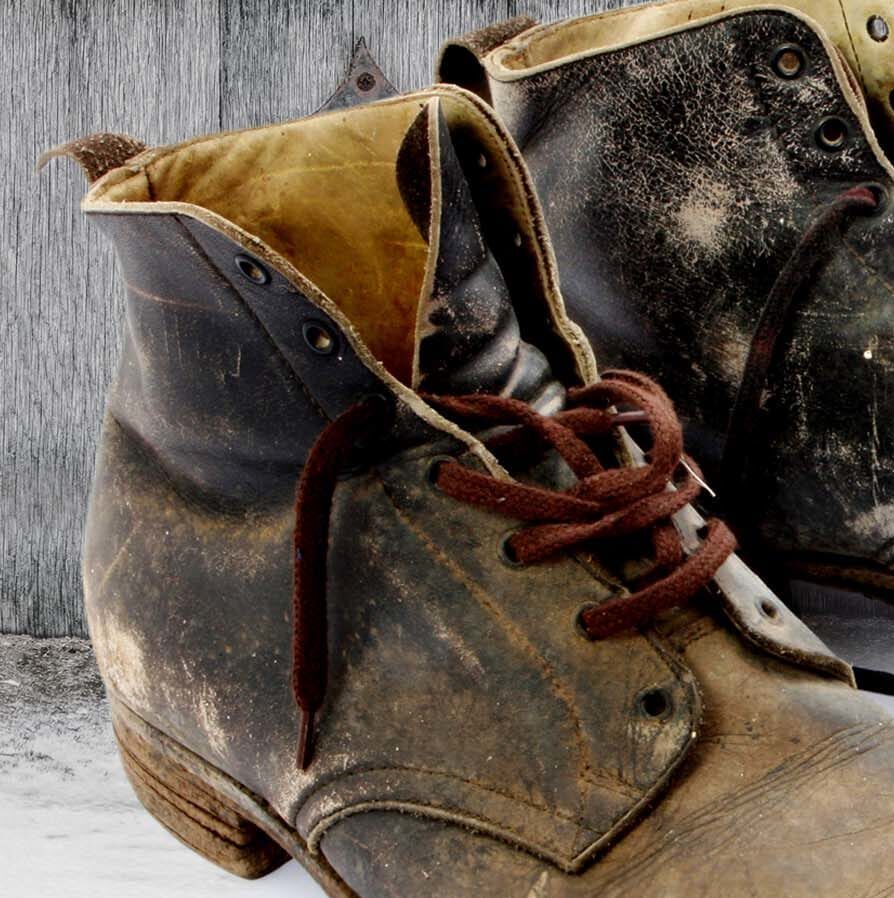
It’s impossible to literally “lift ourselves up by our bootstraps.” And yet, the phrase is commonly used to encourage us to power through challenges with hard work. So how did an impossible task become a call for individual grit? ... Read More

If you don't engage a book's symbolic language, you aren't getting half of what it has to offer. Like luggage, symbolism needs to be unpacked.... Read More