

Where Do These
Expressions Come From?
And What Do They
Actually Mean?
 W
W
hat the heck is an aphorism anyway? And what in tarnation is an idiom? Well… both are forms of figurative language that we hear bandied about a lot. That is, words and phrases that mean one thing when understood literally but are used to describe something else entirely. It’s one of the things that makes language so tricky.
Aphorisms and idioms have a lot in common, that’s for sure. But what’s the difference between them? Where do they come from? And when did we start using them?
Let’s Start With Aphorisms
Without getting bogged down in a sea of definitions, the most obvious characteristic of an aphorism (aside from its brevity) is that it offers a universally valid comment on some aspect of life. We’re all familiar with at least a couple of them. “Blood is thicker than water,” “Charity begins at home,” and “Go the extra mile” are just a few examples.
Like a lot of words in the English language, the origin of the word aphorism dates back to ancient Greece. In this case, to ἀφορισμός /aphorismos. The term aphorismos is derived from the verb ἀφορίζω / aphorizo, which means to divide, mark off, or distinguish. It’s a compound word that consists of the prefix ἀπό /apo (which means “from”), and the verb ὁρίζω / horizo (which means to define, to bound).
Now that we’ve finished geeking out over the word’s origin, let’s take a look at the first aphorisms that were used – the first to go by that name, anyway.
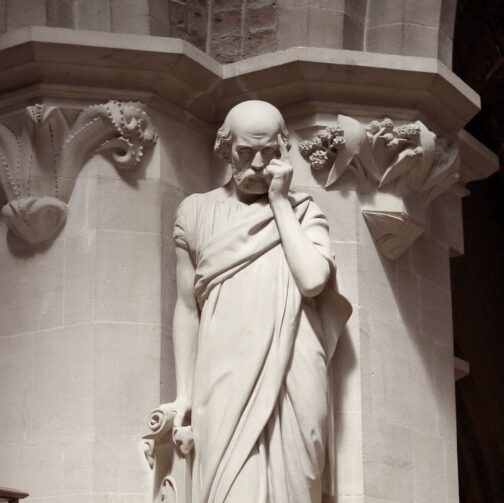
The earliest aphorisms came from Hippocrates (you know, the guy with the medical oath). At the time medicine was considered an integral part of philosophy, so Hippocrates was a philosopher as well as a physician. His aphorisms were a collection of short medical teachings and sayings. For example:
To a patient who is feeble, wan and spent, harsh treatments can bring only detriment.
When the term aphorism was revived in the Renaissance, it continued to look to its scientific origins. However, it soon came to denote the formulation of a philosophical or moral principle as well. And, this gradually took over as its accepted everyday meaning. By the eighteenth century, the shift was so complete that Hippocrates’ medical-based pearls of wisdom were dismissed, leaving us with the current definition of the term.

What About Idioms
As noted above, an idiom is a phrase that carries a figurative meaning rather than making literal sense. Expressions like “spill the beans,” meaning to reveal a secret. Or “it’s a cakewalk,” referring to something so easy success is guaranteed. And then there’s “down a rabbit hole,” to describe getting sucked into a situation that keeps you chasing information for hours. The oldest known idiom is thought to be “a clean slate” meaning a fresh beginning, one cleansed of past mistakes or failures.
The term idiom comes from the Greek idios, meaning private, particular to oneself, or one’s own. Idioms occur in all languages, and there are estimated to be about twenty-five thousand of them in English alone.
Have a gander at our ever-growing list of aphorisms and idioms. What they mean. And where they come from. Some of them will have you thinking twice because they don’t mean what you think they mean. While others are simply a barrel of laughs.
Give Our Latest A Look-See:

Then Scope Out This Bundle Of Aphorisms and Idioms
| Aphorism/Idiom | What It Means |
|---|---|
| A Clean Slate | Starting with “a clean slate” is thought to be the oldest known idiom. It means a fresh beginning, one free of past mistakes or failures. And it originated in The Code of Hammurabi. Read more... |
| Anyone Who Stops Learning Is Old. | Anyone who stops learning is old. This aphorism comes from Henry Ford... you know, founder of the Ford Motor company. Ford went on to say that this is the case whether we choose to stop learning at twenty or eighty. You may ask what makes this pearl of wisdom relevant to you and your life. Read more. |
| Blood is Thicker Than Water | Your mom might have used this saying to explain why you have to take your little brother when you go to the movies... Read more... |
| Carpe Diem | The aphorism carpe diem was penned by the Roman poet Horace in 23 BCE, making it one of the oldest philosophical mottos in... Read more... |
| Charity Begins at Home | Charity begins at home. We’ve all heard the expression. Usually in response to financial aid going to other nations. Or when we’re asked... Read more... |
| Coming out | Much of LGBTQIA+ identify involves the tension between “coming out” and staying “in the closet.” To kick off pride month, we’re looking at both idioms, their histories, and what it means to live on either side of the closet door. Read more... |
| Down A Rabbit Hole | Going down a rabbit hole has become a metaphor for distraction... something you really don't want to end up doing. But here's a Rabbit Hole that you will want to dive into. Read more... |
| Flying By The Seat Of Your Pants | Flying by the seat of your pants means to figure out how to do something as you go along. By using your own initiative, observations, and intrinsic skills rather than detailed instructions. But where did the phrase come from? And how far will flying by the seat of your pants take you? Read more. |
| Go the Extra Mile. | "Go the extra mile" is just one example of a well-worn adage that doesn't mean what we think it means. What is it really telling us?... Read more... |
| Grassroots Movement | In short, it’s people power. Grassroots movements grow the seeds of an idea into a flourishing cause through increased participation in the political process. They’re democracy in action… government by the people, as invoked in the opening phrase of the constitution — “We the people.” Read more. |
| Great Minds Think Alike. | The aphorism "Great minds think alike" may not mean what you think it means. Discover its intended message here. Read more... |
| I Took the Road Less Traveled By… | The Road Not Taken is commonly cited as an ode to free will. But Robert Frost himself wasn’t so certain. So when two roads diverged in that yellow wood… did taking the one less traveled really make all the difference? Read more... |
| It’s a Cakewalk | "It's a cakewalk" is typically used to mean something so easy success is certain. But the origins of this expression are anything but easy... Read more... |
| It’s Nice To Be Important, But More Important To Be Nice. | Like many mothers, my mom drilled the importance of being nice into my young psyche. She used expressions like the direct and simple... Read more... |
| Jack Of All Trades | This idiom has deep historical roots that stretch back to medieval England. But, what does Shakespeare have to do with it? Find out here. |
| Life, Liberty, and the Pursuit of Happiness | Life, liberty, and the pursuit of happiness doesn't mean what you probably think it means. Sometimes that well-worn adage doesn’t really mean what... Read more... |
| Luck Of The Irish | For St. Patrick’s Day, we’re taking a look at the aphorism, “Luck of the Irish.” While used with a positive connotation today, a look into Irish history reveals a much darker past. But how could “good luck” be so sinister? Read more... |
| My Country Right or Wrong | "My Country Right or Wrong" is just one example of a well-worn adage that doesn't mean what we think it means. What does it mean?... Read more... |
| Nothing In Life Is To Be Feared, It Is Only To Be Understood | Spoken by one of history's greatest scientists, Marie Curie's timeless words continue to inspire people across generations. Read more. |
| Pull Yourself Up By Your Bootstraps. | "Pull yourself up by your bootstraps" is just one example of a well-worn adage that doesn't mean what we think it means. What does it really mean?... Read more... |
| Read Between The Lines | Being able to read between the lines is a valuable skill. And this idiom has roots in the centuries-old world of secret communication. How can reading between the lines benefit you? Read more... |
| The More That You Read, The More Things You Will Know. The More That You Learn, The More Places You'll Go | This phrase may have come from Dr. Seuss, but the pearl of wisdom at its heart is not just for children. Read more. |
| The Writing Is On The Wall | The idiom “the writing is on the wall” isn’t about graffiti, Egyptian hieroglyphics, or the stencils above Grandma’s family pictures. What is it about, then? Read more. |
| Turn The Other Cheek | The phrase "turn the other cheek" has come to be interpreted as an admonishment to “just let it go.” But that understanding of Read more... |

Share This Post, Choose a Platform!


Stay in the know about what’s in our ever-growing treasure trove of literary goodness. And, get your free Discover Everything a Book Has to Offer packet.