
Frederick Douglass: Reading Is The Pathway To Freedom

 F
F
rederick Douglass. A towering figure in American history. His name is inextricably linked with the abolition of slavery. He was also one of the most outspoken advocates of women’s rights as well as those of other oppressed groups.
He was a writer, editor, minister, and reformer. The motto of his abolitionist newspaper The North Star was “Right is of no Sex, Truth is of no Color.”[1] Douglass was also the most renowned speaker of the late nineteenth century.
That’s quite a resume. But, makes Frederick Douglass so important to American history?
It wouldn’t be an overstatement to say that he awakened the American conscience to our nation’s great shortcomings in human rights. Not to mention our betrayal of the ideals framed in the Declaration of Independence and the United States Constitution.
That’s why it’s beyond unfortunate that Douglass’ writings are being banned. His early autobiography, Narrative of the Life of Frederick Douglass, an American Slave, is frequently scrubbed from curriculums and removed from school libraries.
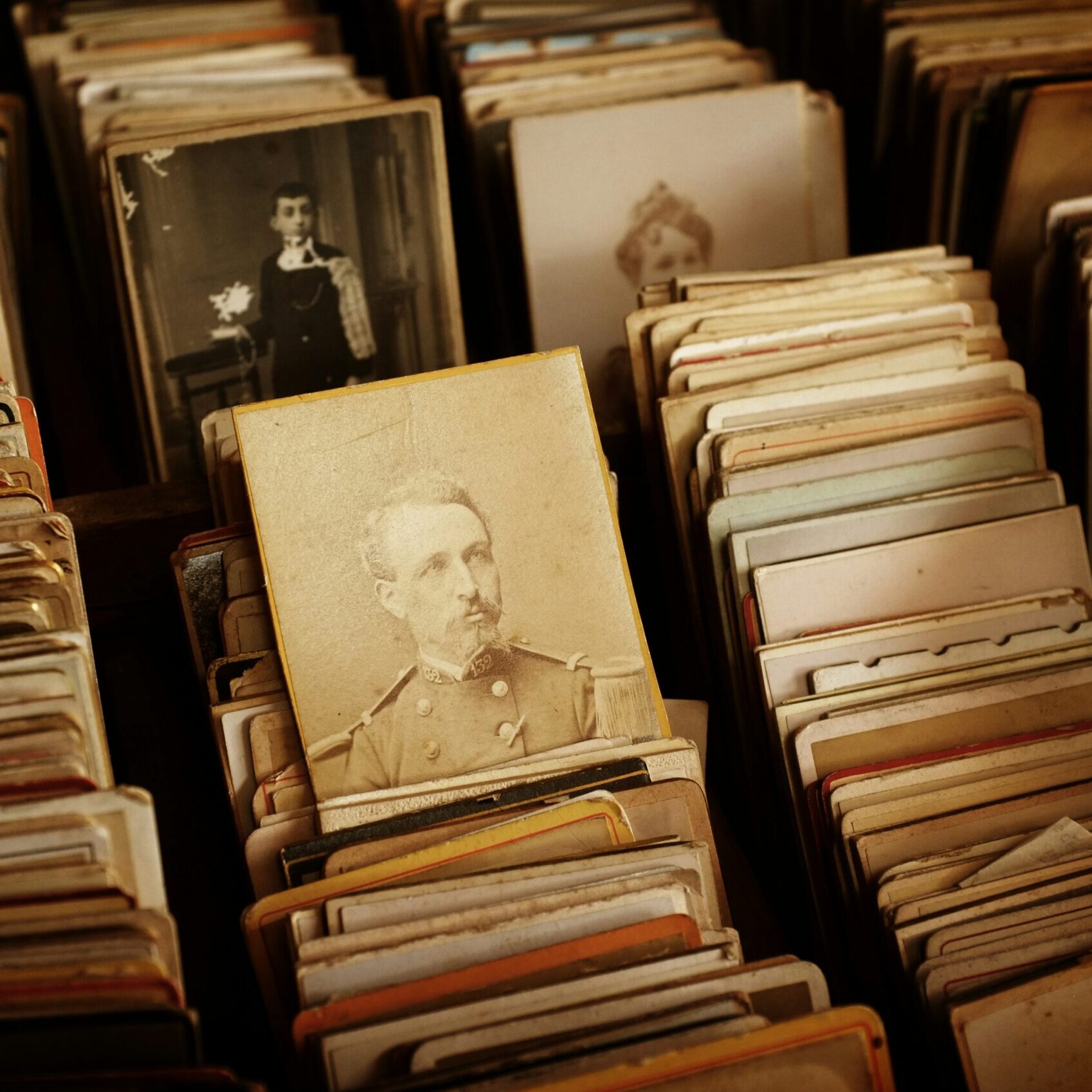
It Isn’t About Shame,
It’s About Remembering.
The specious reasons given for banning Narrative of the Life of Frederick Douglass, an American Slave is that it teaches Critical Race Theory (which wouldn’t even exist for another 100 years).[2] Or, that these works may cause white students to feel uncomfortable. That’s a mighty woke sentiment from the “anti-woke” crowd, those who ban books that address any form of social injustice for being overly sensitive and “woke.”[3]
Having one’s conscience awakened to social injustices like slavery and the racism that produced it isn’t about inducing shame. It’s about recognizing ways that we can better live up to the principles framed in our founding documents. You know, “all men are created equal,” with the inalienable rights of “life, liberty, and the pursuit of happiness.”
Reading books like those Douglass wrote is also about remembering our history, so we aren’t doomed to repeat its darker moments – like the slavery he escaped from, when women were denied the right to vote, or the Jim Crow era he experienced toward the end of his life.
The Jim Crow era refers to a long period in US history following the Civil War, when Black Americans couldn’t exercise the same rights of citizenship as white Americans.[4] This legal system of unequal opportunities was dismantled with the passage of the Civil Rights Act of 1964, the Voting Rights Act of 1965, and the overturn of Southern states’ laws criminalizing inter-racial marriage by the Loving v Virginia case in 1967.
But these days, there’s the very real danger of a return to the Jim Crow era. We’re seeing an undeniable push to undo the work accomplished by the Civil Rights Movement. Is it merely a coincidence that books like Douglass’ Narrative, are being removed from classroom shelves and stricken from curriculums – those that educate students about racial injustices like slavery and those suffered during the Jim Crow era? I think not.
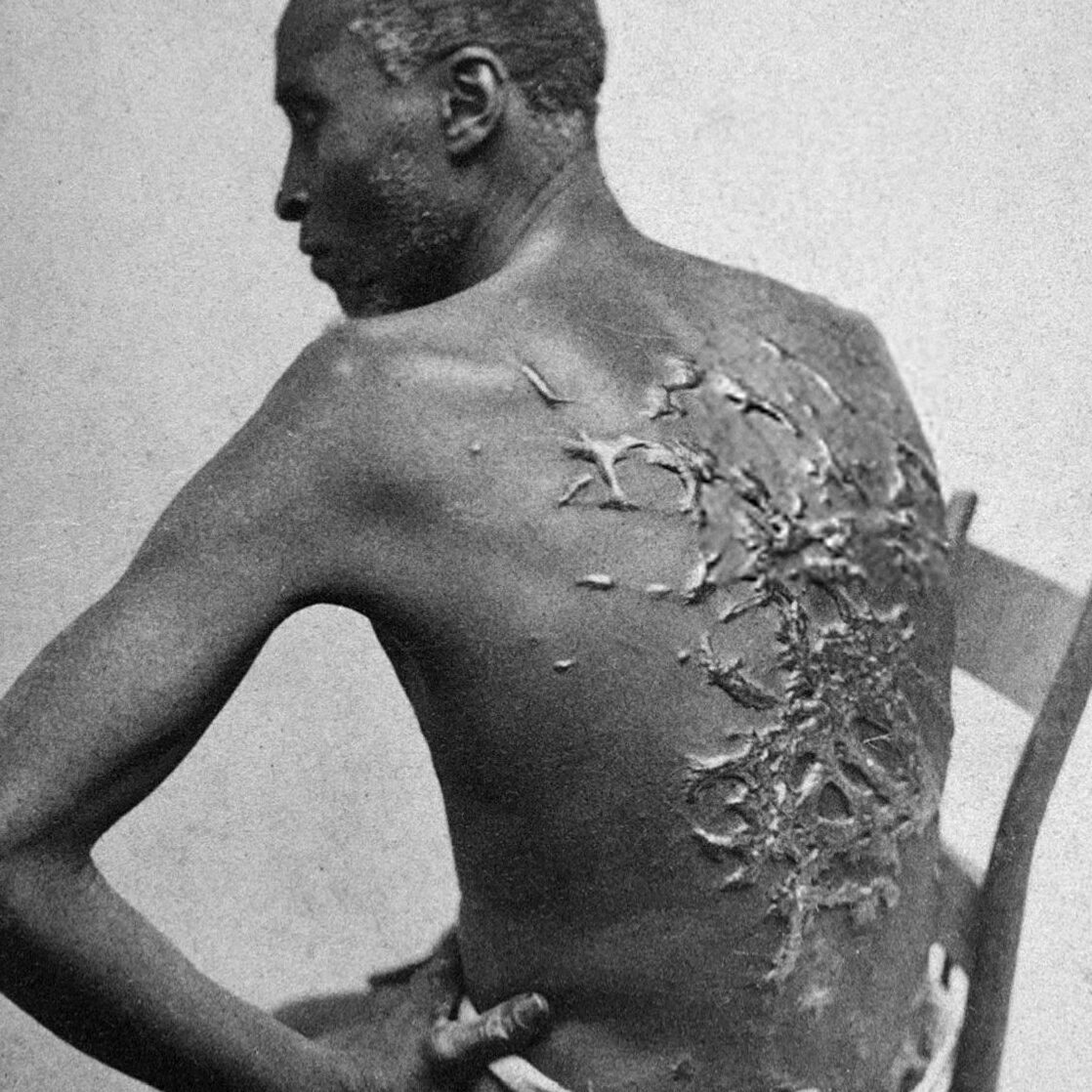
Frederick Douglass
Was Born Into Slavery.
Douglass was born into slavery in 1817 or 1818 (he was never sure which, because the birthdates of babies born into slavery weren’t recorded). He escaped to the North in 1838.[5] This wasn’t his first attempt, however. And, he was fully aware of the risks:

I felt assured that, if I failed in this attempt, my case would be a hopeless one—it would seal my fate as a slave forever. I could not hope to get off with anything less than the severest punishment, and being placed beyond the means of escape. It required no very vivid imagination to depict the most frightful scenes through which I should have to pass, in case I failed. [6]
Fortunately, Douglas was successful. And the rest, as they say, is history.
He spent the rest of his life not only working to abolish slavery, but fighting for equal rights for all people. He championed the recognition of freedom as the natural condition of all human beings. A right that should never be denied to another – especially not by a government founded on the principles of liberty and justice.
But, Douglass doesn’t just talk about physical freedom in his numerous and moving orations. He speaks of spiritual freedom as well, specifically the freedom that comes from reading and education.
His autobiography, Narrative of the Life of Frederick Douglass, An American Slave, contains a passage about his enslaver’s wife teaching him to read when he was a child. But, when her husband discovered this turn of events, he forbid her to continue the lessons in no uncertain terms, declaring:
A n***er should know nothing but to obey his master—to do as he is told to do. Learning would spoil the best n***er in the world. Now,” said he, “if you teach that n***er (speaking of myself) how to read, there would be no keeping him. It would forever unfit him to be a slave. [7]
Not surprisingly, these words had quite an impact on the young Frederick Douglass. Just not the one his enslaver was hoping for. These hateful words “called into existence an entirely new train of thought” in him:[8]
…a new and special revelation, explaining dark and mysterious things, with which my youthful understanding had struggled, but struggled in vain. I now understood what had been to me a most perplexing difficulty—to wit, the white man’s power to enslave the black man. It was a grand achievement, and I prized it highly. From that moment, I understood the pathway from slavery to freedom. [9]
That pathway to freedom was, and continues to be, reading and education. So, he found a way to continue learning to read, no matter what his enslaver said.
Tom Sawyer Himself
Couldn’t Have Done Better.
Realizing how important reading is, Douglass wasn’t going to let his enslaver stop him from learning. One of the ways he learned to write was by watching carpenters in the shipyard as they labeled the timbers being used for building ships. The letter S indicated a piece for the starboard side. L was for larboard. F designated the forward. And, the letter A stood for aft.
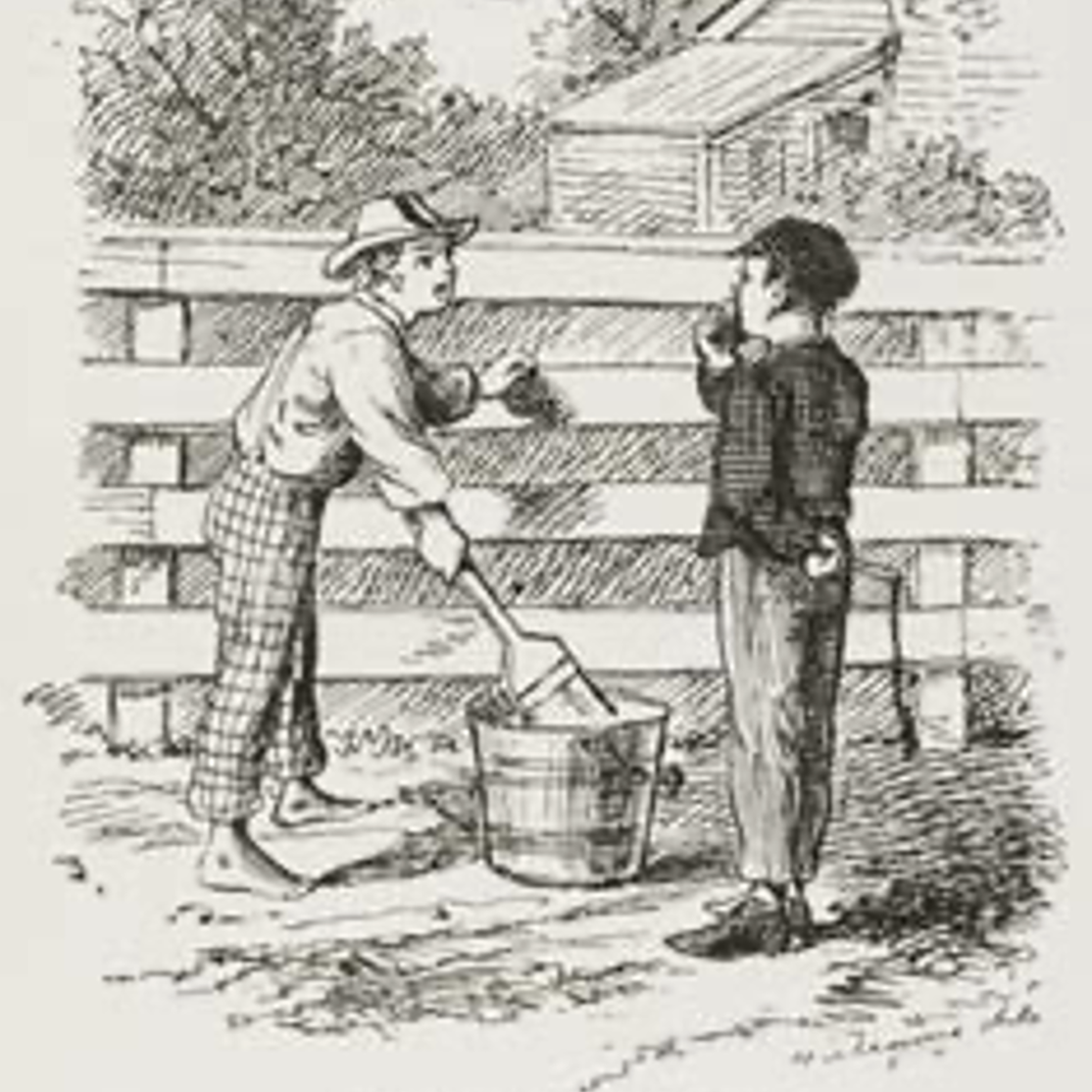
He learned this handful of letters in that matter, but he clearly needed to learn the rest of the alphabet. To learn the remaining letters, Douglass hoodwinked “any boy [he] knew could write,” with a trick that would make Tom Sawyer proud.
He told them that he could write as well as they could. And, being old enough to know that enslaved children were forbidden to learn to write, their response would invariably be, “I don’t believe you. Let me see you try it.” [10] At which point, Douglass would write the few letters he had learned, with a hearty “beat that.” And of course they did, effectively giving him a writing lesson.
As an adult, Douglass began teaching his “fellow-slaves” how to read. Given that they “were liable to be taken up, and given thirty-nine lashes” for this illegal act, it was understood that “there must be as little display about it as possible.” [11]
It was necessary to let their enslavers think the members of this reading group were spending their Sundays “wrestling, boxing, and drinking whisky.” Because they’d rather see those they enslave participating in these “degrading sports” than “behaving like intellectual, moral, and accountable beings.” [12]
Unfortunately, Douglass and his reading group were found out. And, society leaders “rushed in upon [them] with sticks and stones,” putting an end to the lessons. [13]
Thinking back on these days, Douglass divulges that, “The work of instructing my dear fellow-slaves was the sweetest engagement with which I was ever blessed,” further stating:
They came because they wished to learn. Their minds had been starved by their cruel masters. They had been shut up in mental darkness. I taught them, because it was the delight of my soul to be doing something that looked like bettering the condition of my race. [14]
The Blessings
Of Education.
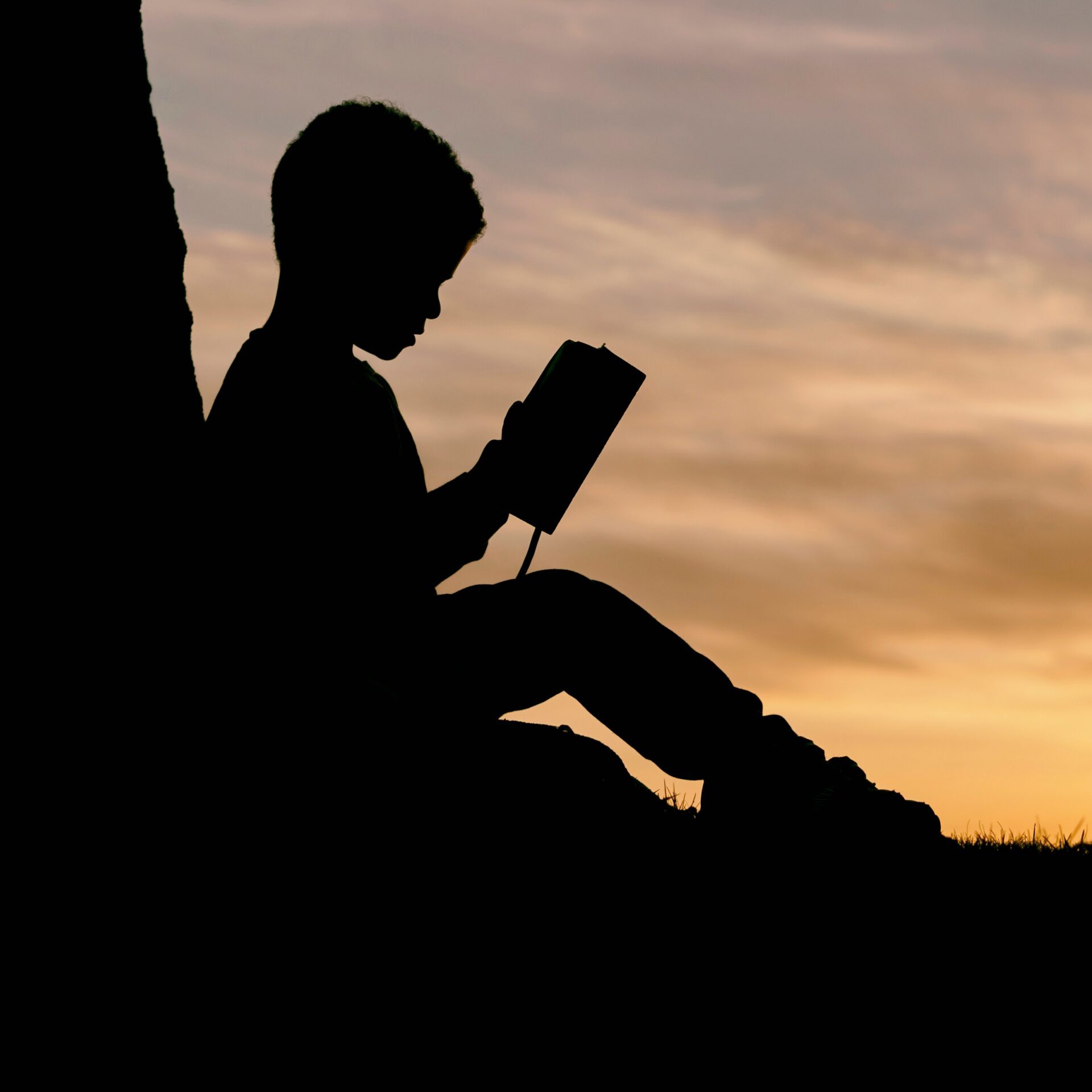
On the fifty-sixth anniversary of his escape from bondage (September 3, 1894), Douglas delivered a speech at the dedication of the Colored Industrial School at Manassas, Virginia.[15] This oration is known as The Blessings of Liberty and Education address. Needless to say, it addresses how liberty and education are linked. And, the benefits of education no matter what position you hold in society, or what you do for a living.
Douglass makes it clear that he has great respect for laborers, and those who work with their hands (what we refer to these days as “the trades”) – and rightly so. He goes on to say, however, that there is “no useful thing a that a man can do, that cannot be better done by an educated man than by an uneducated one.”[16]
He points out that human beings are the most helpless “of all the creatures… on this green earth,” the one “in most need of instruction.”[17] And, he reminds us that in our “natural condition,” we don’t “take high rank,” among other animals. We can’t run as fast as a horse or a dog, for example. We aren’t as strong as a mule or an ox.
Humanity’s true dignity, Douglass asserts, is not to be found in our arms or our legs, but in our heads. That is the “seat and source of all that is of especially great or practical importance” to mankind.[18] There may be “fire in the flint and steel:”
…but it is friction that causes it to flash, flame and burn, and give light where all else may be darkness. There is music in the violin, but the touch of the master is needed to fill the air and the soul with the concord of sweet sounds. There is power in the human mind, but education is needed for its development.[19]
A Shout-out
To Teachers.
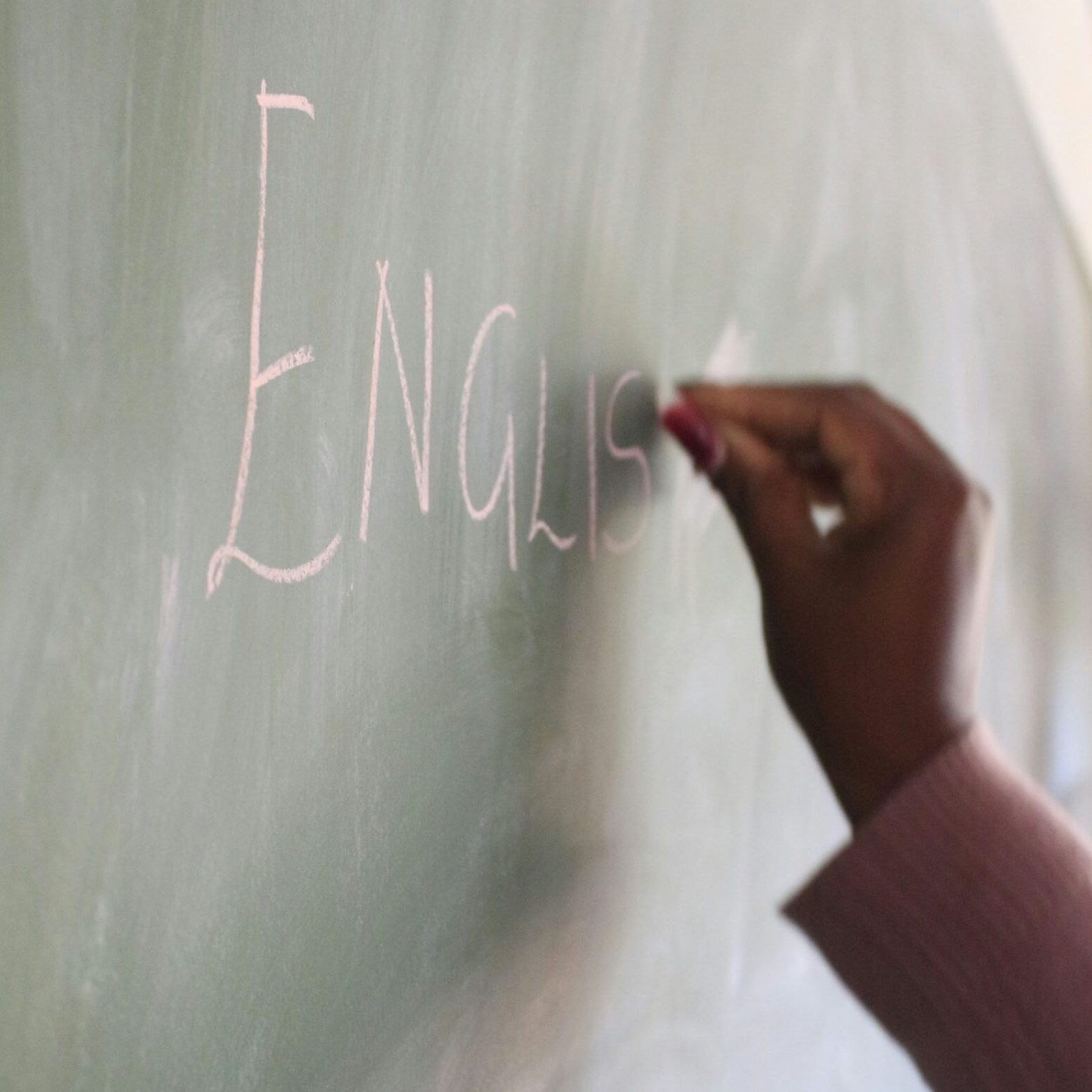
And Douglas gives a shout-out to teachers, with a much-needed reminder of how vital their vocation is to each and every one of us:
As man is the highest being on earth, it follows that the vocation of scholar is among the highest known to man. It is to teach and induce man’s potential and latent greatness. It is to discover and develop the noblest, highest and best that is in him. In view of this fact no man whose business it is to teach should ever allow himself to feel that his mission is mean, inferior or circumscribed. In my estimation neither politics nor religion present to us a calling higher than this primary business of unfolding and strengthening the powers of the human soul. It is a permanent vocation. Some men know the value of education by having it. I know its value by not having it. It is a want that begins with the beginning of human existence, and continues through all
the journey of human life.[20]
Sadly, way too many of us have lost sight of just how important educators are, and how noble a calling teaching is. Especially these days, when they’re being threatened with fines and jail time for doing the essential work of broadening students’ perspectives, expanding their worlds, and teaching them to think critically.

Without Education
Man Is But A Pitiable Object.
Douglass also calls attention to what happens to those who don’t read and get an education. And by education, he doesn’t just mean learning vocational skills. He is talking about literature, the Arts, and philosophy – subjects that develop critical thinking and fall under the Humanities umbrella. Disciplines that engender a greater understanding of our fellow human beings (they’re referred to as Humanities for a reason):
But if man is without education although with all his latent possibility attaching to him he is, as l have said, but a pitiable object; a giant in body but a pigmy in intellect, and at best but half a man. Without education he lives within the narrow, dark and grimy walls of ignorance. He is a poor prisoner without hope. The little light that he gets comes to him as through dark corridors and grated windows. The sights and sounds that reach him, so significant and full of meaning to the well-trained mind, are to him of dim and shadowy importance. He sees, but does not perceive. He hears, but does not understand. The silent and majestic heavens fretted with stars, so inspiring and uplifting, so sublime and glorious to the souls of other men, bear no message to him. They suggest to him no idea of the wonderful world in which we live, or of the harmony of this great universe, and hence, impart to him no happiness.[21]
We’re seeing the results of such a lacking education today. Humanities programs in K-12 education have been diminishing for decades. And, universities are being reduced to vocational training grounds rather than institutions for developing well-rounded members of society. So, no one should be surprised that we’re seeing so many people feeling hopeless, and fearful of those whose lives are different from their own.
And ask yourself, “who benefits from such a lack of education?” It certainly isn’t the “average Joe.” He has become the “pitiable object” Douglass speaks of, a prisoner of the fear created by his lack of understanding. One that is easy to inflame and manipulate.
Keep in mind what Douglass’s enslaver had to say on the subject of reading and education. That the people he enslaved should “know nothing but to obey [their] master – to do as [they] are told to do.” In other words, no critical thinking. Today’s version of this sentiment is that an employee only needs to learn about the skills required for their job. No critical thinking. Just do what the boss tells you to do. And do it without question.

Democracy
In Crisis.
Bearing the symptoms of a deficient education in mind, it should (once again) be no surprise that today’s headlines are filled with stories about American democracy being in crisis. Our citizenry has been rendered vulnerable to division and manipulation. And, we’ve been trained not to question, even things we’ve seen with our own eyes. These are prime conditions for an authoritarian regime of oligarchs to swoop in and become modern-day plantation owners.
But, as Frederick Douglass asserts:
Education, on the other hand, means emancipation. It means light and liberty. It means the uplifting of the soul of man into the glorious light of truth, the light by which men can only be made free. To deny education to any people is one of the greatest crimes against human nature. [22]
The insights Frederick Douglass imparts about the importance of reading and education was hard-earned. His works continue to keep the American conscience awake. Which is why his writings are vital, not only to American history but also to our future.
Given that books like Douglass’ are being pulled from classroom shelves and stripped from curriculums, we are being denied education in this country. But, as Douglass found a way to read and educate himself, so can we find a way to keep his more relevant-than-ever works alive. So, let’s get started!
Download the following Frederick Douglass texts:
Narrative of the Life of Frederick Douglass,
an American Slave.
Life and Times of Frederick Douglass.
Pair this with Einstein… Champion Of A Liberal Arts Education!

#Black History Month #Banned Books #African American authors
#The American Experience #The Benefit of Humanities #Frederick Douglass
#Published 1840s
Share This Post, Choose A Platform!
Endnotes:
[1] “Biographies: Frederick Douglass.” PBS.org https://www.pbs.org/blackpress/news_bios/douglass.html
[2] Bickerton, James. “Oklahoma School Book Ban Blocks Works From Eight Black Authors – Full List.” Newsweek. September 6, 2022. https://www.newsweek.com/oklahoma-school-book-ban-blocks-works-eight-black-authorsfull-list-1740301
[3] Van Atten, Suzanne. “Bookshelf: Lines are drawn in the battle over book bans.” The Atlanta Journal-Constitution, September 13, 2024. https://www.ajc.com/things-to-do/bookshelf-lines-are-drawn-in-the-battle-over-book-bans/JI7LWMCQAFF5VIWZLQZCJCVJZI/
[4] Corbould, Clare. “Activists are warning of a return to the Jim Crow era in America. But who or what was Jim Crow?” The Conversation. https://theconversation.com/activists-are-warning-of-a-return-to-the-jim-crow-era-in-america-but-who-or-what-was-jim-crow-248890
[5] Douglass, Frederick. Narrative of the Life of Frederick Douglass. Boston: Published at the Anti-Slavery office, No. 25 Cornhill, 1845.
[6] Douglass, Frederick. Narrative of the Life of Frederick Douglass. Boston: Published at the Anti-Slavery office, No. 25 Cornhill, 1845. Pg 91-92.
[7] Douglass, Frederick. Narrative of the Life of Frederick Douglass. Boston: Published at the Anti-Slavery office, No. 25 Cornhill, 1845. Pg 29.
[8] Douglass, Frederick. Narrative of the Life of Frederick Douglass. Boston: Published at the Anti-Slavery office, No. 25 Cornhill, 1845. Pg 29.
[9] Douglass, Frederick. Narrative of the Life of Frederick Douglass. Boston: Published at the Anti-Slavery office, No. 25 Cornhill, 1845. Pg 29.
[10] Douglass, Frederick. Narrative of the Life of Frederick Douglass. Boston: Published at the Anti-Slavery office, No. 25 Cornhill, 1845. Pg 38.
[11] Douglass, Frederick. Narrative of the Life of Frederick Douglass. Boston: Published at the Anti-Slavery office, No. 25 Cornhill, 1845. Pg 71, 69-70.
[12] Douglass, Frederick. Narrative of the Life of Frederick Douglass. Boston: Published at the Anti-Slavery office, No. 25 Cornhill, 1845. Pg 70.
[13] Douglass, Frederick. Narrative of the Life of Frederick Douglass. Boston: Published at the Anti-Slavery office, No. 25 Cornhill, 1845. Pg 70.
[14] Douglass, Frederick. Narrative of the Life of Frederick Douglass. Boston: Published at the Anti-Slavery office, No. 25 Cornhill, 1845. Pg 71.
[15] “The Blessings of Liberty and Education: An Address Delivered in Manassas, Virginia, on September 3, 1894.” The Frederick Douglass Papers. https://www.frederickdouglasspapersproject.com/s/digitaledition/item/19104
[16] Douglass, Frederick. “The Blessings of Liberty and Education.” The Frederick Douglass Papers. https://www.frederickdouglasspapersproject.com/s/digitaledition/item/19104
[17] Douglass, Frederick. “The Blessings of Liberty and Education.” The Frederick Douglass Papers. https://www.frederickdouglasspapersproject.com/s/digitaledition/item/19104
[18] Douglass, Frederick. “The Blessings of Liberty and Education.” The Frederick Douglass Papers. https://www.frederickdouglasspapersproject.com/s/digitaledition/item/19104
[19] Douglass, Frederick. “The Blessings of Liberty and Education.” The Frederick Douglass Papers. https://www.frederickdouglasspapersproject.com/s/digitaledition/item/19104
[20] Douglass, Frederick. “The Blessings of Liberty and Education.” The Frederick Douglass Papers. https://www.frederickdouglasspapersproject.com/s/digitaledition/item/19104
[21] Douglass, Frederick. “The Blessings of Liberty and Education.” The Frederick Douglass Papers. https://www.frederickdouglasspapersproject.com/s/digitaledition/item/19104
[22] Douglass, Frederick. “The Blessings of Liberty and Education.” The Frederick Douglass Papers. https://www.frederickdouglasspapersproject.com/s/digitaledition/item/19104
Images:
Frederick Douglass: Public Domain.
It Isn’t About Shame, It’s About Remembering: Photo by Mr Cup / Fabien Barral on Unsplash
Frederick Douglass Was Born Into Slavery: Scourged back by McPherson & Oliver, 1863.jpg Public Domain.
Tom Sawyer Himself Couldn’t Have Done Better: Mark Twain (1835-1910), Public domain, via Wikimedia Commons
The Blessings Of Education: Photo by Aaron Burden on Unsplash
A Shout-out To Teachers: Photo by Antoinette Plessis on Unsplash
Without Education Man Is But A Pitiable Object: Photo by Satyam Pathak on Unsplash
Democracy In Crisis: Photo by Steve Johnson on Unsplash

Share This Post, Choose a Platform!


Stay in the know about what’s in our ever-growing treasure trove of literary goodness. And, get your free Discover Everything a Book Has to Offer packet.









Related Posts

R ay Bradbury’s iconic dystopian work Fahrenheit 451 offers compelling insights into today’s epidemic of book banning. The progression of events within the text... Read More.

Thomas Morton’s blistering satire The New English Canaan was the first book banned in the United States. Learn more about it here.... Read More
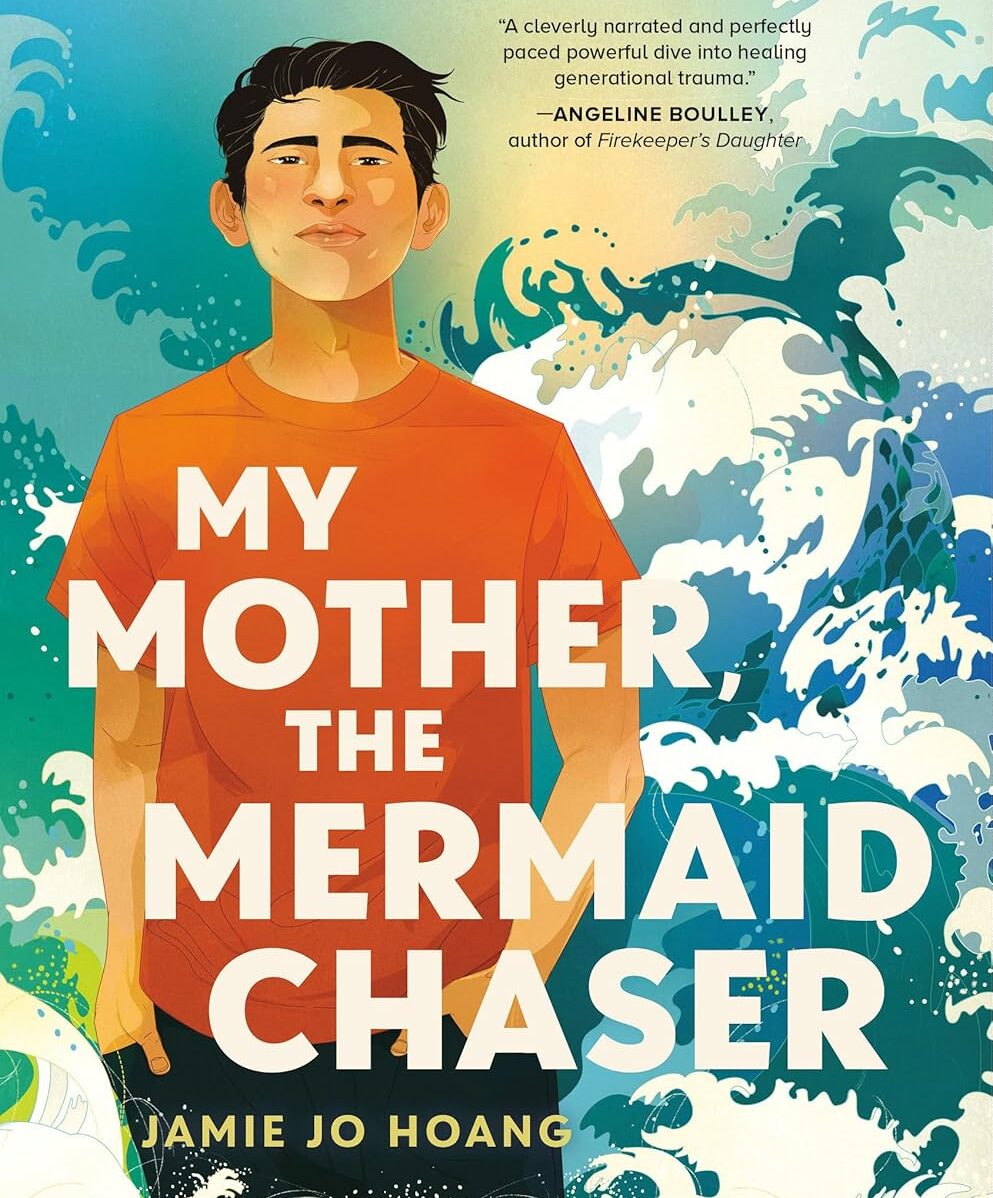
In this edition of the Power of Books Author Series we talk with Jamie Jo Hoang, author of My Mother the Mermaid Chaser. We touch on generational trauma. And, how books engender empathy and understanding, which can help break the cycle of generational trauma.... Read More

Banned due to the social issues it addresses, Cisneros' work tells the culturally significant story of Esperanza as she comes of age in the Hispanic quarter of Chicago.... Read More