
Aphorisms and Idioms: Read Between The Lines
 R
R
eading between the lines describes interpreting any form of communication beyond its literal meaning. Looking outside the limits of what is simply being said to figure out what someone means – even if it isn’t stated directly.[1]
It’s a beneficial skill. One that results in a more profound understanding of the books we read. Some of the tools that allow us to read between the lines of a text are taking note of a novel’s historic context, considering what we know about the author’s life, or engaging a work’s symbolic language.
Utilizing these tools is how we know, for example, that Huckleberry Finn is not just a story about a boy’s adventures on the river. Or that Huck isn’t simply using the disparaging language of the times to describe his fellow traveler, Jim.
Doing so allows us to see that Mark Twain’s work is actually a scathing social commentary on the dehumanizing nature of slavery and racism. One we can learn from, and apply the lessons we learned to making today’s society a better place.
There are practical, everyday advantages as well. Reading between the lines of job postings is especially informative. For example, being a “self-starter” or having the ability to “wear many hats,” might simply sound like characteristics of a responsible applicant. But what is hidden between the proverbial lines is that you’ll likely be doing the work of two or three employees without extra pay.[2]
On a similar note, “must be willing to go above and beyond” means overtime is not only expected, but built into the normal routine. Let’s hope this position is paid on an hourly basis rather than a salary.
And a company looking for a “solution-oriented” employee is typically chaotic or disorganized. Which means, you’ll spend your days frantically putting out fires. So be sure to read between the lines of those postings before you accept a position, to avoid ending up over-worked and underpaid.

Literally Reading
Between The Lines
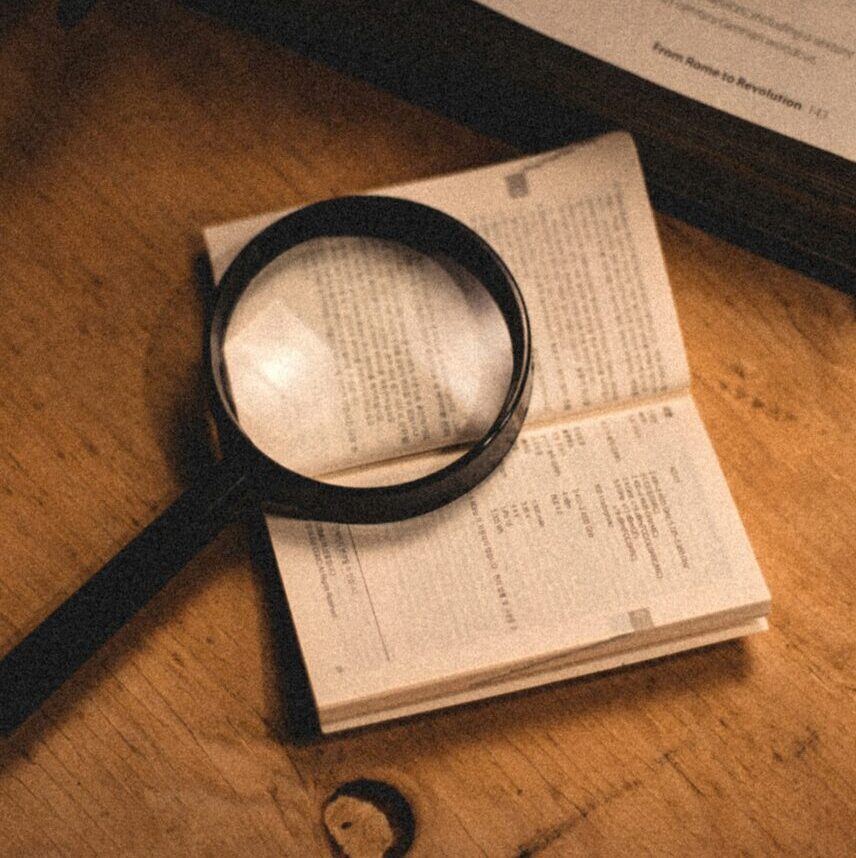
The idiom “reading between the lines” originated in a practice that dates back centuries, to the shadowy world of secret communication. It has roots in genuine cryptographic practices – techniques for secure transmission that prevent third parties from reading private messages.[3]
One popular technique involved using invisible ink to write a message between the lines of a mundane, innocent-looking document. The hidden message would be revealed by applying heat, special light, or chemical treatment. Which allowed the recipient to literally read between the lines of the original text.
Ancient Romans used a variety of invisible inks, such as vinegar, milk, and plant juices. During the American Revolution, spies on both sides used invisible ink in their communications.[4] The invisible ink used during this period was typically a mixture of ferrous sulfate and water.
George Washington himself instructed his agents in the use of this hidden communication, noting that it:
will not only render. . .communications less exposed to detection, but relieve the fears of such persons as may be entrusted in its conveyance.[5]
During WWI and II, technology used to develop invisible ink became incredibly sophisticated. With both sides employing chemists specifically to develop new inks.
And the ancient practice of concealing messages between the lines of a surface text continues to have modern descendants in digital communication, as well as cyber security.[6] Which, in time, might produce some idioms of their own.
Be Sure To Check Out More
Aphorisms And Idioms Here.

Share This Post, Choose A Platform!
Endnotes:
[1] Osmond, Candace. “Read Between the Lines – Idiom, Meaning and Origin.” Grammarist.com
“Read between the lines” Lexistry.com
[2] “Reading Between the Lines in Job Postings.” LinkedIn
[3] Bellare, Mihir; Rogaway, Phillip (21 September 2005). “Introduction”. Introduction to Modern Cryptography. p. 10.
[4] Lexistry.com
[5] “Spy Techniques of the Revolutionary War.” George Washington’s Mount Vernon.
[6] Lexistry.com
Images:
Read Between The Lines: Photo by Harshit Suryawanshi on Unsplash
Literally Reading Between The Lines: Photo by David Sinclair on Unsplash

Share This Post, Choose a Platform!

Stay in the know about what’s in our ever-growing treasure trove of literary goodness. And, get your free Discover Everything a Book Has to Offer packet.









Related Posts

Starting over with “a clean slate” is thought to be the oldest known idiom. It means a fresh beginning, one free of past mistakes or failures. And It originated in The Code of Hammurabi.... Read More

Several idioms encourage us to be “nice,” including the adage “it’s nice to be important, but more important to be nice.” But “being nice” wasn’t always seen as a virtue. So what did it originally mean? And when did its meaning change? ... Read More
It’s impossible to literally “lift ourselves up by our bootstraps.” And yet, the phrase is commonly used to encourage us to power through challenges with hard work. So how did an impossible task become a call for individual grit? ... Read More

Flying by the seat of your pants. What does this idiom mean? Where did it come from? And how far can doing so take you? ... Read More