
Aphorisms & Idioms:
Skeleton In The Closet
 H
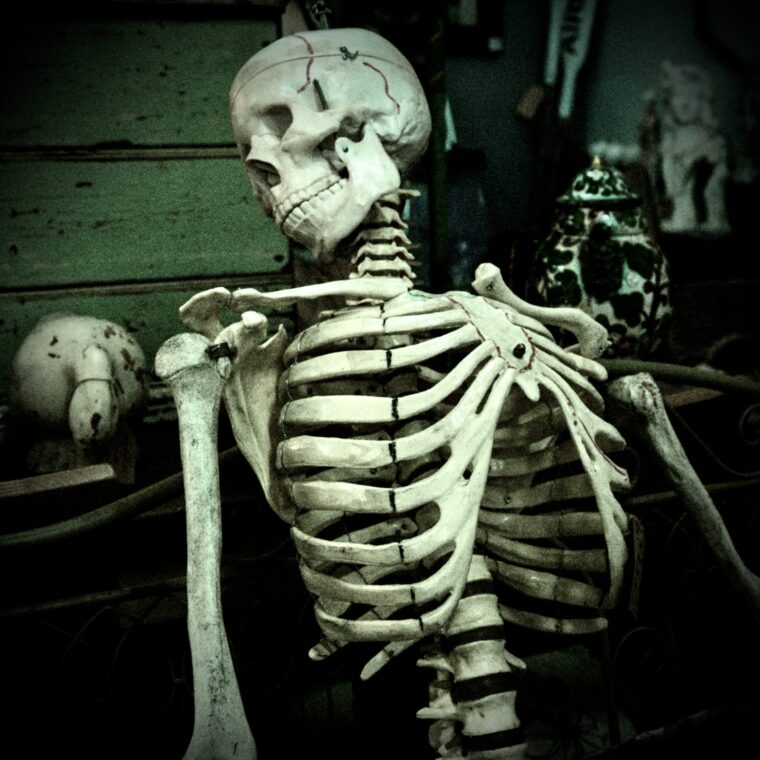
aving a skeleton in the closet (or the cupboard if you’re in the UK) isn’t an infestation of trick-or-treaters. And the bony personage in this idiom isn’t actually the remains of a once living and breathing human being. But it can be just as frightening.
Rather, this skeleton refers to a hidden shame, damaging secret, or potentially ruinous scandal you wish to keep private. Perhaps your grandfather was a war profiteer. You might be hiding a second family in another city. Or it could be as quirky as knowing the lyrics to every Weird Al Yankovich song, but realizing you should probably keep that fact to yourself.
Origins Of The Phrase
Skeleton In The Closet
One story about the origins of this idiom is that 19th century physicians secretly kept human cadavers or skeletons hidden in their office closets/cupboards to avoid prosecution. But this is largely a myth. [1]
The most likely origin is that it arose as a metaphor within Gothic literature. And Victorian society’s tremendous emphasis on maintaining a pristine, respectable public image. Authors of Gothic literature frequently used the image of a corpse hidden in a domestic cupboard as a metaphor for corruption, or darker aspects of human nature. Especially when combined with those pesky secrets from the past that never seem to stay buried in Gothic literature, like criminal relatives, bankruptcy, or madness.[2]
The oldest printed record of the phrase is thought to be in an article by William Hendry Stowell, published in the U.K. monthly periodical The Electric Review in 1816:

The dread of being the cause of misery to posterity has prevailed over men to conceal the skeleton in the closet…[3]
It was widely adopted, however, thanks to the popular Victorian author William Makepeace Thackeray. Who used it repeatedly in his novels, like this example from The Newcomes; memoirs of a most respectable family:
And it is from these that we shall arrive at some particulars regarding the Newcome family, which will show us that they have a skeleton or two in their closets, as well as their neighbors.[4]
No matter where the idiom originated, it’s clear that the only good time to have a skeleton in the closet is around Halloween. But only if it’s the kind you get from the local costume shop.
Pair This With

Check Out More
Aphorisms & Idioms Here.
Aphorisms & Idioms Here.

Endnotes:
[1] Idioms Online.
[2] Stephen Carlick and Eppie Shepher. “A guide to Gothic literature.” Penguin Books.co.uk
Idioms Online.
[3] Theidioms.com April 30, 2021.
[4] Thackeray, William Makepeace. The Newcomes: memoirs of a most respectable family. Boston: Estes & Lauriat, 1891. Pg 75.

Share This Post, Choose a Platform!


Stay in the know about what’s in our ever-growing treasure trove of literary goodness. And, get your free Discover Everything a Book Has to Offer packet.

















Related Posts

Commonly used as a call for pacifism, the biblical phrase “turn the other cheek” was originally a form of protest, encouraging people to stand up against their oppressors. But what kind of protest was Jesus promoting, exactly?... Read More

Several idioms encourage us to be “nice,” including the adage “it’s nice to be important, but more important to be nice.” But “being nice” wasn’t always seen as a virtue. So what did it originally mean? And when did its meaning change? ... Read More
It’s impossible to literally “lift ourselves up by our bootstraps.” And yet, the phrase is commonly used to encourage us to power through challenges with hard work. So how did an impossible task become a call for individual grit? ... Read More

"My Country Right or Wrong" is just one example of a well-worn adage that doesn't mean what we think it means. What does it mean?... Read More