Parable Of The Sower: Octavia Butler Tried To Tell Us
 O
O
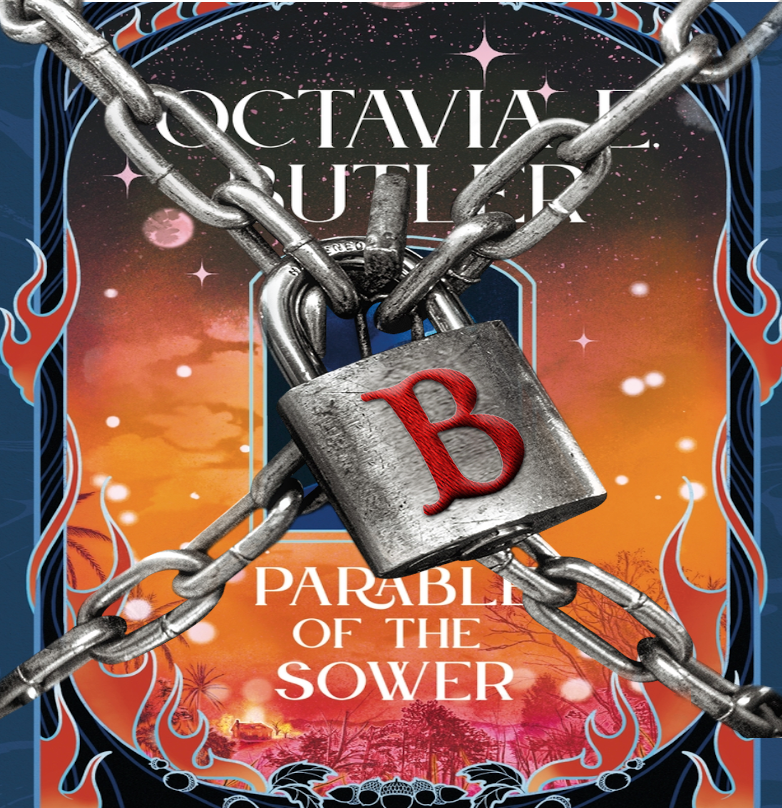
ctavia Butler’s visionary novel Parable of the Sower has really been resonating with folks lately. A writer of speculative fiction, Butler is known as the Mother of Afrofuturism. She’s celebrated for writing novels that grapple with racial justice, women’s rights, and political extremism – not to mention the climate crisis.[1]
And that’s why her books have been banned or challenged in five states across six school districts in Florida, Iowa, Tennessee, Texas and Wisconsin. Challenged for violence, religious themes, and the catch-all excuse of “disturbing content.”[2]
But despite her books being challenged and banned, this pioneering writer of science fiction is experiencing a renaissance years after her death. A great number of people are turning to Butler’s work for comfort, guidance and reflection.[3]
They’re connecting with Paradise of the Sower because the apocalypse it describes isn’t caused by a singular event, like a meteor strike, alien invasion, or nuclear war. It’s an accumulation of serious problems and the second-order crises that manifest from these issues.
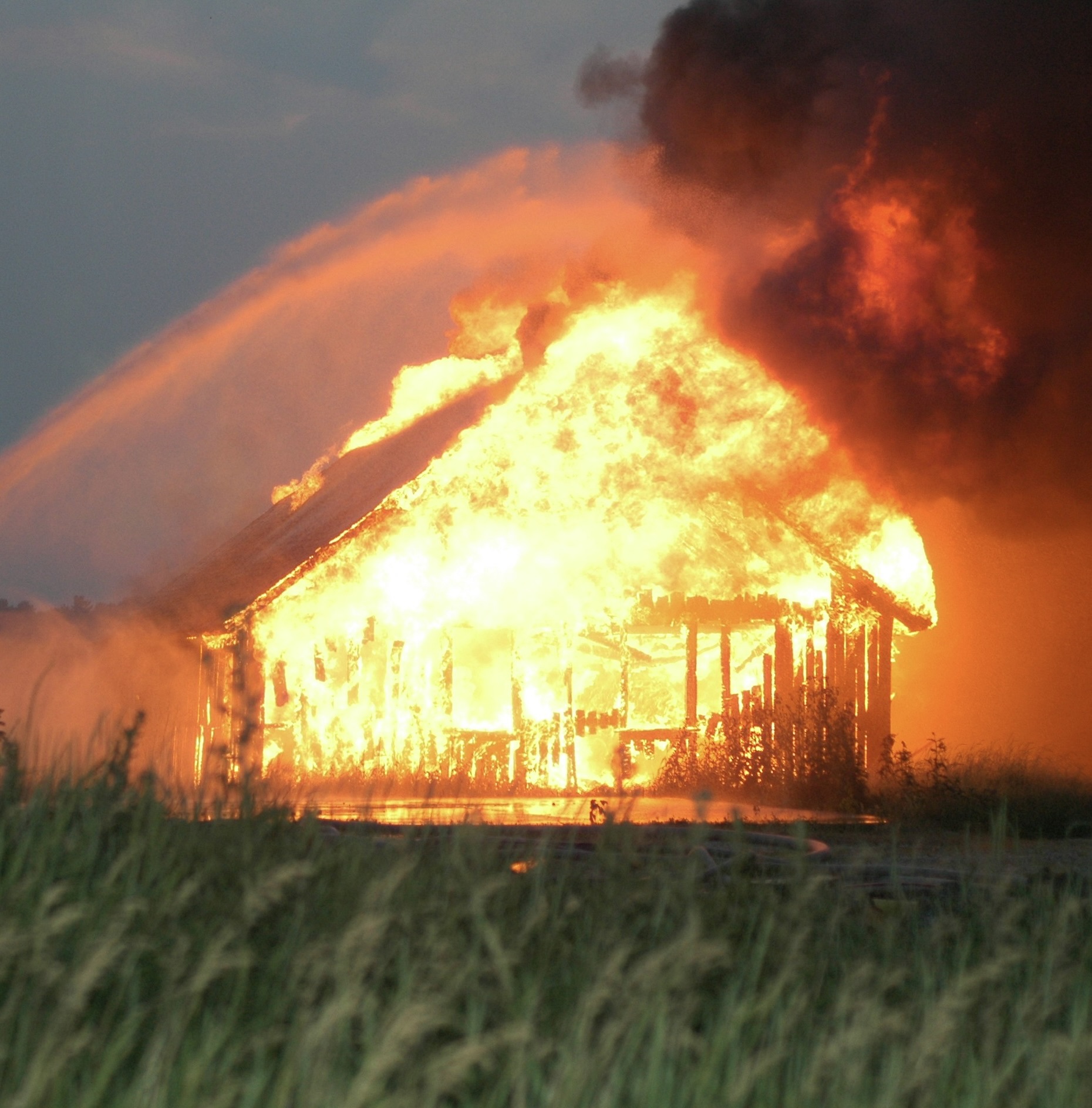
Published in 1993, Parable of the Sower opens in July 2024. In the near future Butler painted, we see severe effects of climate change, heightened class and racial antagonisms, the growth of private power, the destruction of local communities, as well as a presidential candidate who may set the country back a hundred years. And it’s set in a California ravaged by devastating wildfires.
This sounds eerily “on the nose.” In fact, there are so many similarities between the world Butler created and the current state of our country that this book is frequently characterized as prophetic. And Butler’s insights have been described as seemingly telepathic.[4]
No Special Ability
To Foretell the Future
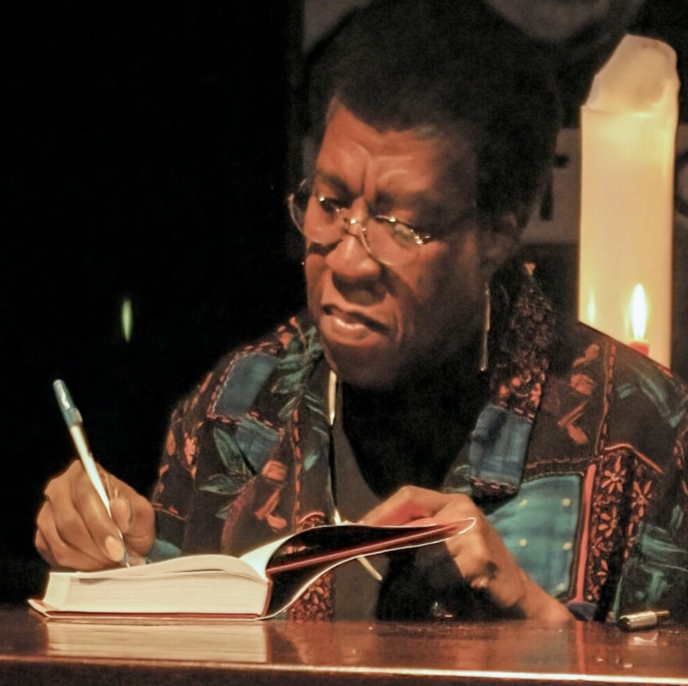
Butler is not telepathic, however. As Butler herself notes, she is simply a student of history. “Writing novels about the future doesn’t give me any special ability to foretell the future,” she states:
But it does encourage me to use our past and present behaviors as guides to the kind of world we seem to be creating. The past, for example, is filled with repeating cycles of strength and weakness, wisdom and stupidity, empire and ashes. To study history is to study humanity.[5]
As mentioned above, Butler wrote her Parable series in the 1990’s (unfinished due to her untimely death). And according to her, they are cautionary tales about:
what happens because we don’t trouble to correct some of the problems that we’re brewing for ourselves right now. Global warming is one of those problems. And I was aware of it back in the ‘80’s. [6]
Butler puts this sentiment in the mouth of Taylor Bankole, a character who meets protagonist Lauren Olamina on the road and eventually becomes her lover:
I have also read that the Pox [short for apocalypse] was caused by accidentally coinciding climactic, economic and sociological crises. It would be more honest to say that the Pox was caused by our own refusal to deal with obvious problems in those areas. We caused the problems: then we sat and watched as they grew into crises.[7]
Butler ties her images to problems and political ideologies that were prevalent at the time she was writing the Parable series. She portrays a United States where governments at all levels fail to defend human rights, provide any kind of services, or protect the environment. Globally, unfettered multi-national corporations act repressively, and extreme income inequalities exist.
This dystopia depicts the fruits of the Republican right’s policies beginning with the Reagan years. Those proclaimed by Speaker of the House Newt Gingrich in his “Contract with America,” a set of policy priorities for Republicans during this period. [8]
These priorities were lower taxes, diminished levels of aid to the poor, less regulation and other “interference” in the market. Significantly, rolling back regulations included “issuing leases for oil, gas, and coal development on tens of millions of acres of national lands.”[9]
It was a “bold plan” to “change the nation.” And change the nation it did. The Contract with America reexamined “litigation, taxation, regulation, welfare, education, the very structure of government, the structure of health.”[10]
A lot of Butler’s friends were teachers. So, education was another problem that caught her attention:
the politics of education was getting scarier, it seemed to me. We were getting to that point where we were thinking more about the building of prisons than of schools and libraries.[11]
Frightening politics surrounding education should sound familiar to anyone paying attention, especially to proposed legislation that includes jail time for teachers and librarians who overstep the bounds of the politicized book banning and curriculum scrubbing that has been taking place over the last several years. Then there’s the current administration’s dismantling of the Department of Education.
According to Butler, give the problems we’ve been neglecting about thirty years – long enough to “grow into full-fledged disasters” – and we’re likely to wind up with a world like the one in Parable of the Sower.[12] One disturbingly similar to the society we live in today. As Gloria Steinem observes in her celebration of Octavia Butler’s groundbreaking novel:
If there is one thing scarier than a dystopian novel about the future, it’s one written in the past that has already begun to come true. This is what makes Parable of the Sower even more impressive than it was when first published.[13]
Robledo
And The Pyros
The first half of Parable of the Sower shows us a fragmented social environment of atomized individualism – a collection of independent individuals rather than an interconnected community.[14]
Butler’s protagonist, fifteen-year-old Lauren Olamina lives with her family inside the walled community of Robledo. The compound’s security entails a locked gate and shifts of armed guards, allowing its occupants to remain somewhat sheltered from the surrounding anarchy.
Be that as it may, they are still squeezed both from within and without. Basic goods are outrageously expensive. And money is nearly impossible to come by. So, life is lived at the subsistence level, making it difficult for inhabitants to look beyond “taking care of their own.”
And the increasing number of those without are becoming more desperate. The homeless people who live outside the walls of this compound not only suffer the worst kinds of abuse, but also rampant disease.
To them, the inhabitants of Robledo are “rich” rather than “barely getting by.” In a show of contempt, they often throw “gifts of envy and hate” over the wall, “a maggoty, dead animal,” for example, or “even an occasional severed human limb.”[15]
Robledo’s compound walls are eventually breached, and the community decimated by “pyros,” addicts of a drug by the same name. One that induces a murderous, orgiastic frenzy in its users, compelling them to burn anything they can get their hands on to the ground.
In the midst of this devastation Lauren is left with the only two other survivors of the pyros’ attack, people she hardly knows, as they set out on a journey north to a place rumored to have work.

There’s No
Single Answer
Given Parable of the Sower’s foresight, we can learn a lot from the way Lauren responds to the crises our worlds have in common. As Butler points out, “there’s no single answer that will solve all of our future problems.”[16] But this book does offer a way forward.
The second half of Parable of the Sower shows us opposition to the divided, contentious society pictured in the first half of the book. A counter-narrative of quiet, persistent resistance is embodied in the community that gathers around Lauren over the course of Butler’s novel.
Lauren is one of the few literate people in this dystopian world. And the journal she keeps constitutes the novel’s text. Her entries begin with verses that ultimately become a book of scripture called Earthseed: The Books of the Living.
The following is a verse, which not only speaks to Lauren’s situation, but our own:
Embrace diversity.
Unite –
Or be divided,
robbed,
ruled,
killed.
By those who see you as prey.
Embrace diversity
Or be destroyed.[17]
In a world where DEI (Diversity, Equity, and Inclusion) has become a dirty word, this passage warns us about what happens when we’re divided. It also reminds us who benefits from our division – it certainly isn’t us.
It’s no surprise that the community that gathers around Lauren consists of characters from different colors, classes, ethnicities, social backgrounds and life stories. In doing so, Butler forces them to face (and shows us) the necessity of establishing empathy, equality, and reliance on one another. None of which had been part of their past lives, and all of which are rapidly waning in our current society.[18]
So How Should
We Proceed?
What is the way forward in a world defined by uncertainty and division? As Butler notes in the passage below, we must remain focused on bringing the future we wish to live in into being. [19]
Prodigy is, in its essence, adaptability and persistent, positive obsession. Without persistence, what remains is an enthusiasm of the moment. Without adaptability, what remains may be channeled into destructive fanaticism. Without positive obsession, there is nothing at all.[20]
Persistence is clearly key. Because, as the passage above points out, without it what remains is simply “an enthusiasm of the moment.” For example, the Civil Rights Movement is often described as something that occurred in the past. When lunch counter sit-ins took place. When Dr. Martin Luther King Jr led the march in Selma. And when the Civil Rights Act of 1964 and The Voting Rights Act of 1965 were passed.
Characterizing the Civil Rights Movement as a glorious moment in American history that took place in the 1950s and 1960s makes it too easy for a lot of people to consider that proverbial box checked. Needless to say, that is clearly not the case. When it comes to Civil Rights, there’s still plenty of work to be done.
But as Dr. Martin Luther King Jr. maintained, a sentiment that Octavia Butler put in the mouth of her protagonist Lauren Olamina, “the weak can overcome the strong if the weak persist.”[21] Because as Dr. King frequently stated, “the arc of the moral universe is long but it bends toward justice.”[22] This quote originally came from a sermon by abolitionist minister Theodore Parker:
Look at the facts of the world. You see a continual and progressive triumph of the right. I do not pretend to understand the moral universe, the arc is a long one, my eye reaches but little ways. I cannot calculate the curve and complete the figure by the experience of sight; I can divine it by conscience. But from what I see I am sure it bends towards justice.[23]
Parker isn’t suggesting that we just sit back and wait for the tide to turn toward a less dystopian world. Comparing the laws of the “moral universe” to the “laws of matter” (which function on their own to bind the physical universe together), he points out that the “law of right” — that is, justice:
does not work free from all hindrance; it develops itself through conscious agent.[24]
And we are the conscious agent that bends the arc in the direction of justice. But only if we remain persistent in our efforts to bring about our “positive obsession.”
Adaptability Is
Also Necessary
While persistence is indeed critical, as Lauren’s Earthseed verse tells us, adaptability is also necessary. In fact, Lauren goes so far as to say that “all successful life is adaptable.”[25] Adaptability is necessary because without it our fervor may “be channeled into destructive fanaticism.” Those who refuse to accept renewable sources of energy like solar, wind, and geothermal, represent such a lack of adaptability.
Fossil fuels are the primary source of greenhouse gas emissions, which significantly contribute to climate change.[26] So, insisting upon continued dependence on coal and fossil fuels when viable clean alternatives exist is clearly a “destructive fanaticism.”
A viewpoint we see the catastrophic results of in situations like New Orleans’ breeched levees, and flooded subways in New York due to historically powerful hurricanes. To say nothing of the recent wildfires in LA… the very ones Butler seems to have predicted.
Over thirty years ago, Octavia Butler showed us what was likely to happen if things continued as they were. And clearly we haven’t listened. But Parable of the Sower doesn’t leave us feeling hopeless. Butler gives us a way forward, a master plan for adjusting to the uncertainty many of us are experiencing these days. Which is undoubtedly why the guidance and reflection this work offers is resonating with so many people lately.
That’s my take on
Parable of the Sower,
what’s yours?
Use this discussion guide
to inspire in-depth thinking,
and jump-start a conversation.
Pair this with


See Below For Related Posts
Share This Post, Choose A Platform!
Endnotes:
[1] Shady Grove Oliver. “Reading Octavia Butler in a time of change.” AfroLA May 14, 2025. https://afrolanews.org/2025/05/reading-octavia-butler-in-a-time-of-change/
“Octavia Estelle Butler.” National Women’s History Museum. https://www.womenshistory.org/education-resources/biographies/octavia-estelle-butler
[2] ForbiddenBookShop.com https://forbiddenbookshop.com/authors/butler-octavia-e/
[3] Shady Grove Oliver. “Reading Octavia Butler in a time of change.” AfroLA May 14, 2025. https://afrolanews.org/2025/05/reading-octavia-butler-in-a-time-of-change/
[4] Akinmowo, OlaRonke. “Octavia Taught Me/12 Things.” Women’s Studies. (2019) Vol. 48:1, Pp 47-58.
[5] “Octavia E. Butler: A Few Rules For Predicting The Future.” Essence Magazine, May 2000.
[6] “Remembering Octavia Butler: Black Sci-Fi Writer Shares Cautionary Tales in Unearthed 2005 Interview.” Democracy Now! https://www.democracynow.org/2021/2/23/octavia_butler_2005_interview
[7] Butler, Octavia E. Parable of the Talents. New York: Open Road Integrated Media, 1998 Pg 2.
[8] Rep. Newt Gingrich and Rep. Dick Armey. Contract With America. Edited by Ed Gillespie and Bob Schellhas. New York: Times Books, 1994. https://archive.org/details/contractwithamer00ging/page/n5/mode/2up
[9] Little, Amanda. “A look back at Reagan’s environmental record.” Grist.org June 11, 2004. https://grist.org/politics/griscom-reagan/
[10] Rep. Newt Gingrich and Rep. Dick Armey. Contract With America. Edited by Ed Gillespie and Bob Schellhas. New York: Times Books, 1994. https://archive.org/details/contractwithamer00ging/page/n5/mode/2up
[11] “Remembering Octavia Butler: Black Sci-Fi Writer Shares Cautionary Tales in Unearthed 2005 Interview.” Democracy Now! https://www.democracynow.org/2021/2/23/octavia_butler_2005_interview
[12] “Octavia E. Butler: A Few Rules For Predicting The Future.” Essence Magazine, May 2000.
[13] Steinem, Gloria. “A celebration of Octavia Butler’s groundbreaking science-fiction novel.” Earlybirdbooks.com. February 26, 2016. https://earlybirdbooks.com/gloria-steinem-on-octavia-butler
[14] Gabriela Bruschini Grecca. “A Racist Challenge Might Force Us Apart: Divergence, Reliance, and Empathy in Parable of the Sower, by Octavia Butler.”
[15] Butler, Octavia. Parable of the Sower. London: Headline Publishing Group, 2019. Pg 45.
[16] “Octavia E. Butler: A Few Rules For Predicting The Future.” Essence Magazine, May 2000.
[17] Butler, Octavia. Parable of the Sower. London: Headline Publishing Group, 2019. Pg 185.
[18] Gabriela Bruschini Grecca. “A Racist Challenge Might Force Us Apart: Divergence, Reliance, and Empathy in Parable of the Sower, by Octavia Butler.”
[19] “How Octavia Butler’s 1993 book ‘Parable of the Sower’ predicted our climate reality.” Grist.org https://grist.org/culture/octavia-butlers-1993-parable-of-the-sower-predicted-climate-reality/
[20] Butler, Octavia. Parable of the Sower. London: Headline Publishing Group, 2019. Pg 1.
[21] Butler, Octavia. Parable of the Sower. London: Headline Publishing Group, 2019. Pg 127.
[22] Dr. Martin Luther King Jr. Speech at Grosse Pointe High School. March 14, 1968. Grosse Pointe Historical Society. https://www.gphistorical.org/mlk/mlkspeech/mlkaudio.htm
[23] Parker, Theodore. “Of Justice and the Conscience (1852).” In Ten Sermons of Religion. Boston: Crosby, Nichols, and Company, 1853. Pg 85.
[24] Parker, Theodore. “Of Justice and the Conscience (1852).” In Ten Sermons of Religion. Boston: Crosby, Nichols, and Company, 1853. Pg 69.
[25] Butler, Octavia. Parable of the Sower. London: Headline Publishing Group, 2019. Pg 117.
[26] “Sources of Greenhouse Gas Emissions.” Environmental Protection Agency. https://www.epa.gov/ghgemissions/sources-greenhouse-gas-emissions
Images:
Parable of the Sower chained.
No Special Ability To Foretell the Future: https://www.womenshistory.org/education-resources/biographies/octavia-estelle-butler
Robledo And The Pyros: Photo by Jen Theodore on Unsplash
There’s No Single Answer: Photo by Roberto Shumski on Unsplash
How Should We Proceed: Photo by TECHTON 6 on Unsplash
Adaptability Is Also Necessary: https://www.loc.gov/item/2002695620/

Share This Post, Choose a Platform!


Stay in the know about what’s in our ever-growing treasure trove of literary goodness. And, get your free Discover Everything a Book Has to Offer packet.










Related Posts
Bamboozled! It means to be hoodwinked, flimflammed, hornswoggled -- all fun & fancy words that mean to be tricked, deceived in underhanded ways. Why is this Fun & Fancy word more important than ever?... Read More
Nathaniel Hawthorne is renowned for deep symbolism and psychological insight. So, what's The Scarlet Letter really about? ... Read More
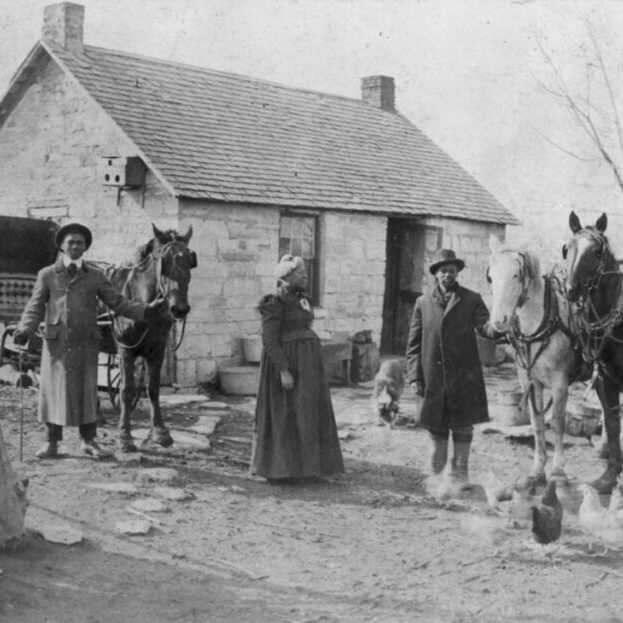
Who are the Exodusters? Tragically, stories about people like these formerly enslaved homesteaders are being purged from school curriculums. So we’re shining a light on them here.... Read More

Imagine living in a world where you never see yourself represented in books or media. And, when you finally do, it’s as negative, immoral, or downright evil. How would that effect you?... Read More