
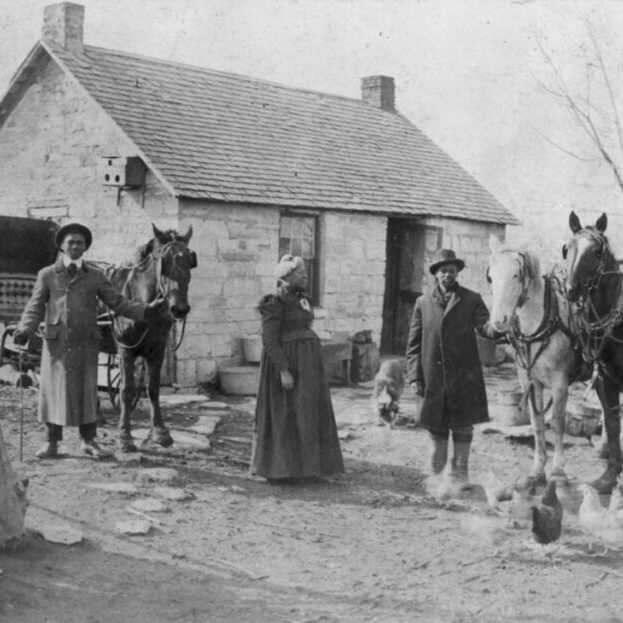
Exodusters: Carrying The Hope Of Freedom And Prosperity
 W
W
ho are the Exodusters? Tragically stories like theirs, about African American pioneers and their contributions to our nation, are being purged from many school curriculums. But these stories are critical to our understanding of American history. So we’re shining a light on these courageous, formerly enslaved homesteaders here.
We’ve all undoubtedly learned about the Homestead Act of 1862. Its legacy has played a role in characterizing America as a nation full of scrappy, “pull yourself by your bootstraps” types. And we’ve all heard about Reconstruction – you know, the rebuilding period following the Civil War.
But “what do the Homestead Act and Reconstruction have to do with each other,” you may ask. Well, that’s where the Exodusters come in.
The Post-Civil War Era
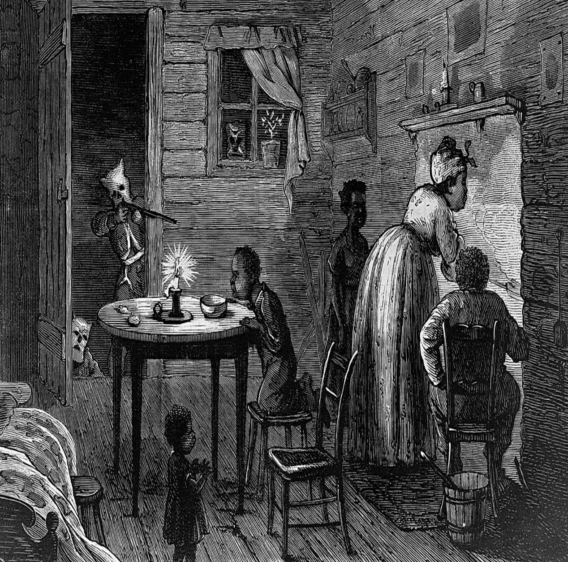
The post-Civil War era seems like it should have been a time of progress for African Americans in the South. What’s known as the Reconstruction Amendments had been passed: the Thirteenth Amendment ended slavery, the Fourteenth Amendment granted citizenship to those previously enslaved, and the Fifteenth Amendment outlawed suffrage discrimination based on color, race, or previous slave status.[1]
But the post-Civil War era was not “a brand-new day,” as the saying goes. Because as another saying goes, “where there’s a will there’s a way.” And many Southern whites made a concerted effort to keep Black people disenfranchised, socially marginalized, and poverty-stricken.[2]
When Rutherford B. Hays ended Reconstruction in 1877 in return for Southern support to secure his presidency in the disputed 1876 election, things got even worse.[3]
During Reconstruction, federal soldiers had been stationed in the South to maintain order, enforce new laws, and protect the rights of the formerly enslaved. Though their protection was frequently minimal, it was better than nothing.
And once the troops were removed, the South’s white ruling class had free reign to oppress and terrorize freed Blacks without interference. Lynchings, murders, and other violent crimes against African Americans increased dramatically. [4]
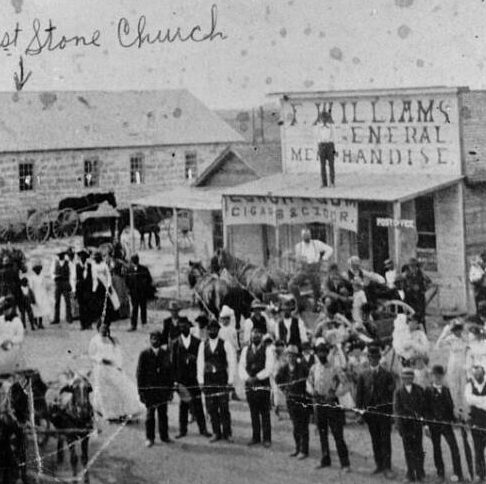
The Great Exodus
Bearing this turn of events in mind, it was time to take advantage of opportunities offered by The Homestead Act, which gave 160 acres of federal land to anyone who agreed to farm it. This migration came to be known as “the Great Exodus.” And the 40,000 – 60,000 people who participated in it were called “Exodusters.”[5]
Carrying the hope for freedom and prosperity most settled in Kansas. Largely due to the state’s history as the site of fervent “free state” sentiments during the antebellum period (not to mention being the home of abolitionist John Brown).[6]
And many were part of organized efforts to establish all-Black settlements. And by 1881, Exodusters had established a dozen agricultural colonies in the state of Kansas: Nicodemus, Hodgeman, Morton City, Dunlap, Kansas City–area Colony, Parsons, Wabaunsee, Summit Township, Topeka-area Colony, Burlington, Little Coney, and the Daniel Votaw Colony.
These African American pioneers also established communities in Nebraska, including the town of Dewitty. They migrated to western New Mexico, creating settlements such as Blackdom and Dora. Not to mention the fact that over a fifty-five-year period following the Civil War, African Americans established more than fifty identifiable communities in Oklahoma. [7] Like other settlements whose foundations were laid during the pioneer age, some of them sprouted and quickly vanished, and others still survive.
Stories like theirs may be targeted for banning, but the Exodusters’ legacy deserves to be remembered.
To Learn More About The Exodusters,
Check Out These Books.
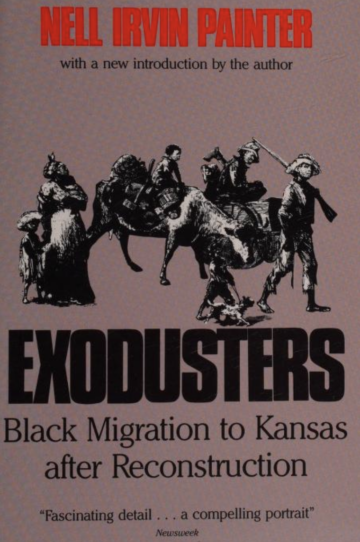
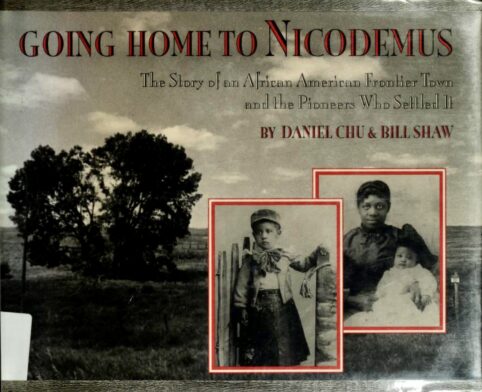

Pair this with
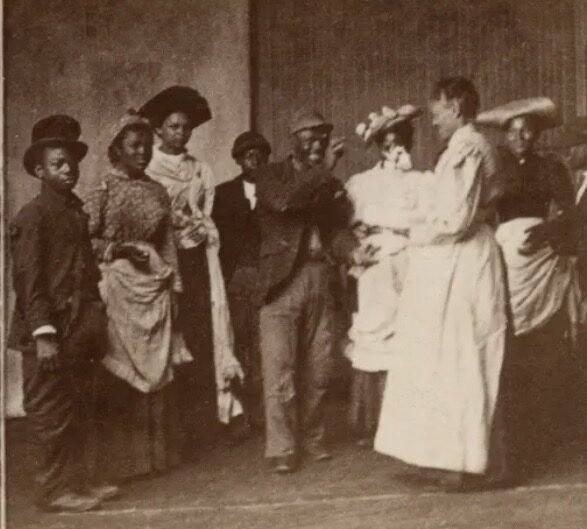
And For You Educators,
Help Yourself To This Lesson Plan

See Below For Related Posts
Share This Post, Choose a Platform!
Endnotes:
[1] “The Reconstruction Amendments.” The Constitution Center. https://constitutioncenter.org/education/classroom-resource-library/classroom/the-reconstruction-amendments
[2] Arrington, Todd. “Exodusters.” National Park Service. https://www.nps.gov/home/learn/historyculture/exodusters.htm
[3] “Compromise of 1877.” History.com https://www.history.com/articles/compromise-of-1877
[4] Arrington, Todd. “Exodusters.” National Park Service. https://www.nps.gov/home/learn/historyculture/exodusters.htm
[5] Toler, Pamela D. “The Exodusters.” June 20, 2025. History in the Margins. https://www.historyinthemargins.com/2025/06/20/the-exodusters/
[6] Davis, Damani. “Exodus to Kansas.” Prologue Magazine. Summer 2008, Vol. 40 No. 2.
[7] “All-Black Towns.” Encyclopedia of the Great Plains. University of Nebraska-Lincoln. https://plainshumanities.unl.edu/encyclopedia/doc/egp.afam.006.html
Images:
Exodusters: Kansas Historical Society.
The Post-Civil War Era: U.S. National Park Service.
The Great Exodus: Library of Congress

Share This Post, Choose a Platform!


Stay in the know about what’s in our ever-growing treasure trove of literary goodness. And, get your free Discover Everything a Book Has to Offer packet.


















Related Posts

George M. Johnson's memoir All Boys Aren’t Blue has been characterized as obscene. Here’s a breakdown of why that’s sheer nonsense.... Read More
R ay Bradbury’s iconic dystopian work Fahrenheit 451 offers compelling insights into today’s epidemic of book banning. The progression of events within the text... Read More.

Thomas Morton’s blistering satire The New English Canaan was the first book banned in the United States. Learn more about it here.... Read More

We talk a lot about the harm book bans cause students, but educators are also struggling. Guest writer Sarah Bland has been outspoken about the importance of self-care for teachers in this new era of extreme censorship Check out her essay. ... Read More