
Maya Angelou: Still I Rise
 M
M
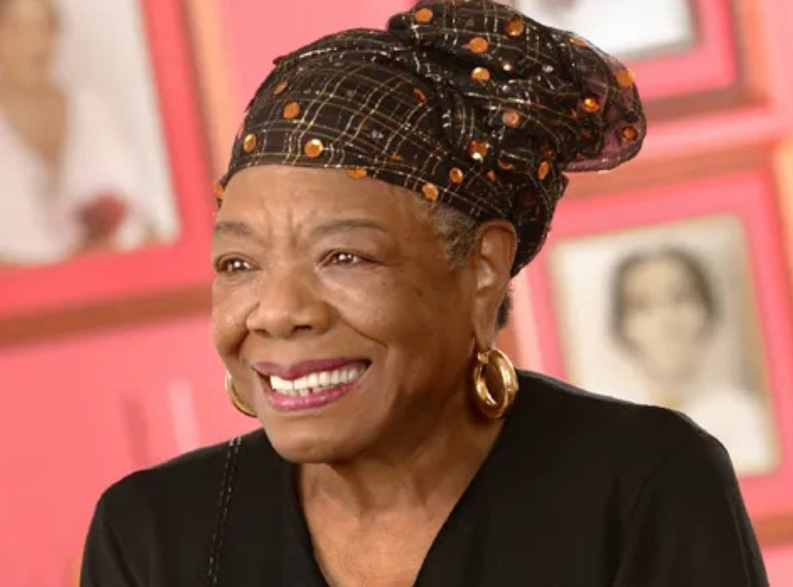
aya Angelou, legendary storyteller, dancer, singer, actress, activist, autobiographer, and – last but not least – poet, has been described as a spokesperson “for all people who are committed to raising the moral standards of living in the United States.”[1]
As President Obama pointed out when he presented Angelou with the country’s highest civilian honor, the Presidential Medal of Freedom:
By holding on even amid cruelty and loss, and then expanding to a sense of compassion, an ability to love – by holding on to her humanity, she has inspired countless others who have known injustice and misfortune in their own lives.[2]
And, her ability to inspire is why Maya Angelou is such a revered figure.

Why The Caged Bird Sings
Her autobiography I Know Why the Caged Bird Sings has a lot to say, to be sure. This work illustrates how strength of character and a love of literature transformed Angelou from a victim of racism and trauma into a woman of dignity, capable of responding to prejudice.
Despite its inspirational message, I Know Why the Caged Bird Sings is frequently challenged and banned. For, claims of “offensive language,” “LGBTQIA+ content,” “sexually explicit scenes,” and allegedly being “anti-white.”[3]
It describes her early years, and how she stopped talking after being raped when she was just seven years old. Though remaining mute for five years, she developed a love for language through reading.
When Angelou reached the age of twelve and a half, however, a woman named Mrs. Flowers got her to speak again. Mrs. Flowers explained the nature and importance of education.
She emphasized the significance of the spoken word, pointing out that “it takes the human voice to infuse [words] with the shades of deeper meaning.”[4] In doing so, Mrs. Flowers instilled a love of poetry in young Maya (Marguerite) Angelou.
And the rest, as they say, is history… one that, among other things, earned her 30 honorary degrees, got her put on both a quarter as well as a U.S. postal stamp, the National Medal of Arts, the National Medal of Freedom mentioned above, and lands Angelou in the National Women’s History Museum.
Enjoy Still I Rise, a poem that encapsulates Maya Angelou’s body of work, and the way she (as President Obama phrased it) “encouraged and stirred the souls of millions of readers.”[5]
Still I Rise
You may write me down in history
With your bitter, twisted lies,
You may trod me in the very dirt
But still, like dust, I’ll rise.
Does my sassiness upset you?
Why are you beset with gloom?
’Cause I walk like I’ve got oil wells
Pumping in my living room.
Just like moons and like suns,
With the certainty of tides,
Just like hopes springing high,
Still I’ll rise.
Did you want to see me broken?
Bowed head and lowered eyes?
Shoulders falling down like teardrops,
Weakened by my soulful cries?
Does my haughtiness offend you?
Don’t you take it awful hard
’Cause I laugh like I’ve got gold mines
Diggin’ in my own backyard.
You may shoot me with your words,
You may cut me with your eyes,
You may kill me with your hatefulness,
But still, like air, I’ll rise.
Does my sexiness upset you?
Does it come as a surprise
That I dance like I’ve got diamonds
At the meeting of my thighs?
Out of the huts of history’s shame
I rise
Up from a past that’s rooted in pain
I rise
I’m a black ocean, leaping and wide,
Welling and swelling I bear in the tide.
Leaving behind nights of terror and fear
I rise
Into a daybreak that’s wondrously clear
I rise
Bringing the gifts that my ancestors gave,
I am the dream and the hope of the slave.
I rise
I rise
I rise.
Pair this with


See Below For More Related Posts
Share This Post, Choose A Platform!
Endnotes:
[1] Neubauer, Carol E. “Maya Angelou: Self and a Song of Freedom.” In Southern Women Writers: The New Generation. Edited by Tonette Bond Inge. Yuscaloosa, Alabama: The University of Alabama Press,1990.Pg 134
Spring, Kelly A. “Maya Angelou.” National Women’s History Museum. https://www.womenshistory.org/education-resources/biographies/maya-angelou
[2] Hudson, David. “Remembering and Celebrating the Life of Dr. maya Angelou.” March 28, 2014. The White House President Barack Obama.
[3] LibGuides: Banned Books Week: I Know Why the Caged Bird Sings. Foley Library, Gonzaga University. February 26, 2026. https://researchguides.gonzaga.edu/BannedBooksWeek/IKnowWhyTheCagedBirdSings
[4] Angelou, Maya. I Know Why the caged bird sings. New York: Random House. Pg 15.
[5] Hudson, David. “Remembering and Celebrating the Life of Dr. maya Angelou.” March 28, 2014. The White House President Barack Obama.
[6] Maya Angelou. Still I Rise. Poetry Foundation. https://www.poetryfoundation.org/poems/46446/still-i-rise
Images:
Maya Angelou: drmayaangelou Instagram
Why The Caged Bird Sings: Photo by Luna Wang on Unsplash
Still I Rise: Photo by OC Gonzalez on Unsplash

Share This Post, Choose a Platform!

Stay in the know about what’s in our ever-growing treasure trove of literary goodness. And, get your free Discover Everything a Book Has to Offer packet.





Related Posts

George M. Johnson's memoir All Boys Aren’t Blue has been characterized as obscene. Here’s a breakdown of why that’s sheer nonsense.... Read More
R ay Bradbury’s iconic dystopian work Fahrenheit 451 offers compelling insights into today’s epidemic of book banning. The progression of events within the text... Read More.

Thomas Morton’s blistering satire The New English Canaan was the first book banned in the United States. Learn more about it here.... Read More
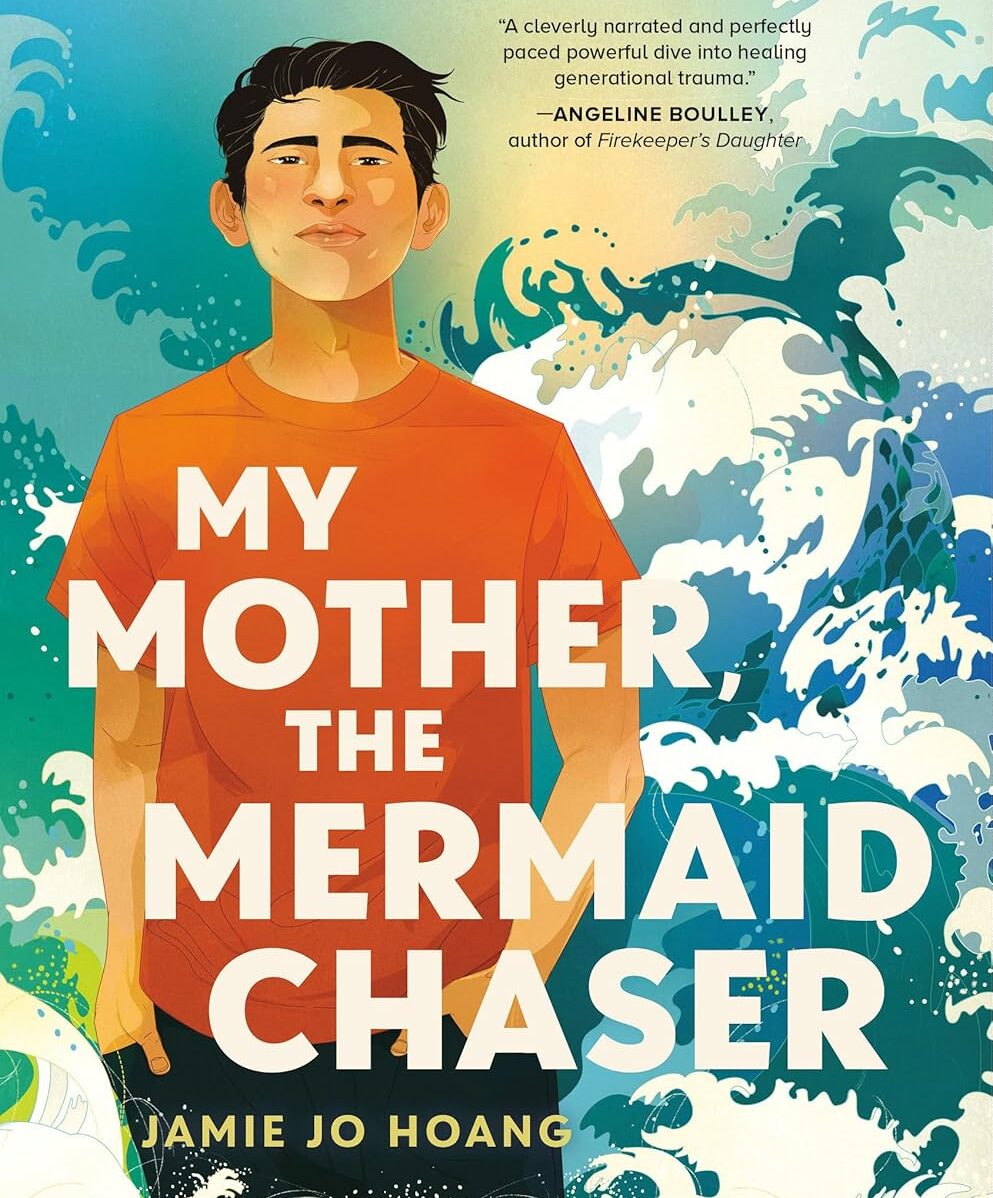
In this edition of the Power of Books Author Series we talk with Jamie Jo Hoang, author of My Mother the Mermaid Chaser. We touch on generational trauma. And, how books engender empathy and understanding, which can help break the cycle of generational trauma.... Read More