
A Boon For History Buffs: Just In Time For America’s 250th Anniversary
 H
H
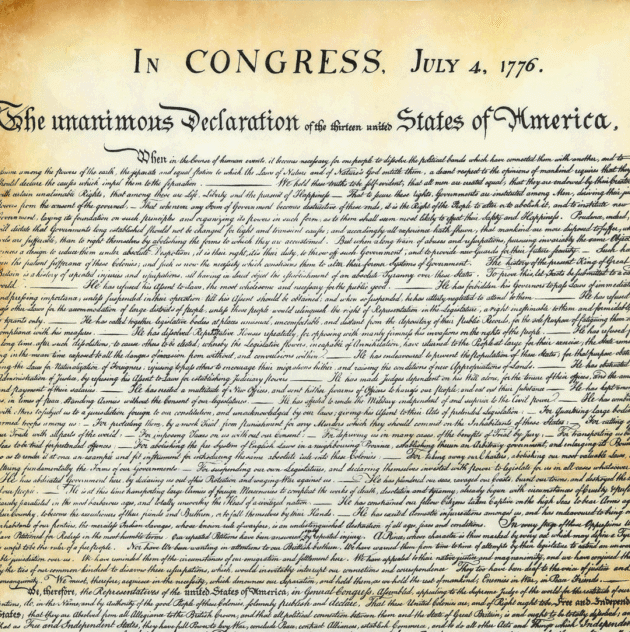
istory buffs, Humanities enthusiasts, and especially educators… this series of video lectures is right up your alley! It’s called 1776, Then and Now. And it’s right in time for America’s 250th anniversary.
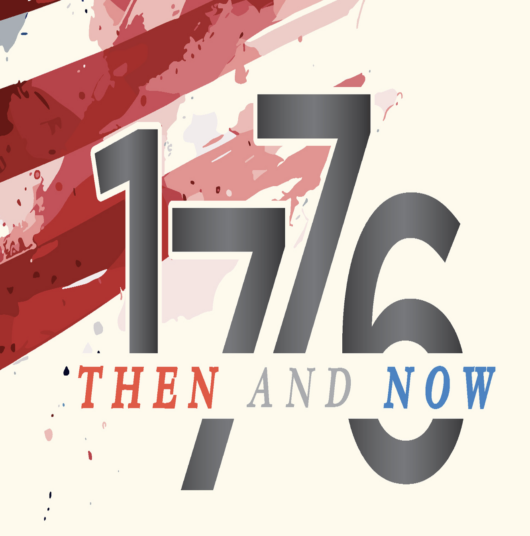
In fact, that’s precisely why the folks at The John C. Danforth Center on Religion and Politics at Washington University in St Louis put this series of lectures together. To commemorate and respond to the events of 1776 and the founding of the United States.
These talks take a look at the founding of the United States from various points of view and multiple perspectives. As well as the consequences, and continuing relevance of those events. This series of lectures examines the questions:

What happened, how did it happen, and why does it still matter? [1]
And it does so with the help of renowned scholars from around the country, as well as those who call WashU home.

It Was About
More Than Just Tea
These lectures explore all the conflicts that led colonists to challenge British authority – political, economic, imperial, as well as ideological. The participating scholars also consider how competing visions of liberty, governance, and empire shaped the path toward revolution. And the ways ordinary people experienced the escalating crisis.
Lecturing scholars expand the meaning of freedom beyond the quest for national independence. They examine how the Revolution created limitations as well as opportunities in the struggle for both personal and collective liberty by highlighting tensions between the revolutionary ideals of freedom and the realities of bondage and inequality.
We’ve all heard the United States referred to as a “Christian nation.” But participating scholars investigate the complex relationship between religion, religious diversity and emerging secular ideas in revolutionary America. Questions of pluralism, religious liberty, and the role of religion in public life are explored as well.
This series also delves into how Americans sought to define and secure rights in their new nation. The lectures analyze the way constitutional principles developed, the expansion and limits of citizenship. They also address ongoing debates about liberty, equality, and participation in public life.[2]
In Conclusion
Clearly, the points of view mentioned above still matter. Perhaps now more than ever. Unfortunately, a lot of us weren’t taught certain aspects of how the founding of the United States unfolded. Or who contributed beyond the ever-ready Minute Men.
Because until quite recently, the history of our nation has predominantly been presented to students from a single perspective – that of mythologized Founding Fathers whose sole motivation was a philosophy of equality and self-governance.
And the politically motivated book banners we’ve seen so much of lately have made it clear they’re making every effort to keep it that way. No matter whose contributions to our nation’s history they have to ban from classroom libraries and scrub from curriculums to do it.
So, broaden your understanding about the founding of the United States with this fabulous series of video lectures. What happened, how it happened, and who helped make it happen. Not to mention why having a more complete understanding of our nation’s history matters – And it does, significantly.
Pair This With

#Teacher Resources #The American Experience
Endnotes:
[1] 1776, Then and Now. John C. Danforth Center for Religion and Politics. https://rap.wustl.edu/1776-then-and-now/[2] 1776, Then and Now. John C. Danforth Center for Religion and Politics. https://rap.wustl.edu/1776-then-and-now/
Images:
A Boon for History Buffs: Photo by Aaron Burden on Unsplash
It Was About More Than Tea: Photo by petr sidorov on Unsplash
In Conclusion: Photo by petr sidorov on Unsplash

Share This Post, Choose a Platform!


Stay in the know about what’s in our ever-growing treasure trove of literary goodness. And, get your free Discover Everything a Book Has to Offer packet.







Related Posts

We talk a lot about the harm book bans cause students, but educators are also struggling. Guest writer Sarah Bland has been outspoken about the importance of self-care for teachers in this new era of extreme censorship Check out her essay. ... Read More

When we read books for more than just their surface narratives, literature and history work together. Here's a handful of resources for teachers to help students connect with the history inside literature. ... Read More

If you don't engage a book's symbolic language, you aren't getting half of what it has to offer. Like luggage, symbolism needs to be unpacked.... Read More

Stories are more than just characters and plot. They’re a collaboration between author, reader, and culture, sometimes contradictory and always symbolic. To understand them, you can’t just look at the surface—you need to dig through every layer.... Read More