
Aphorisms and Idioms: Jack Of All Trades
 J
J
ack of all trades. This idiom has deep historical roots that stretch back to medieval England. The oldest part of this phrase is the name Jack. It was widely used as a generic term for a common fellow, a laborer perhaps, or a servant during the Middle Ages. What we would call an “ordinary Joe” today.
This usage of Jack first appears in a 1390 poem by John Gower, Confessio Amantis:
Therwhile he hath his fulle packe,
They seie, ‘A good felawe is Jacke’. [1]
Not surprisingly, a lot of “Jacks” took on extra jobs outside their main trade. Hence, a Jack of all trades… someone who could turn his hand to many different tasks. So, in its earliest sense the phrase was complimentary, and praised versatility.

What Does Shakespeare
Have To Do With It?
In Elizabethan England, the phrase became associated with versatility in the theater world. Where Robert Greene, rival playwright of William Shakespeare, mocked him in a pamphlet titled Greene’s Groatworth of Wit. He referring to Shakespeare as a Johannes fac totum. That’s Latin for “John who does everything,” the direct equivalent of “Jack of all trades.”
Greene’s insult implied that Shakespeare dabbled in many theatrical roles – writing, producing, acting – without being a master of any of them. Which brings us to the second part of this idiom.
By the 17th century, “Jack of all trades” was being paired with “and master of none.” Which flips the script, rendering the expression derogatory, emphasizing a skillset that lacks specialization.[2]

Jack Of All Trades
Comes Full Circle
A more recent version of the idiom “Jack of all trades” brings things full circle. We started with everyman Jack’s ability to turn his hand at a variety of trades seen in a positive light. Then, with the addition of “and master of none,” it becomes a derogatory phrase used to emphasize a lack of expertise.
But the world is a more integrated and complicated place these days. Not to mention the fact that automation and AI have caused a lot of folks to lose the jobs they’ve spent so much time and effort specializing in.
So, it isn’t surprising that the recent addition of the phrase “but oftentimes better than a master of one” returns the idiom “Jack of all trades” to being a complimentary expression. One that recognizes the benefit of being good at many things, like ordinary Joes were all those years ago. [3]
Be Sure To Check Out More
Aphorisms And Idioms Here.

Endnotes:
[1] The Idioms. Largest Idiom Dictionary.
Book Browse: Your guide to exceptional books.
[2] The Idioms. Largest Idiom Dictionary.
Book Browse: Your guide to exceptional books.
Images:
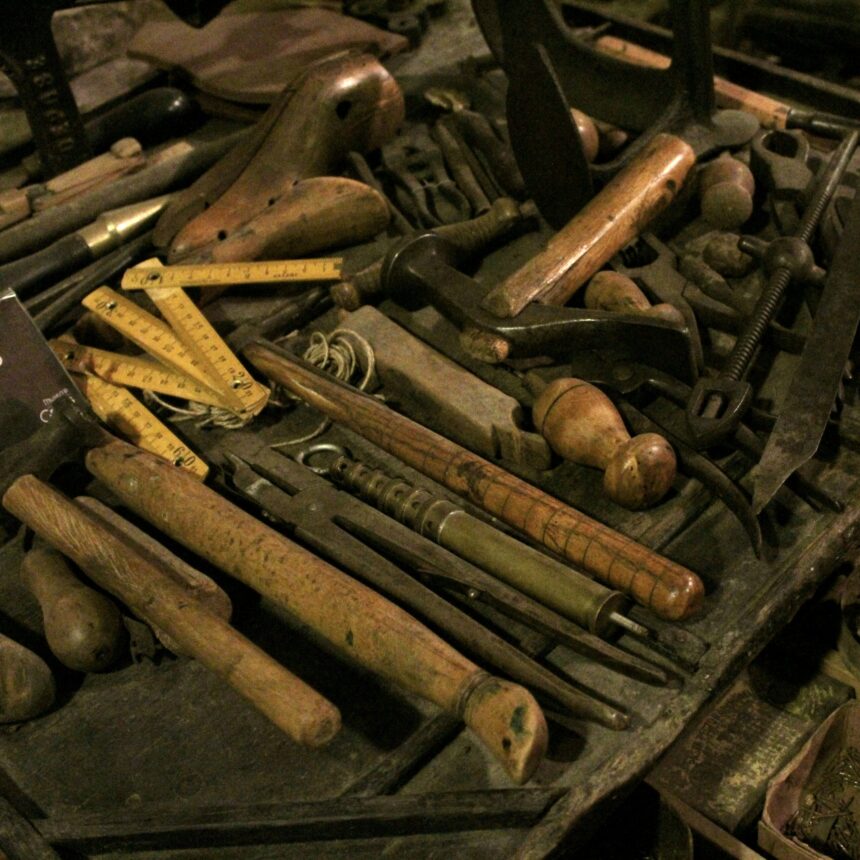
Jack Of All Trades: Photo by Maria Serna on Unsplash
What Does Shakespeare Have To Do With It: Title Page. William Shakespeare’s First Folio. Martin Droeshout, Public domain, via Wikimedia Commons
A Recent Evolution Comes Full Circle: Photo by Emilio Guzman on Unsplash

Share This Post, Choose a Platform!


Stay in the know about what’s in our ever-growing treasure trove of literary goodness. And, get your free Discover Everything a Book Has to Offer packet.













Related Posts

Starting over with “a clean slate” is thought to be the oldest known idiom. It means a fresh beginning, one free of past mistakes or failures. And It originated in The Code of Hammurabi.... Read More

Several idioms encourage us to be “nice,” including the adage “it’s nice to be important, but more important to be nice.” But “being nice” wasn’t always seen as a virtue. So what did it originally mean? And when did its meaning change? ... Read More
It’s impossible to literally “lift ourselves up by our bootstraps.” And yet, the phrase is commonly used to encourage us to power through challenges with hard work. So how did an impossible task become a call for individual grit? ... Read More
Being able to read between the lines is a valuable skill. And this idiom has roots in the centuries-old world of secret communication. How can reading between the lines benefit you?... Read More