
All Boys Aren’t Blue:
Chockfull Of Literary, Artistic, And Political Value
 A
A
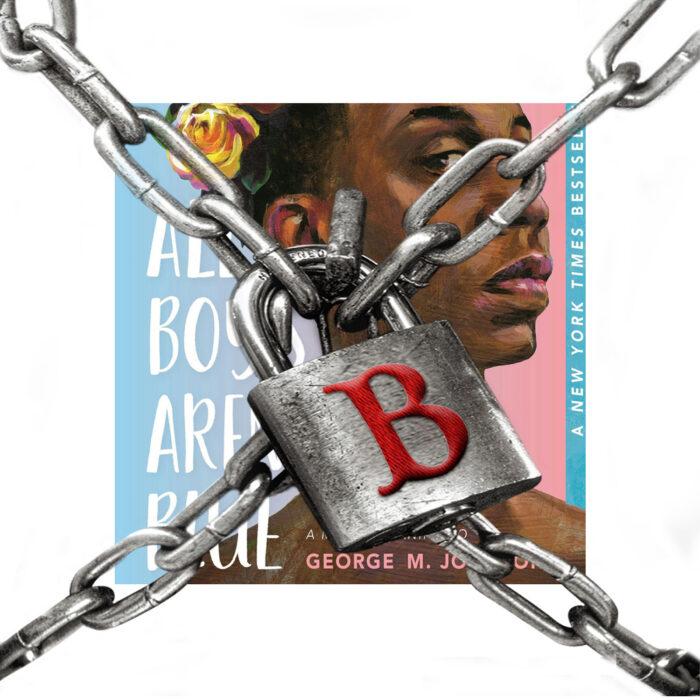
ll Boys Aren’t Blue by George M. Johnson has been described as “one of the most critical works of literature in the contemporary American cannon.”[1] Bearing this observation in mind, it’s no surprise that its string of accolades is impressive.
Johnson’s work is a New York Times and Indie Bestseller, as well as a CNN Summer Read Pick. It’s been a recommended read for Teen Vogue and Buzzfeed, a Best Book of 2020 for the New York Library, as well as the Chicago Public Library, and Kirkus Reviews.
Not to mention a place on the American Library Association’s (ALA) Rainbow List, Publisher’s Weekly’s Anti-Racist List, and the 2021 Texas Topaz Nonfiction Reading List. [2] Just to name a few of the laurels conferred upon this trailblazing work.
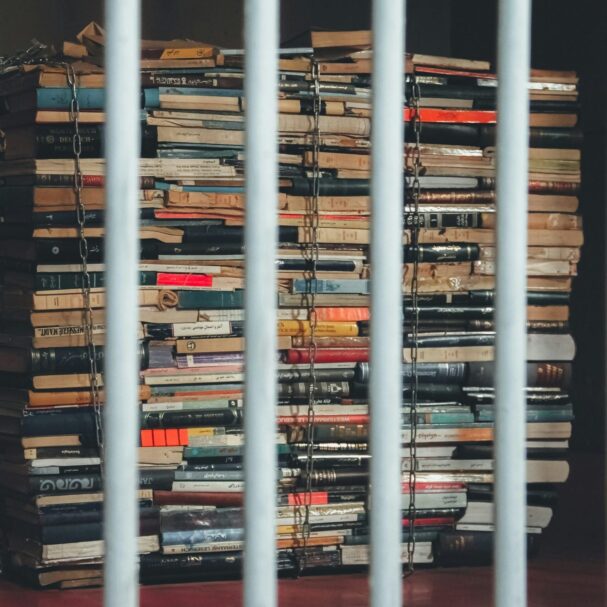
Despite this formidable resume, All Boys Aren’t Blue has appeared near the top of the ALA’s most challenged books list. It was the single most banned and challenged work of literature in America during 2024.[3] And has accrued over 100 bans as of December 2025, and counting.[4]
This turn of events isn’t an honor. Or a selling mechanism, the way many book banners try to spin it. “It’s a tragedy,” as MS NOW’s Ali Velshi rightfully describes such censorship.[5]
Why All The Banning?
In this groundbreaking young adult memoir, Johnson writes about growing up Black and queer, covering their childhood, adolescence, and early adulthood. And therein lies the problem, according to book banners. All Boys Aren’t Blue has been widely challenged and banned specifically for LGBTQ+ content, as well as passages characterized as obscene.
In fact, a school board member in Flagler County, Florida filed a criminal complaint about Johnson’s memoir. One claiming that the book’s inclusion in district school libraries violated the state’s obscenity laws.[6]
Painting All Boys Aren’t Blue as pornographic (or any other challenged book) is certainly triggering for parents. That’s undoubtedly the idea. To provoke parents into a knee-jerk reaction, not thinking past their noses and examining the work as a whole.
Not surprisingly, after a thorough investigation, the Fagler County Sheriff’s office found no violation of the state’s obscenity laws. Yet, All Boys Aren’t Blue continues to be painted as pornographic.[7] Here’s a breakdown of why that portrayal is sheer nonsense.
While at its core Johnson’s addresses intersectionality (the way multiple forms of discrimination combine in the experiences of marginalized groups or individuals), this piece speaks to the spurious allegations of obscenity that have been levied toward All Boys Aren’t Blue. Passages cited as obscene are sexual in nature. And as such, revolve around Johnson’s identity as a member of the LGBTQIAP+ community. Therefore, discussion focuses on that particular aspect of their identity.
The Miller Test
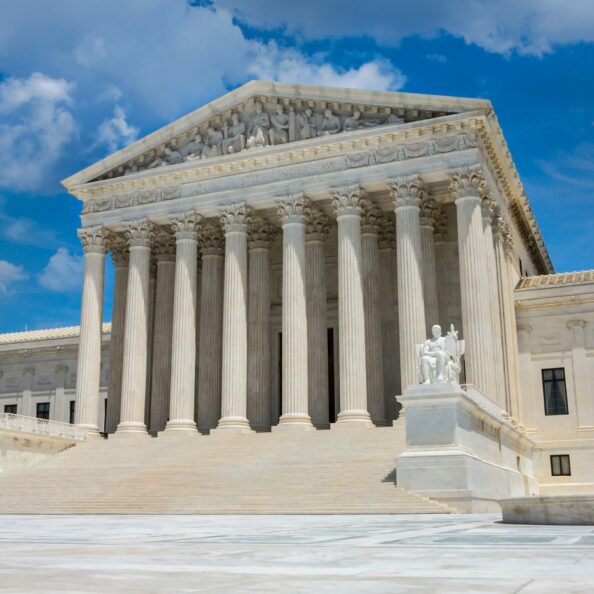
The U.S. Supreme Court has established what is known as the Miller Test, a result of three major obscenity cases: Miller v California in 1973, Smith v United States in 1977, and Pop v Illinois in 1987. It’s a litmus test for what does, and more importantly what does not constitute obscenity.
The Miller test is three-pronged, and the item in question must satisfy all three to be considered obscene:
- Whether the average person, applying contemporary adult community standards, finds that the matter, taken as a whole, appeals to prurient interests (i.e., an erotic, lascivious, abnormal, unhealthy, degrading, shameful, or morbid interest in nudity, sex, or excretion);
- Whether the average person, applying contemporary adult community standards, finds that the matter depicts or describes sexual conduct in a patently offensive way (i.e., ultimate sexual acts, normal or perverted, actual or simulated, masturbation, excretory functions, lewd exhibition of the genitals, or sado-masochistic sexual abuse); and
- Whether a reasonable person finds that the matter, taken as a whole, lacks serious literary, artistic, political, or scientific value.[8]
The Florida state statute on obscenity reiterates these conditions.[9] And as noted above, the Flagler County Sheriff’s investigation found that All Boys Aren’t Blue does not violate obscenity laws, stating:
While a portion of the book may be sexual in nature and offensive to some within the community it fails the third prong of the test. Specifically, the third prong requires when taken as a whole, it be without serious literary, artistic, political, or scientific value for minors.[10]
The report goes on to recognizes All Boys Aren’t Blue’s award-winning status and artistic value. As well as acknowledge its social, and political value to the age group impacted by the difficult subjects it deals with.

Enabling Students
To Make Intelligent Judgments
The Flagler County Sheriff’s investigation report also points out that the School Board’s guidance pertaining to instructional material states it will provide “a background of information enabling students to make intelligent judgments in their daily life.” As well as material that will “stimulate growth in ethical standards.”[11] So, let’s start there.
Johnson literally opens and closes his work with statements indicating that his intent in writing this book aligns perfectly with these mandates. Which are not only espoused by the Flagler County school board, but within educational organizations nationwide.[12]
The opening paragraphs of All Boys Aren’t Blue are:
In writing this book, I wanted to be as authentic and truthful about my experience as possible. I wanted my story to be told in totality: the good, the bad, and the things I was always too afraid to talk about publicly. This meant going to places and discussing some subjects that are often kept away from teens for fear of them being “too heavy.”
But the truth of the matter is, these things happened to me when I was a child, teenager, and young adult. So as heavy as these subjects may be, it is necessary that they are not only told, but also read by teens who may have to navigate many of these same experiences in their own lives.[13]
The work’s Afterward section bookends this sentiment with the following passage:
I released the deepest and darkest things about my past in the hopes that someone might see a reflection of themselves in the words and know that they are not alone, and they too can grow and thrive. And so that they may not make the many missteps I took along the road.[14]
In other words, Johnson is providing information that will help readers make intelligent judgments in their daily lives.
But as supporters of All Boys Aren’t Blue point out (and has proven to be the case in the aforementioned criminal investigation), those challenging this book (as well as a significant number of other targeted books) typically haven’t read it in its entirety. Rather, they strip the challenged passages from their broader context. So, these book banners never see passages like those opening and closing Johnson’s work.
And then there are the passages within the challenge that have been characterized as obscene. Very often, those passages revolve around consent, and boundary enforcement, reflecting on why both are critical. Such a discussion is completely in line with school boards’ responsibility to provide material that will “stimulate growth in ethical standards.”
In an interview with FlaglerLive, Johnson gave the following warning about the banning of his book:
Removing my book doesn’t mean that your child won’t still have experiences with the topics I discuss in my book. It simply means they won’t know how to deal with those situations when they happen. And you’ll have no one to blame but yourself.[15]
The Political Value
Within All Boys Aren’t Blue
George M. Johnson attests that his life is led by Toni Morrison’s admonition, “if there’s a book that you want to read and it hasn’t been written yet, then you must write it.” Johnson goes on to say that they followed Morrison’s sage advice, and wrote the book they wish they had been able to have as a young person struggling “to navigate a society that wasn’t built for me.”[16]
Elaborating, Johnson notes:
In writing this, though, I realized that I wasn’t just telling my story. I was telling the story of millions of queer people who never got a chance to tell theirs… It became less about being a guide and more about being the gateway for more people to find their truth and find their power to live in that truth.[17]
They further assert:
I’m always talking about how this queer community has the chance to be the blueprint. We get to set the stage for the next generation that will come up behind us. We don’t have to be so easily accepting of the norms we were forced to follow. We get to try them out and if they don’t work, create something new.[18]
Johnson also addresses the flip side of the proverbial coin. Clearly speaking to the straight, male teen that U.S. curriculums are heavily geared toward, they declare:
I hope this book will open you up to understanding the people you may have never spoken to because of their differences from you. We are not as different as you think, and all our stories matter and deserve to be celebrated and told.[19]
All Boys Aren’t Blue fiercely advocates for the LGBTQIAP+ community. And clearly pushes back against hegemonic norms, making the act of recording marginalized history a form of resistance and political activism.
In fact, Johnson specifically states that they chose to do a memoir targeting young adults because they felt doing so would be more beneficial in “creating some actual changes in the systems that we have in place today.”[20] There’s no question that All Boys Aren’t Blue contains political value.
The Scientific/Informational Value
Within All Boys Aren’t Blue
Johnson’s work has been described as reading like a textbook in some areas. One that interviewer Petra Mayer wished she had “as a kid.”[21] Johnson acknowledges that an element of his work revolves around “sexual education:”[22]
The notion that keeping vital information from people who will then learn through trial and error is a disservice to young adults everywhere. If knowledge is power, then give them the damn information. And if folks won’t do it, then I will.[23]
Johnson points out that they’re also teaching kids about not feeling guilty when sexual abuse happens. And more importantly, how to recognize sexual abuse. Speaking from experience, they contend most teens don’t even recognize that what is happening to them is abuse. They also address how to fight back against such traumas, those “you can hold on to for so very long.”[24] Johnson sums it up with the assertion:
Children still have to exist in a world full of these heavy topics, and are going to be affected by them whether they read the book or not. Having [this] book though, gives them the tools, the language, the resources and the education so that when they are having to deal with a heavy topic, they have a roadmap for how to handle it.[25]
The most challenged passages in All Boys Aren’t Blue fall into this category. They’re a detailed telling of sexual experiences, both consensual and sexual assault. But as the ParentsPick database notes, these scenarios are “not presented in an erotic manner.”[26] Rather, they’re presented in a “just the facts” way, used to inform the life lessons mentioned above. Yet another reason Johnson’s work is not obscenity.
The Literary Significance
Of All Boys Aren’t Blue
Johnson describes All Boys Aren’t Blue as a memoir-manifesto. Merging personal, coming of age storytelling with a sociopolitical manifesto, Johnson’s work has been described as “a game changer” for the young adult memoir genre.[27]
So often, a manifesto has negative connotations. We tend to only hear about them regarding people like the Unabomber, perpetrators of mass shootings, or The Communist Manifesto that was used to frighten people during the Cold War. But what is a manifesto, really?
A manifesto is a written declaration explaining the core beliefs, goals and intentions of the issuer. In this case George M. Johnson, whose memoir relates “the struggles of Black men and queer men and people who exist at the intersection of both identities.”[28]
Johnson sets up issues they’re addressing by pointing out:
Unfortunately, we are still struggling to move the conversation past an assumed identity at birth. And LGBTQIAP+ people are not just fighting for the right to self-identify and be accepted in a society that is predominantly composed of two genders – which would be the bare minimum of acceptance. We are also fighting to survive physical acts of violence. Many of us are not even surviving that.[29]
Then Johnson shifts to manifesto mode, with the statement:
I believe that the dominant society establishes an idea of what normal” is simply to suppress differences, which means that any of us who fall outside of their “normal” will eventually be oppressed.[30]
The call to action within manifestos can be seen in Johnson’s appeal for this generation to refrain from accepting the norms they were forced to follow. A message that is integrated into their storytelling.
An exhortation to young Black queer readers to not only find their truth, but the power to live in that truth. And become the blueprint mentioned above for future generations of those who live at the intersection of Black and queer identities.
Other readers, as noted above, are called to better understand the people they may never have spoken to because of their differences from them. Which opens the door to reflecting times they may have been the enemy in someone else’s truth. Or harmed a group they had more power than (inadvertently or otherwise). To do the work of changing their actions.[31]

All Boys Aren’t Blue’s
Literary Merit
All Boys Aren’t Blue possesses a high degree of literary merit through its lyrical essayistic style, and the unflinching emotional vulnerability that creates deep empathy.
The book’s episodic structure mimics the impressionistic, scattered nature of memory itself. The fragmented way memories are recalled, rather than in a linear narrative. Which emphasizes the complexity of personal history and identity. Writing in this manner allows the reader to experience the significance and emotional weight of each memory.
And Johnson’s prose captures the interiority of feeling “othered” even before having the vocabulary to articulate it:
By that age [five years old] I already knew I was different, even though I didn’t have the language to explain it or maturity to understand fully what “different” meant. I wasn’t gravitating toward typical boy things, like sports, trucks, and so on. I liked baby dolls and doing hair. I could sense that the feelings I had inside of me weren’t “right” by society’s standards either…[32]
On the topic of “coming out,” Johnson writes with unfiltered frankness:
It was somewhat devastating that I had planned so long to have my moment, and was still not ready for it. We see coming-out stories all the time. Some for the better, many for the worse. What we don’t get to see is what led up to that moment. How many times a person tried to push past that barrier to get to that point.
Notice my varying confidence and discouragement throughout this chapter. Notice my confusion in how strong I was in some moments and how weak I was in others, because that is what coming out truly is. It is not a final thing. It’s something that is ever occurring.[33]
Johnson’s radical openness when talking about “coming out” is enlightening for all readers, regardless of whether they happen to be queer or heteronormative. If there’s any doubt about that, just ask any of the students who have protested the removal All Boys Aren’t Blue from school library shelves.[34]
In Conclusion
All Boys Aren’t Blue is a beautifully written, empowering piece of literature. One that has changed the landscape of young adult memoirs. Unlike the policy violating pornography that book banning school board members characterize it as, Johnson’s work is chockfull of literary, artistic, and political value.
And it actually upholds the educational guidelines set forth by school boards and their supporting organizations across the country. It is indeed one of the most critical works of literature in the contemporary American cannon.

#Banned Books #published in 2020s
Share This Post, Choose a Platform!
Endnotes:
[1] Velshi Banned Book Club: Revisiting “All Boys Aren’t Blue” by George M. Johnson. MSNOW
[2] Thimakis, Nia. “All Boys Aren’t Blue, a 2021 Top Ten Title.” Intellectual Freedom Blog Office for Intellectual Freedom of the American Library Association. April 27, 2022.
[3] Velshi Banned Book Club: Revisiting “All Boys Aren’t Blue” by George M. Johnson. MSNOW.
[4] Tolin, Lisa. “Top 52 Banned Books: The Most Banned Books in U.S. Schools.” PenAmerica. December 16, 2025.
[5] Velshi Banned Book Club: Revisiting “All Boys Aren’t Blue” by George M. Johnson. MSNOW.
[6] Flagler County Sheriff’s Office Investigative Report Case #: 2021-100272.
[7] Hicks, David.“USD 450 rejects parents’ concerns over inappropriate library books.” The Sentinel. March 23, 2022.
[8] “Citizen’s Guide To U.S. Federal Law On Obscenity.”
[9] 2021 Florida Statutes (Including 2021B Session) 847.001 (6)
[10] Flagler County Sheriff’s Office Investigative Report Case #: 2021-100272. Pg 21.
[11] Flagler County Sheriff’s Office Investigative Report Case #: 2021-100272. Pg 19.
[12] Great Schools Partnership. Instructional & Library Materials Policy Exemplar.
[13] Johnson, George M. All Boys Aren’t Blue. New York: Farrar Straus Giroux, 2020. Pg vii.
[14] Johnson, George M. All Boys Aren’t Blue. New York: Farrar Straus Giroux, 2020. Pg 295.
[15] McMillan, Brian. “Johnson’s ‘All Boys Aren’t Blue’ is brave, important, empathetic—and Rated-R.” Observer. November 17, 2021.
[16] “Their Memoir Has Been Removed From School Libraries In 8 States.” Massnews.com November 18, 2021.
[17] Johnson, George M. All Boys Aren’t Blue. New York: Farrar Straus Giroux, 2020. Pg 14
[18] Johnson, George M. All Boys Aren’t Blue. New York: Farrar Straus Giroux, 2020. Pg 296.
[19] Johnson, George M. All Boys Aren’t Blue. New York: Farrar Straus Giroux, 2020. Pg ix
[20] Anderson, Tre’vell. “Exclusive: George M. Johnson Reveals The Cover of His Memoir.”
Out.com. June 6, 2019.
[21] Mayer, Petra. “’Give Them The Damn Information’: Questions For George M. Johnson.” St. Louis Public Radio. May 2, 2020.
[22] Carlisle, Madeleine. “Their Memoir Has Been Removed From School Libraries In 8 States. This Black Queer Author Is Fighting Back.” Time.com Nov 18, 2021
[23] Mayer, Petra. “’Give Them The Damn Information’: Questions For George M. Johnson.” St. Louis Public Radio. May 2, 2020.
[24] Carlisle, Madeleine. “Their Memoir Has Been Removed From School Libraries In 8 States. This Black Queer Author Is Fighting Back.” Time.com Nov 18, 2021
[25] Carlisle, Madeleine. “Their Memoir Has Been Removed From School Libraries In 8 States. This Black Queer Author Is Fighting Back.” Time.com Nov 18, 2021
[26] “Why is All Boys Aren’t Blue Banned? A Factual Content Breakdown.” ParentsPick.com March 9, 2026
[27] Fidan, Neyla. “George M. Johnson’s Memoir ‘All Boys Aren’t Blue’ Redefines Acceptance for Queer Youth in America.” Artshelp.com
[28] Johnson, George M. All Boys Aren’t Blue. New York: Farrar Straus Giroux, 2020. Pg 6
[29] Johnson, George M. All Boys Aren’t Blue. New York: Farrar Straus Giroux, 2020. Pg 4.
[30] Johnson, George M. All Boys Aren’t Blue. New York: Farrar Straus Giroux, 2020. Pg 6
[31] Mayer, Petra. “’Give Them The Damn Information’: Questions For George M. Johnson.” St. Louis Public Radio. May 2, 2020.
[32] Johnson, George M. All Boys Aren’t Blue. New York: Farrar Straus Giroux, 2020. Pg 22-23
[33] Johnson, George M. All Boys Aren’t Blue. New York: Farrar Straus Giroux, 2020. Pg 237
[34] Woronoff, Brent. “School Board member Jill Woolbright turns to Sheriff’s Office over ‘obscene’ book at schools.” Observerlocalnews.com November 11, 2021.
Images:
Why All The Banning: Photo by Khashayar Kouchpeydeh on Unsplash
The Miller Test: Photo by Fine Photographics on Unsplash
Enabling Students To Make Intelligent Judgments: Photo by LinkedIn Sales Solutions on Unsplash
The Political Value Within All Boys Aren’t Blue: Photo by Sean Robertson on Unsplash
The Scientific/Informational Value within All Boys Aren’t Blue: Photo by Niamat Ullah on Unsplash
The Literary Significance Of All Boys Aren’t Blue: Photo by Prateek Katyal on Unsplash
All Boys Aren’t Blue’s Literary Merit: Photo by Anne Nygård on Unsplash
In Conclusion: Photo by Sebastian Schuster on Unsplash

Share This Post, Choose a Platform!

Stay in the know about what’s in our ever-growing treasure trove of literary goodness. And, get your free Discover Everything a Book Has to Offer packet.






Related Posts

R ay Bradbury’s iconic dystopian work Fahrenheit 451 offers compelling insights into today’s epidemic of book banning. The progression of events within the text... Read More.

Thomas Morton’s blistering satire The New English Canaan was the first book banned in the United States. Learn more about it here.... Read More
Banned due to the social issues it addresses, Cisneros' work tells the culturally significant story of Esperanza as she comes of age in the Hispanic quarter of Chicago.... Read More
Hispanic Heritage Month takes place every year from September 15th to October 15th. For those looking to celebrate with a book, we’re highlighting some challenged and banned titles written by Hispanic authors.... Read More