
Let’s Talk Turkey: The Real Story Of The First Thanksgiving is Banned.

 T
T
hanksgiving is just around the corner! So, let’s Talk Turkey, as the saying goes. The actual story of the first Thanksgiving is banned.
This holiday typically revolves around a roasted Turkey with all the trimmings (whatever scrumptious morsels that might include at your house). And as we learned in school, it commemorates a Day of Thanksgiving observed by the Pilgrims in 1621, one celebrating a successful harvest… not to mention the fact that they survived a harsh first year after landing on Plymouth Rock.
Historian David Silverman sums up the story of the first Thanksgiving that virtually all of us were taught as kids like this:
The myth is that friendly Indians, unidentified by tribe, welcome the Pilgrims to America, teach them how to live in this new place, sit down to dinner with them and then disappear. They hand off America to white people so they can create a great nation dedicated to liberty, opportunity and Christianity for the rest of the world to profit. That’s the story — it’s about Native people conceding to colonialism. It’s bloodless and in many ways an extension of the ideology of Manifest Destiny.” [1]
.
What really happened around the first Thanksgiving, however, is much more nuanced, and a lot more complicated than this version — which was clearly written from a colonist perspective, and obviously with no Native American input.
That is why it’s important for Indigenous peoples to write their own stories – to counter damaging narratives written about them by non-Indigenous people, and correct historical inaccuracies.
Unfortunately, efforts toward a full understanding of our country’s history are systematically being squashed. From the book banning that targets works about any sort of diversity, to the curriculum scrubbing that nullifies teaching about race and ethnicity at all levels of education, to the dismantling of the Department of Education itself.
Which is why books like If You Lived During the Plimoth Thanksgiving, written by Chris Newell (a proud citizen of the Passamaquoddy Tribe), are essential. This book may have been designed with elementary and middle schoolers in mind, but anyone interested in learning facts about the first Thanksgiving will gain new knowledge.
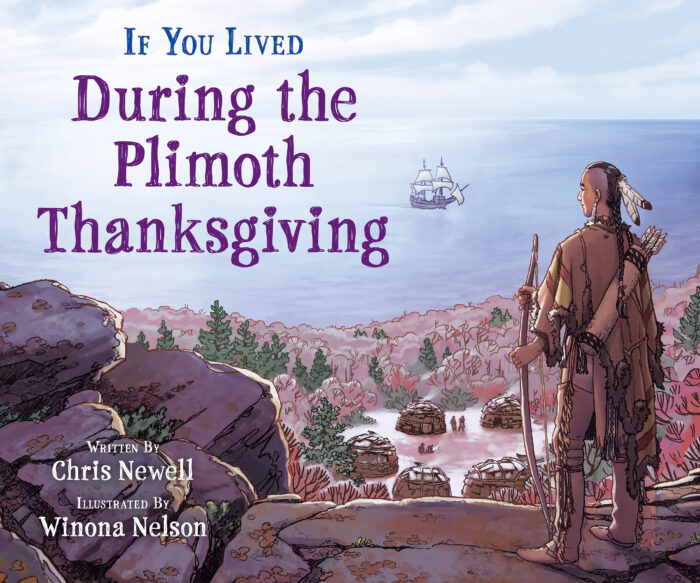
In a recent interview, Newell talks about the uninformed questions he frequently fielded during his tenure as Education Supervisor at the Mashantucket Pequot Museum and Research Center in Maine. The erasure of indigenous peoples’ role in early American history is so complete that Newell would get questions like “are the Pequots still alive?” [2]
This is the type of widespread misinformation his book addresses. Effective education about events like the first Thanksgiving requires moving beyond a singular, colonist-focused view to one that includes multiple perspectives. In this case, the Indigenous viewpoint in particular given the significance of their role in the first Thanksgiving.
That is what Newell has set out to do in If You Lived During the Plimoth Thanksgiving. He exposes truths about this major American holiday that have been suppressed, beginning with the original spelling of Plimoth (as opposed to Plymouth).
He addresses unexplored subjects like epidemics brought by European settlers that decimated Indigenous communities, the enslavement of Indigenous people by English colonists, and the loss of land associated with European contact.
And, he doesn’t restrict his outlook to the first Thanksgiving. Newell also casts a proverbial eye beyond the dialog where other writings leave off, with questions like: “How and when did Thanksgiving become a national holiday?” “Do Indigenous peoples celebrate Thanksgiving?” He also poses the very important question, “what are holidays that honor Native history?”[3]
So, before you sit down to whatever delicious foods make up the Thanksgiving feast at your house, be sure to check out If You Lived During the Plimoth Thanksgiving. And, have a heaping helping of Thanksgiving history to offset the myth we were fed as children.
Pair this with
It’s Native American Heritage Month:
Shining a spotlight on Zitkála-Šá
and

#Benefits of Humanities #Celebrations #The American Experience
Endnotes:
[1] Bugos, Claire. “The Myths of the Thanksgiving Story and the Lasting Damage They Imbue.” Smithsonian Magazine. November 26, 2019. https://www.smithsonianmag.com/history/thanksgiving-myth-and-what-we-should-be-teaching-kids-180973655/
[2] If You Lived During the Plimoth Thanksgiving by Christopher Newell, Conversation Club, Nov. 18, 2021
[3] Zotigh, Dennis. “’If You Lived During the Plimoth Thanksgiving.’” By Chris Newell Exposes New Truths About a Major American Holiday.” Smithsonian magazine, November 23, 2021. https://www.smithsonianmag.com/blogs/national-museum-american-indian/2021/11/23/if-you-lived-during-the-plimoth-thanksgiving-by-chris-newell-exposes-new-truths-about-a-major-american-holiday/
“Native-American Slavery in New England.” New England Historical Society. https://newenglandhistoricalsociety.com/native-american-slavery-in-new-england/
.
Images:
The First Thanksgiving by Jean Leon Gerome Ferris. Public Domain Library of Congress. ID cph.3g04961

Share This Post, Choose a Platform!
Stay in the know about what’s in our ever-growing treasure trove of literary goodness. And, get your free Discover Everything a Book Has to Offer packet.




Related Posts

Why study literature? Why read fiction? Why spend one’s life teaching it? What’s the point? Guest essayist Abram Van Engen offers some insight into those questions.... Read More
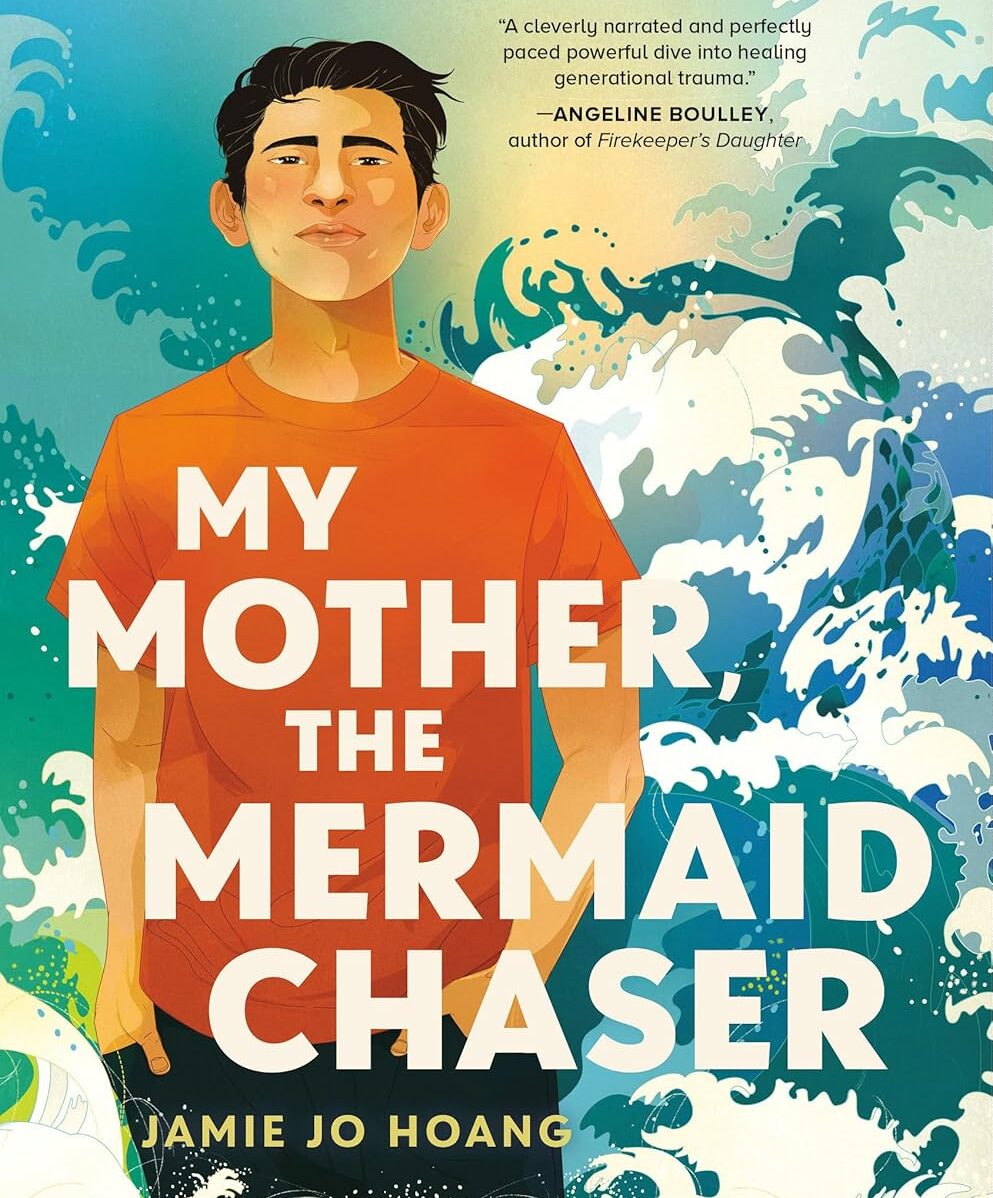
In this edition of the Power of Books Author Series we talk with Jamie Jo Hoang, author of My Mother the Mermaid Chaser. We touch on generational trauma. And, how books engender empathy and understanding, which can help break the cycle of generational trauma.... Read More
Hispanic Heritage Month takes place every year from September 15th to October 15th. For those looking to celebrate with a book, we’re highlighting some challenged and banned titles written by Hispanic authors.... Read More

The more that you read, the more things that you'll know. The more that you learn, the more places you'll go. This aphorism may come from Dr. Seuss, but the wisdom it contains isn't just for kids. ... Read More