
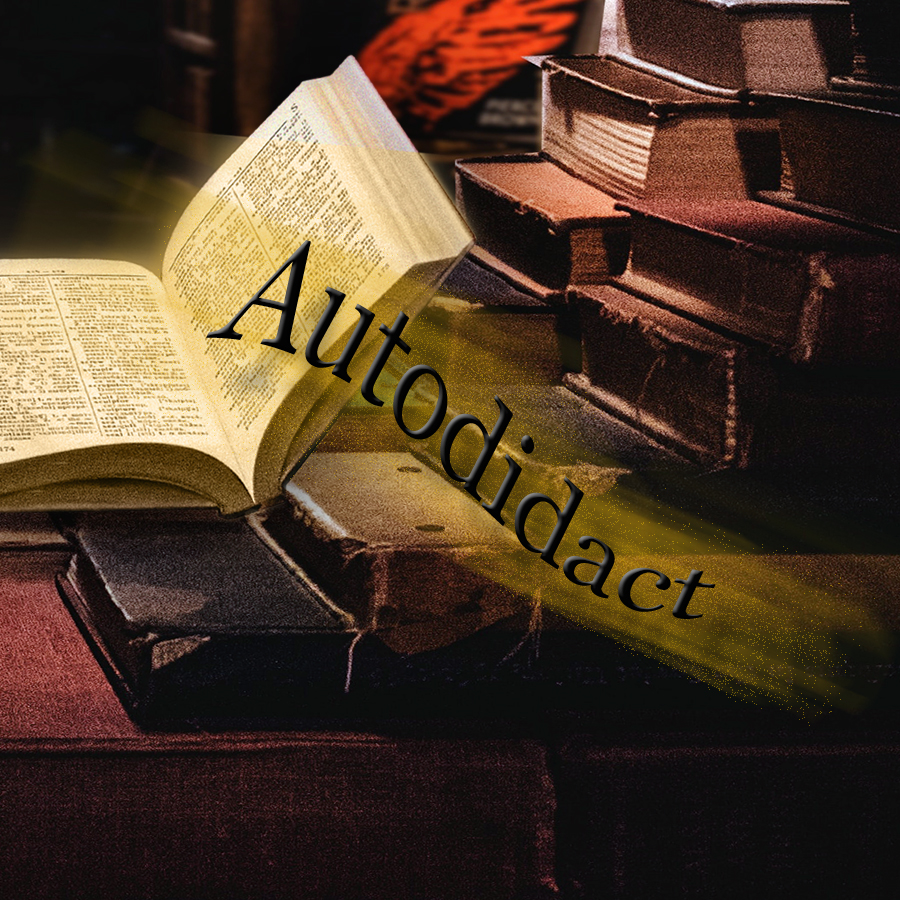
This Week’s Fun & Fancy Word: Autodidact!
 D
o you suffer from autodidactism? Do you have an insatiable thirst for knowledge? Do you take pleasure in learning everything you can about things you are interested in? Are you a self-learner? If so, congratulations, you are an autodidact — a person who teaches themselves.
Etymology:
Origin Of The Word Autodidact
The word autodidact comes from the Greek autodidaktos, which combines auto, meaning self, and didaktos, meaning taught. This term emerged in ancient Greece, where philosophers frequently emphasized the importance of self-directed learning as well as formal instruction.
The word was adopted by the English language in the mid-17th century, during a period when self-education became increasingly valued among intellectual circles. [1]
And FYI, Isaac Newton, Leonardo Da Vinci, Charles Darwin, Albert Einstein, Thomas Edison, and Nikola Tesla were all autodidacts. Not to mention Mark Twain, Charles Dickens, Ernest Hemingway, Ray Bradbury, John Steinbeck, Herman Melville.
Then there’s Noel Coward, Bob Dylan, Jimi Hendrix, David Bowie, and Bruce Springsteen. And let’s not forget Benjamin Franklin, and Abraham Lincoln. [2] Perhaps you can add yourself to this list of heavy-hitters.
Find A Caboodle
Of Fun & Fancy Words Here.


Share This Post, Choose a Platform!

Stay in the know about what’s in our ever-growing treasure trove of literary goodness. And, get your free Discover Everything a Book Has to Offer packet.








Related Posts
You might use the word banjaxed, if a weasel ran in front of your bicycle when you were on your way to the market. And you crashed into a tree when you swerved to miss the little critter. So, now your beautiful bike is banjaxed.... Read More

This Week's Fun & Fancy Word Is: You definitely want to avoid having one of these in your library or bookstore. Because a... Read More.

It’s the perfect Fun & Fancy word for Banned Books Week. Don't worry, it's a treatable condition.... Read More
No, gobsmacked isn't a never-ending candy made by Willy Wonka. It's British slang. But, what is vernacular for? ... Read More
