Aphorisms And Idioms: Anyone Who Stops Learning Is Old

 A
A
nyone who stops learning is old. This aphorism comes from Henry Ford… you know, founder of the Ford Motor company. Ford went on to say that this is the case whether we choose to stop learning “at twenty or at eighty.”[1]
Ford was clearly making a distinction between biological age and mental or cognitive age. Needless to say, biological age is fixed and only runs in one direction. Intellectual age, on the other hand, is determined by whether or not we’re still learning.
As Ford points out:
Anyone who is satisfied with the progress that he is making or is inclined to be thankful for having arrived at his present position is old.[2]
Bearing that in mind, a twenty-five-year-old who feels they know everything they need to know is, in a meaningful sense, old. Their thinking is closed. And new information is filtered through existing conclusions rather than genuinely considered on its own terms.
There may be comfort in such certainty. And revising long held positions may be more uncomfortable than simply reinforcing what we already believe. But a sixty-five-year-old who engages new perspectives, and is still interested in how things work continues to be young in the way that matters most.
And it’s important to note that learning doesn’t end with school. Nor is it limited to academic work. Learning is simply acquiring new information, and continuing to be curious about things we don’t understand… yet, that is.
This aphorism offers a way of understanding what it means to be alive and engaged in the world. Because our mind’s vitality isn’t determined by age but by a choice, one made repeatedly over the course of our lifetime. And that choice is to remain open to what the world has to show us.[3]

Practically Speaking
There are also practical reasons for cultivating a lifelong learning mindset. As Ford further states:
Anyone who keeps on learning not only remains young but becomes constantly more valuable regardless of physical capacity.[4]
In our ever-evolving world, skills can become obsolete pretty fast. How many times have you heard about the ways automation and AI are replacing human employees? Quite a few, I’d wager.
Adapting to such rapid change, and acquiring new skills is crucial for success. Employers aren’t looking for the “perfect professional.” Rather, they’re seeking individuals who are able to adapt to changing conditions and become experts over the course of their job-related learning.
And embracing shifting industry trends, new technologies, and innovative ideas is more manageable for those who prioritize continuous education. In short, individuals who continuously add to their knowledge and improve their skills keep them relevant as the world advances.[4]
Learning New Things
Keeps Your Brain Young
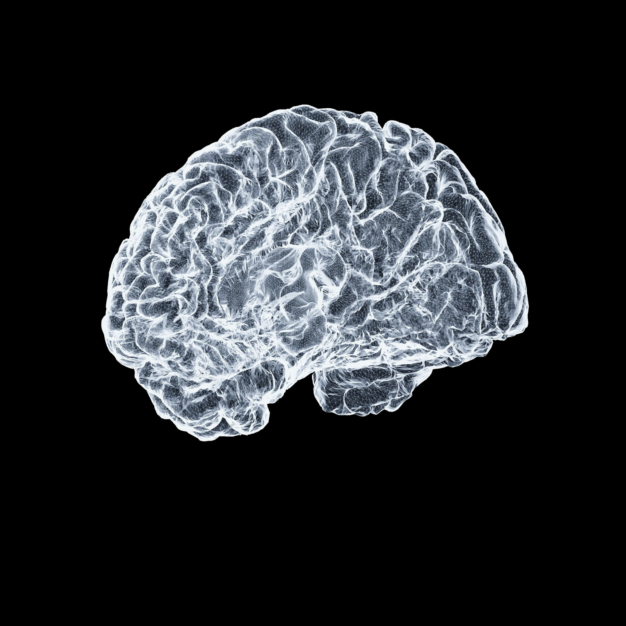
Research shows that learning new thing actually keeps our brains young. Unlike other organs, our brains are capable of creating new nerve pathways in certain areas throughout our lifetime. And learning new things is what forms the new neural connections that keep our brains young. [6]
And reading can play a big part in forming new neural connections. In fact, literacy has been found to be the most potent tool for cognitive enhancement available to us human beings. Because it drives “structural upgrades” across multiple neural networks in our brain.[7]
Reading isn’t simply a means of receiving information. It’s a profound neurological catalyst. One that fundamentally rewires memory, attention, executive reasoning, and visual perception.[8]
So, pick up a book. They’re a veritable fountain of youth. Create new neural connections by learning about people whose lives are different than your own, places you’ve never seen, and things you never thought about before. And stay mentally young, whether you’re twenty or eighty.
Be Sure To Check Out More
Aphorisms And Idioms Here.

Share This Post, Choose A Platform!
Endnotes:
[1] Ford, Henry. Moving Forward. London: William Heineman Ltd, 1931. Pg 89.
[2] Ford, Henry. Moving Forward. London: William Heineman Ltd, 1931. Pg 89-90.
[3]Quote of the day by Henry Ford: “Anyone who stops learning is old, whether…” Times of India. June 17, 2026.
[4] Ford, Henry. Moving Forward. London: William Heineman Ltd, 1931. Pg 89.
[5] “Adapt and thrive: Lifelong learning as a key to success.” Do Better by Esade. January 2024.
“From Curiosity to Success: Why We All Should Embrace Lifelong Learning.” Mississippi State University.
Sterling, Christa. “The Value of Lifelong Learning.” Central Connecticut State University.
[6] “Anyone who keeps learning stays young – Henry Ford and Research.” Medium.com August 17, 2017.
Jennifer Fisher, MMSc, PA-C. “Tips to leverage neuroplasticity to maintain cognitive fitness as you age.” Harvard Health Publishing: Harvard Medical School. April 2, 2025.
[7] “Reading Is the Ultimate Cognitive Enhancer.” Neurosciencenews.com June 27, 2026.
[8] “Reading Is the Ultimate Cognitive Enhancer.” Neurosciencenews.com June 27, 2026.
Images:
Anyone Who Stops Learning Is Old: Photo by D Wagonered on Unsplash.com
Practically Speaking: Photo by Laura Ockel on Unsplash
Learning New Things Keeps Our Brains Young: Photo by Shawn Day on Unsplash

Share This Post, Choose a Platform!


Stay in the know about what’s in our ever-growing treasure trove of literary goodness. And, get your free Discover Everything a Book Has to Offer packet.








Related Posts
Being able to read between the lines is a valuable skill. And this idiom has roots in the centuries-old world of secret communication. How can reading between the lines benefit you?... Read More

Flying by the seat of your pants. What does this idiom mean? Where did it come from? And how far can doing so take you? ... Read More

Nothing in life is to be feared, it is only to be understood. Spoken by one of history’s greatest scientists, Marie Curie’s timeless words continue to inspire people across generations.... Read More

The more that you read, the more things that you'll know. The more that you learn, the more places you'll go. This aphorism may come from Dr. Seuss, but the wisdom it contains isn't just for kids. ... Read More