
Murders in the Rue Morgue: What Does Sherlock Holmes Have to Do With It?
 W
W
hat’s the first thing you think of when you hear the name Edgar Allan Poe? The Raven, The Tell Tale Heart, or The Black Cat? Pretty grim stuff, wouldn’t you say?
Edgar Allan Poe is considered the essential author of a genre known as Dark Romanticism. Other Dark Romance authors include Nathaniel Hawthorne, known for gloomy works like The House of the Seven Gables, Young Goodman Brown, The Devil in Manuscript, not to mention The Scarlet Letter. And, then there’s Herman Melville and Emily Dickinson, also known for their less than chipper subject matter.
Dark Romanticism is a sub-genre of Romanticism, which is a response to the Enlightenment’s unwavering faith in logic, reason, and individualism. While Romanticism isn’t an outright rejection of Enlightenment thought, it emphasizes emotional experience, human interconnectedness, as well as a connection to nature.[1]
And Dark Romanticism, needless to say, explores the darker aspects of human experience.
Dark Romanticism, A Counterpoint
To Transcendentalism.
Dark Romanticism emerged as a counterpoint to the mid-nineteenth century philosophical and literary movement known as Transcendentalism.
The key tenet of Transcendentalism is human perfectibility, toward an ideal spiritual state that “transcends” the physical (hence the term Transcendentalism).[2] And, the idealistic thought of Transcendentalist writers such as Ralph Waldo Emerson, Henry David Thoreau, and Walt Whitman is grounded in this belief in the innate goodness of humanity.[3]
Dark Romanticism, on the other hand, acknowledges the shadow side of human nature, with the capacity for moral failure, and self-destruction.[4] You undoubtedly recognize such proclivities within the macabre stories of Edgar Allan Poe. And, depiction of these very human tendencies is the reason that has been given for banning many of his works.
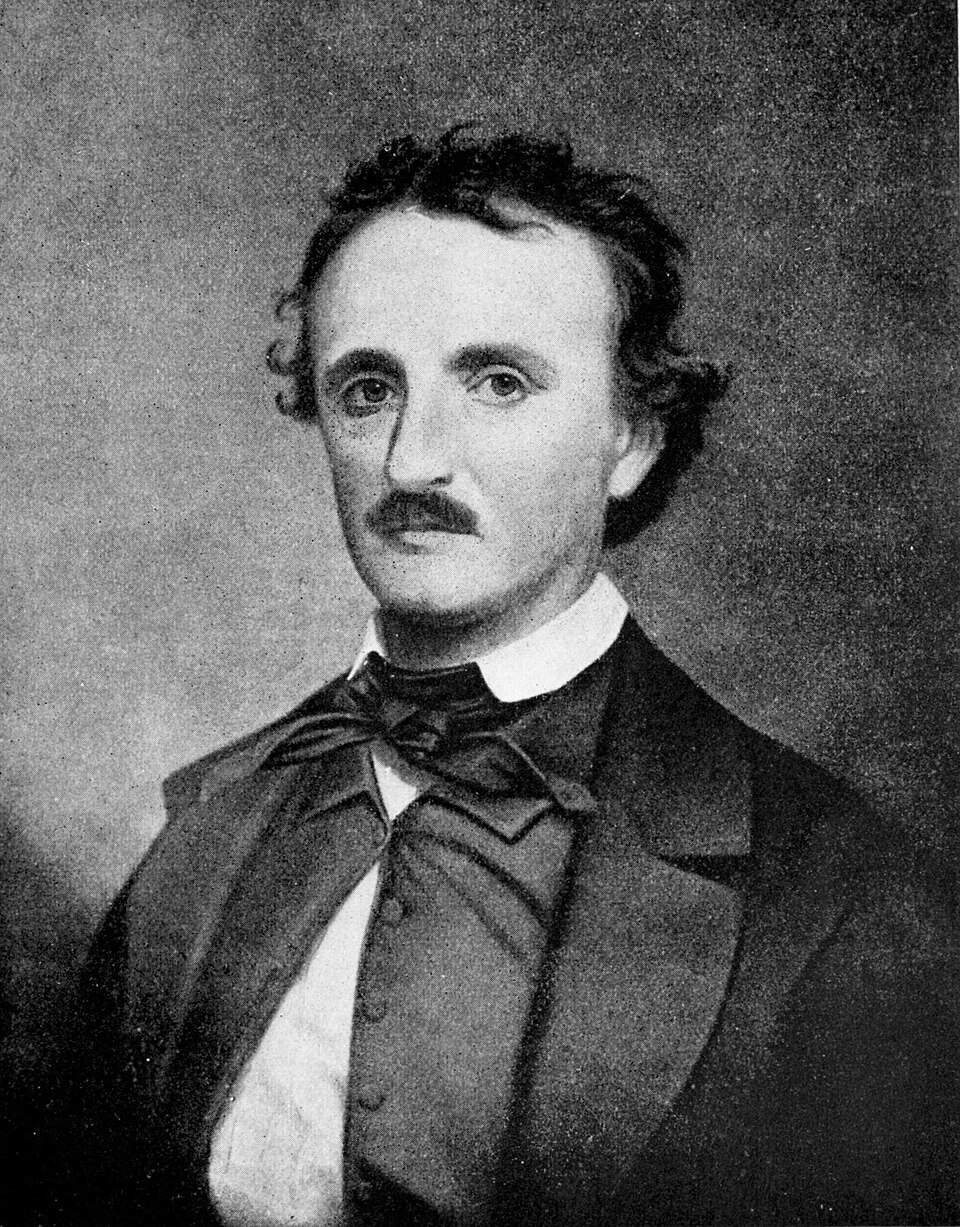
But Did You Know…
… that Edgar Allan Poe is also credited with writing the first detective story? His short story Murders in the Rue Morgue is considered to be the defining text of the modern detective genre. Without it, we wouldn’t have Sherlock Holmes or Hercule Poirot.
Poe’s protagonist C. Auguste Dupin is the prototype for future fictional detectives, exhibiting traits that have become literary conventions of the detective novel. Needless to say, Dupin is an eccentric, yet brilliant, detective. And, like Sherlock Holmes, his personal friend serves as narrator.
Murders in the Rue Morgue also establishes other tropes of detective fiction, such as a bumbling police force. And, the storytelling device where the detective reveals his solution, followed by an explanation of the reasoning leading up to it.
It is also the first “locked room mystery.” Which is a crime (typically a murder) that takes place under circumstances where it appears impossible for the perpetrator to enter the crime scene, commit the crime, and leave without being detected.[5]

A Focus On Analysis.
The detective genre differs from a general mystery story in that its focus is on analysis.[6] And, in a letter to a friend, Poe describes this genre-defining as “a tale of ratiocination.”[7] In other words, “the process of reasoning, or deducing conclusions from premises.”[8]
He begins The Murders in The Rue Morgue with a commentary on the nature and power of analysis, as well as the analytically minded. Poe also remarks on the significance of observation skills, to say nothing of inherent ingenuity. In other words, he outlines the characteristics required to be a master detective.

It Whets The Curiosity Of The Reader.
Poe received quite a bit of acclaim when The Murders of Rue Morgue was published, for doing what we have come to expect from top tier detective novels. As The Pennsylvania inquirer wrote:

At every step it whets the curiosity of the reader, until the interest is heightened to a point from which the mind shrinks with something like incredulity; when with an inventive power and skill, of which we know no parallel, he reconciles every difficulty, and with the most winning vraisemblance brings the mind to admit the truth of every marvel related.[9]
.
So, whether you’re a murder mystery enthusiast, interested in literary history, or simply a Poe fan, be sure to give this genre defining work a read.
Pair this post with It’s World Read Aloud Day!

Share This Post, Choose a Platform!
Endnotes:
[1] “How did the romantic movement differ from the enlightenment?” July 2, 2025. California Learning Resoursce Network. https://www.clrn.org/how-did-the-romantic-movement-differ-from-the-enlightenment/
[2] “Dark Romanticism.” New World Encyclopedia. https://www.newworldencyclopedia.org/entry/Dark_romanticism#cite_note-thompson-5
[3] “Transcendentalism.” Britannica.com https://www.britannica.com/event/Transcendentalism-American-movement
[4] “Dark Romanticism Study Guide: A Literary Genre of Complex Emotions and Individualism.” American Literature.com https://americanliterature.com/dark-romanticism-study-guide/
[5] Penzler, Otto. “The Locked Room Mysteries: As a new collection of the genre’s best is published. Its editor Otto Penzler explains the rules of engagement.” The Independent. December 28, 2014. https://www.the-independent.com/arts-entertainment/books/features/the-locked-room-mysteries-as-a-new-collection-of-the-genre-s-best-is-published-its-editor-otto-penzler-explains-the-rules-of-engagement-9947360.html
[6] Sova, Dawn B. Edgar Allan Poe A to Z: The Essential Reference to His Life and Work
(Paperback ed.). New York: Checkmark Books, 2001. pp. 162–163.
[7] Edgar Allan Poe (ed. T. O. Mabbott), “The Murders in the Rue Morgue,” The Collected
Works of Edgar Allan Poe — Vol. II: Tales and Sketches (1978), pg 521. https://www.eapoe.org/works/mabbott/tom2t043.htm#nv0527a
[8] “Ratiocination.” The GNU version of the Collaborative International Dictionary of English.
[9] Silverman, Kenneth Edgar A. Poe: Mournful and Never-Ending Remembrance (https://
archive.org/details/edgarpoe00kenn) (Paperback ed.). New York: Harper Perennial,1991. Pg 174.
Images:
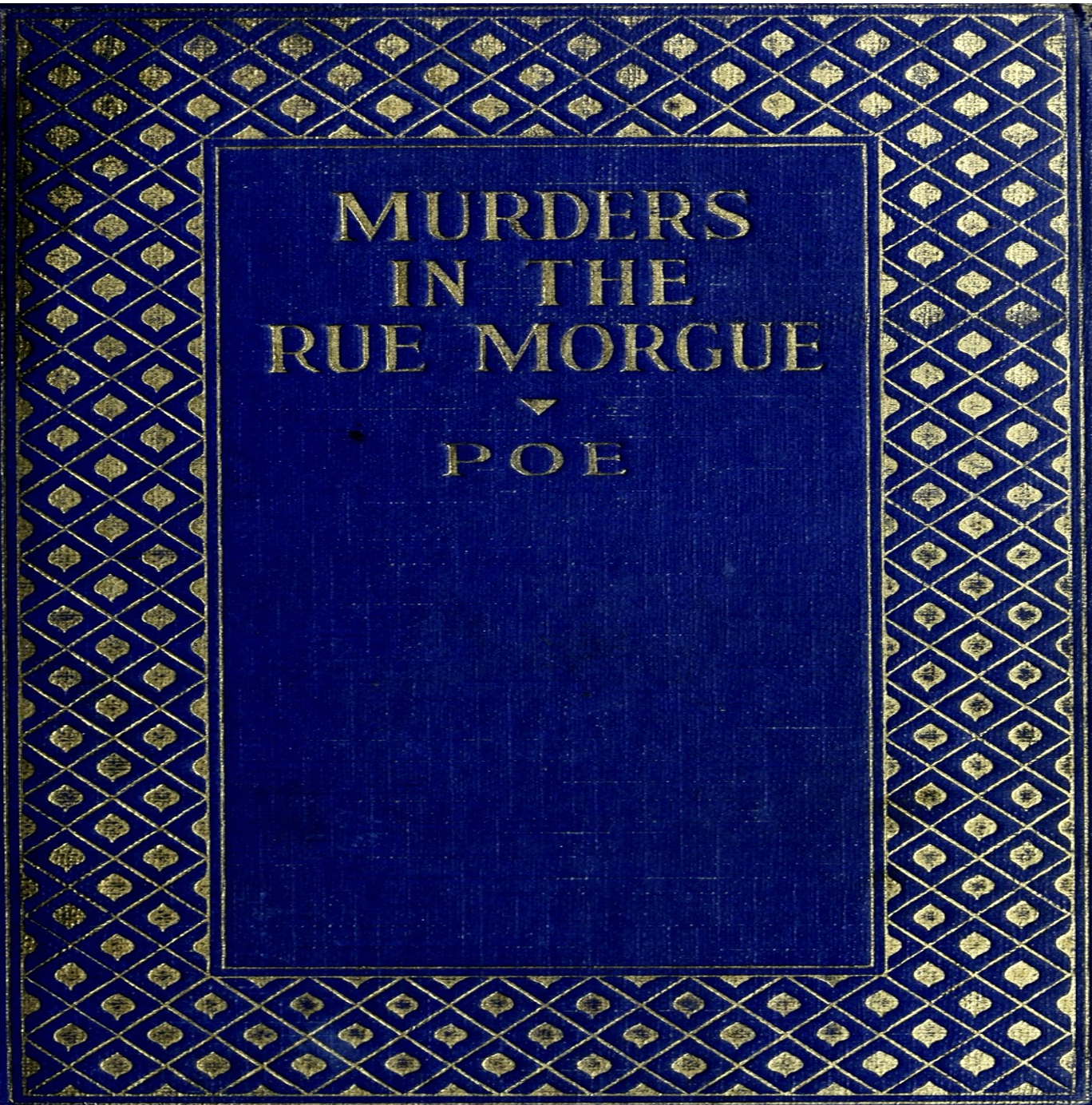
The Murders in the Rue Morgue: Cover of Poe, Edgar Allan. The Murders in the Rue Morgue and other stories.
New York: Popular Classics, 1895.
Counterpoint to Transcendentalism: Image by Square Frog from Pixabay
But did you know… : American Bookmen: Sketches, Chiefly Biographical, of Certain Writers of the Nineteenth Century. New York: Dodd, Mead and Company 1898, Pg 89.
A focus on analysis: Photo by Sergey Sokolov on Unsplash
It whets the curiosity of the reader: Daniel Vierge – https://americanliterature.com/author/edgar-allan-poe/short-story/the-murders-in-the-rue-morgue Public Domain.

Share This Post, Choose a Platform!


Stay in the know about what’s in our ever-growing treasure trove of literary goodness. And, get your free Discover Everything a Book Has to Offer packet.








Related Posts

George M. Johnson's memoir All Boys Aren’t Blue has been characterized as obscene. Here’s a breakdown of why that’s sheer nonsense.... Read More
R ay Bradbury’s iconic dystopian work Fahrenheit 451 offers compelling insights into today’s epidemic of book banning. The progression of events within the text... Read More.

Thomas Morton’s blistering satire The New English Canaan was the first book banned in the United States. Learn more about it here.... Read More
Banned due to the social issues it addresses, Cisneros' work tells the culturally significant story of Esperanza as she comes of age in the Hispanic quarter of Chicago.... Read More