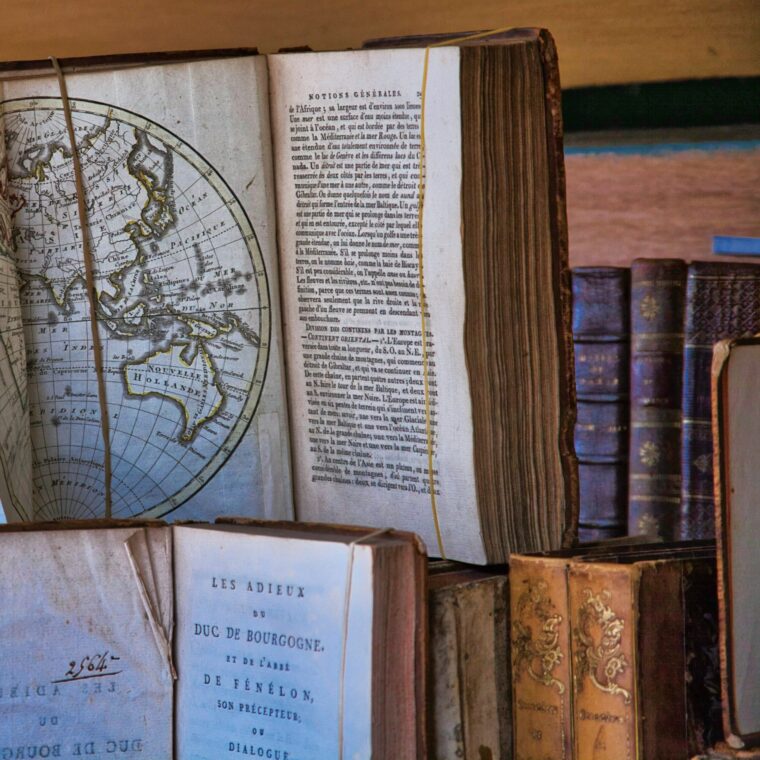
It’s World Read Aloud Day!

 T
T
oday is World Read Aloud Day! Silent reading is the norm these days. But, that wasn’t always the case. Reading used to be noisy business. Clay tablets from Iraq and Syria dated some 4,000 years ago commonly used words for “to read” that literally meant “to cry out,” or “to listen.” [1]
One letter from this period says “I am sending a very urgent message. Listen to this tablet. If it is appropriate, have the king listen to it.” Rarely was “seeing” a tablet – that is to read it silently—mentioned.[2]
Reading only with the voices in our heads may be the norm, but recent research indicates that we miss out on a lot when we limit ourselves to silent reading. Because the ancient art of reading aloud has quite a few cognitive benefits.
For starters, multiple studies show that reading aloud boosts working memory. As well as improving the comprehension of ideas. Reading aloud also builds vocabulary. And, it bolsters fluency – reading accurately, at the proper rate, and with appropriate rhythm and expression.
Then there’s the strengthening of emotional bonds that occurs between people when they read aloud. Not to mention the simple entertainment factor.[3]
Bearing all this in mind, what’s the best form of literature for celebrating Read Aloud Day? According to Edgar Allan Poe, short stories are the perfect choice. Because as Poe notes in his essay The Philosophy of Composition:
 There is a distinct limit, as regards length, to all works of literary art — the limit of a single sitting.
As he insightfully points out:
If any literary work is too long to be read at one sitting, we must be content to dispense with the immensely important effect derivable from unity of impression — for, if two sittings be required, the affairs of the world interfere, and every thing like totality is at once destroyed…[4]
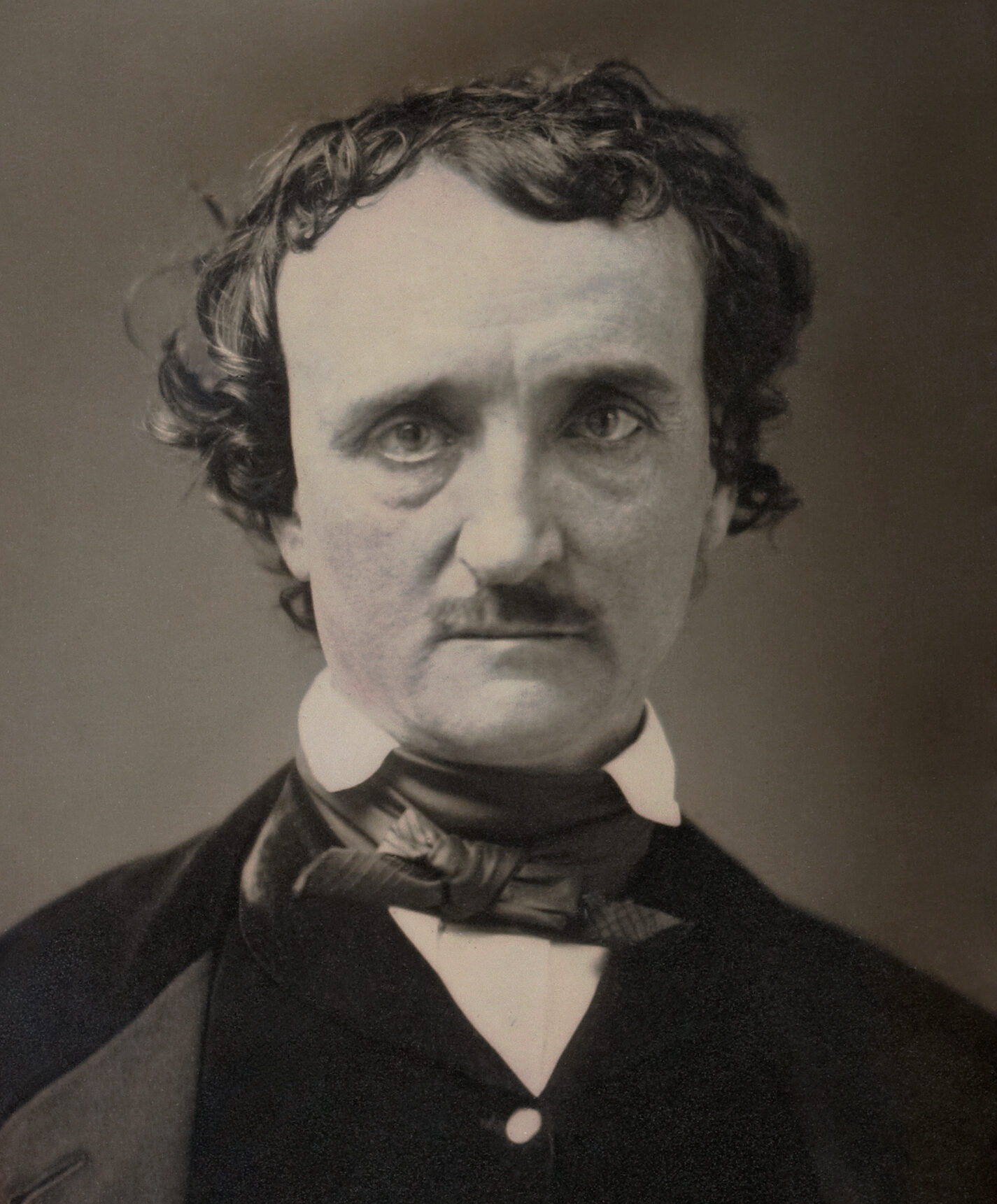
Since it was the master of macabre himself who made this literary proclamation, we’re highlighting a few of Poe’s short stories to read aloud today.
We’re all familiar with his eerie stories, The Black Cat, The Tell-Tale Heart, and The Murders in the Rue Morgue. (And yes, a good number of his works have been banned.) But, it may surprise you to know that Poe wrote his share of love stories –macabre and often ghoulish (it’s still Poe after all), but love stories nonetheless.
Poe seems to have a complicated relationship with women. Most of the women in his stories are sickly and die from a mysterious illness or wasting disease, with something horrible resulting from their deaths. Perhaps because that was Poe’s experience in life. More than one woman he loved (either platonically or romantically) died from such causes… Or it’s simply the result of a dark and feverish mind.
But whatever the reason for this pattern, the women in Poe’s stories are greatly loved – often to the point of obsession.[5]
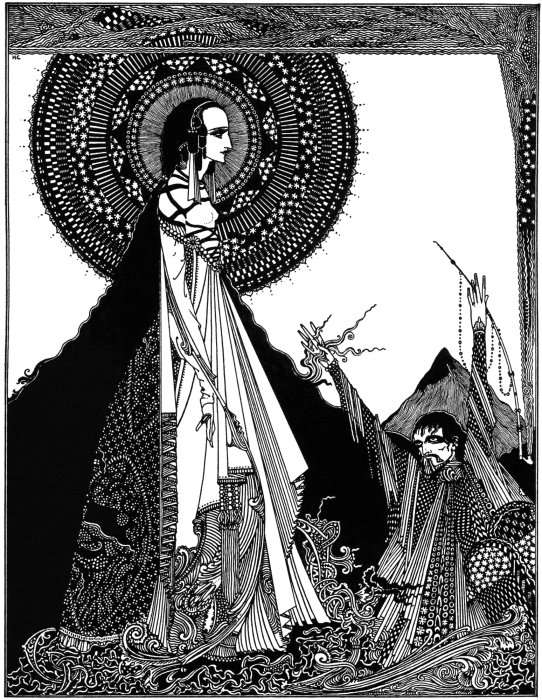
Ligeia is one such story – download it here.
.
Speaking of a dark and feverish mind… what may not surprise you is the fact that some of Poe’s short stories anticipate the cosmic horror of Algernon Blackwood, Arthur Machen, and H. P. Lovecraft.
As Lovecraft observed:
 The oldest and strongest emotion of mankind is fear, and the oldest and strongest kind of fear is fear of the unknown… [this] admitted truth must establish for all time the genuineness and dignity of the weirdly horrible tale as a literary form.[6]
Writing about Poe, Lovecraft also noted:
In the eighteen-thirties occurred a literary dawn directly affecting not only the history of the weird tale, but that of short fiction as a whole… Before Poe the bulk of weird writers had worked largely in the dark; without an understanding of the psychological basis of the horror appeal.[7]
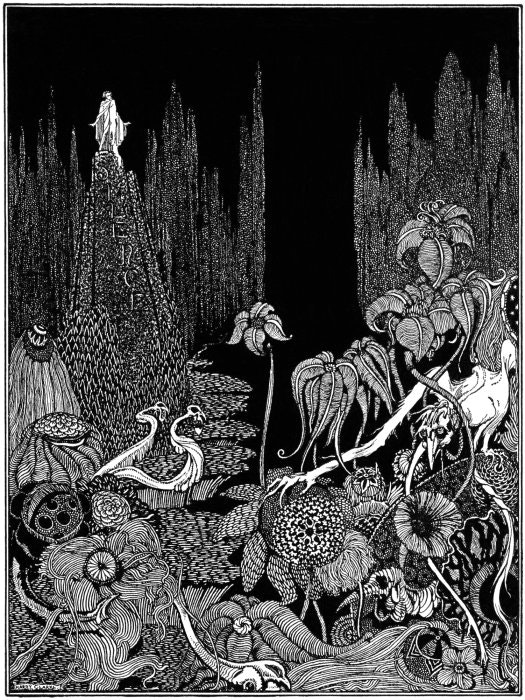
Poe’s short story Silence addresses the existential desperation buried within mankind’s psyche. If you’re up for what has been described as Poe’s “most psychedelic work,” this one’s for you on Read Aloud Day.
You’re all set to celebrate World Read Aloud Day!
So, dive into Poe’s tales forthwith and commence reaping the benefits of reading aloud.
.
Pair this with
Murders in the Rue Morgue:
What’s Sherlock Holmes got to do with it?

Share This Post., Choose a Platform!
Endnotes:
[1] Hardach, Sophie. “Why You Should read This Out Loud.” BBC.com September 17, 2002.
[2] Hardach, Sophie. “Why You Should read This Out Loud.” BBC.com September 17, 2002.
[3] “Say It Loud: 5 Benefits of Readinng Aloud in Your Classroom.” Carnegie Learning. https://www.carnegielearning.com/blog/5-benefits-reading-aloud/
[4] Edgar Allan Poe, “The Philosophy of Composition” Graham’s Magazine, vol. 28, no. 4, April 1846. (Pp163-167).
[5] “Ligeia, Morella, and Annabel Lee: The Women of Poe.” Westlake Porter Public Library Blog. June 2022.
https://blogs.westlakelibrary.org/2022/06/ligeia-morella-and-annabel-lee-the-women-of-poe/
[6] Lovecraft, H. P. “Introduction.” In Supernatural Horror in Literature.
[7] Lovecraft, H. P. “Edgar Allen Poe.” In Supernatural Horror in Literature.
Images:
It’s World Read Aloud Day: Photo by Annie Spratt on Unsplash
Edgar Allan Poe: June 1849. Daguerreotype “Annie”, given to Poe’s friend Mrs. Annie L. Richmond; probably taken in June 1849 in Lowell, Massachusetts, photographer unknown. Wikipedia.com Public Domain.
Ligeia: by Harry Clarke. From Poe, Edgar Allan. Tales of Mystery and Imagination. Illustrated by Harry Clarke. London: George G. Harrap & Co, Ltd. 1919
Silence–a Fable: by Harry Clarke. From Poe, Edgar Allan. Tales of Mystery and Imagination. Illustrated by Harry Clarke. London: George G. Harrap & Co, Ltd. 1919

Share This Post, Choose a Platform!


Stay in the know about what’s in our ever-growing treasure trove of literary goodness. And, get your free Discover Everything a Book Has to Offer packet.







Related Posts

If you don't engage a book's symbolic language, you aren't getting half of what it has to offer. Like luggage, symbolism needs to be unpacked.... Read More
The Library of Congress' National Book Festival takes place on August 22. Can't make it in person? Be sure to check out the online options.... Read More

The more that you read, the more things that you'll know. The more that you learn, the more places you'll go. This aphorism may come from Dr. Seuss, but the wisdom it contains isn't just for kids. ... Read More

Stories are more than just characters and plot. They’re a collaboration between author, reader, and culture, sometimes contradictory and always symbolic. To understand them, you can’t just look at the surface—you need to dig through every layer.... Read More