
The Crucible Discussion Guide:
A few conversation starters.
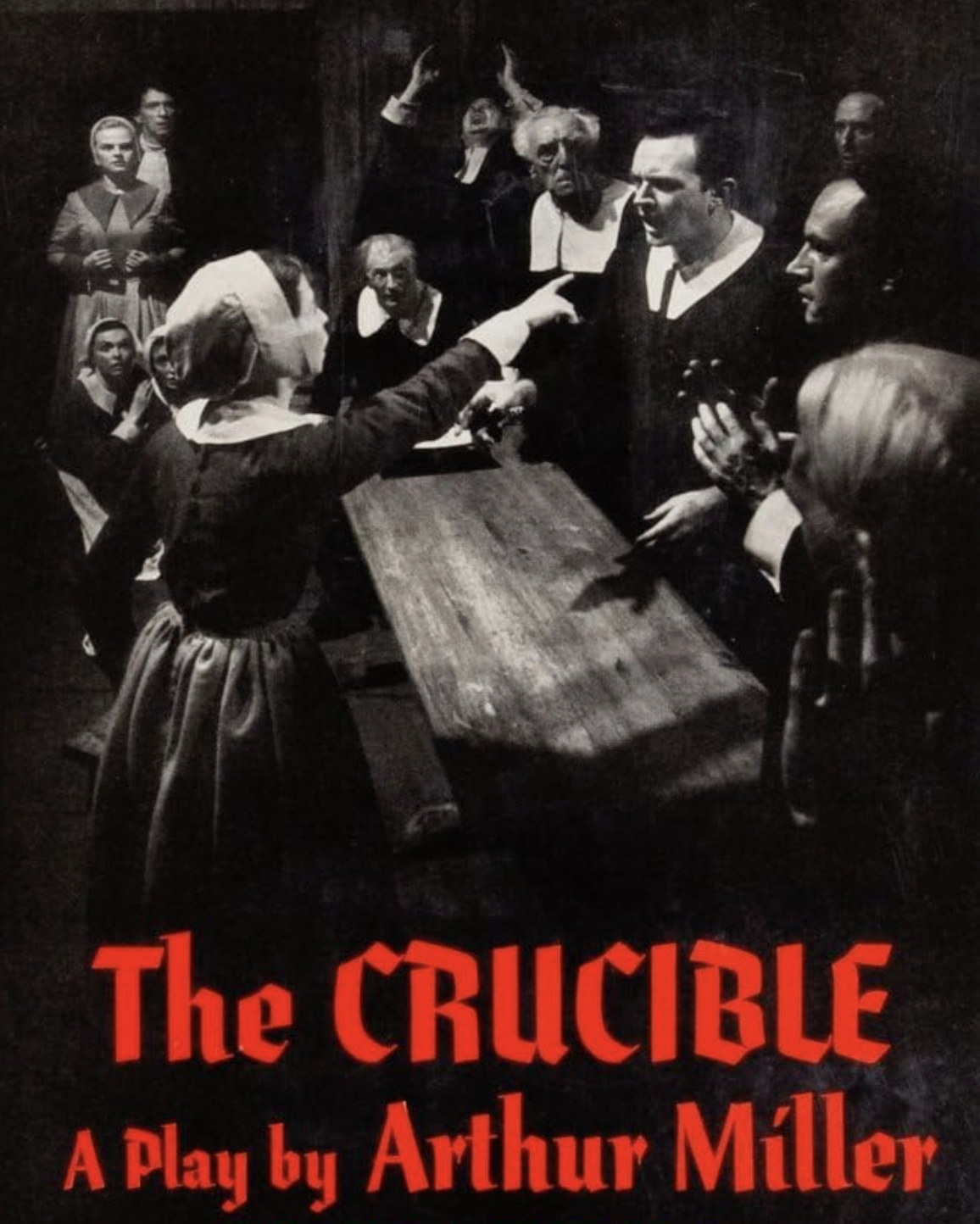
Have a gander at our take
on Arthur Miller’s
The Crucible
 T
T
hen, use this discussion guide to inspire in-depth thinking, and jump-start a conversation about this banned political allegory. There’s plenty here to set your mental wheels in motion.
- Miller wrote the play as an allegory for the infamous period during the 1950s that was characterized by McCarthyism. What parallels does Miller draw between this political environment and the Salem Witch Trials?
. - Why do you think Arthur Miller titled this play The Crucible?
. - The Crucible’s opening scene takes place in a courtroom. Why is that significant to the events that follow?
. - What role does power play in The Crucible, especially when it comes to interactions between court officials and the townspeople?
. - How might Tituba’s “confession” be characterized? Why does she confess? What role does she play in the events of ‘The Crucible’?
. - Was suggestibility a cause of unexplained behavior in Salem? Why or why not?
. - Were the girls who testified at the witch trials under the influence of a form of mass hysteria? If so, what are the consequences of mass hysteria as depicted in The Crucible?
. - What does the townspeople’s reaction to the witch trials reveal about human nature?
. - In what ways do characters in The Crucible exhibit courage despite their fears?
. - How does Reverend Parris embody the themes of fear and paranoia in the play?

#the art of reading #banned books #witch trials #published 1950s #english literature #Benefits of the Humanities
Share This Guide, Choose a Platform!


Stay in the know about what’s in our ever-growing treasure trove of literary goodness. And, get your free Discover Everything a Book Has to Offer packet.