

Aphorisms And Idioms: Grassroots Movement

 G
G
rassroots movement. No, it doesn’t mean your lawn is relocating. A grassroots movement is an idiom that describes a political or social collective action driven by every-day citizens rather than institutions or lobbying operations.
In short, it’s people power. Grassroots movements grow the seeds of an idea into a flourishing cause through increased participation in the political process. They’re democracy in action… government by the people, as invoked in the opening phrase of the constitution — “We the people.” [1]
Grassroots movements are typically organized outside formal power structures, in places like churches, union halls, even at people’s kitchen tables and on city streets. Like that petition you’ve been asked to sign at the entrance of your local farmer’s market, for example.
They rely on local community action, volunteer work, and educating fellow citizens on the issues, rather than PAC money and corporate donations. Power flows upward in a grassroots movement, from communities affected by the issue at hand rather than downward from party big-wigs, government agencies, or well-funded lobbyists.
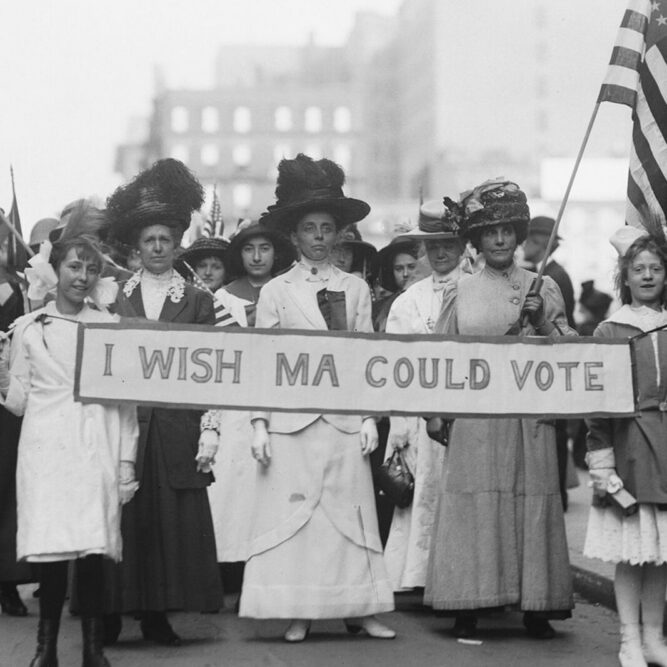
A FEW SIGNIFICANT
GRASSROOTS MOVEMENTS
Have a look at a few historically significant grassroots movements, and the organizing techniques they introduced:
- The Abolitionist Movement (1830s–1865):
Originated mass petition Drives. And the use of first-person testimony as persuasive evidence against slavery.
- The Labor Movement (1880s–1940s):
Developed the strike, the picket line, and ultimately the industrial union as enduring pressure instruments.
- The Women’s Suffrage Movement (1848–1920):
Showcased the power of sustained, multi-generational coalition building, not only across state concerns but federal targets as well.
- The Civil Rights Movement (1950s–1968):
Institutionalized the use of nonviolent direct action, and employing local church networks as organizing infrastructure.
- The Environmental Movement (1960s–1980s):
Introduced the public comment process, and regulatory advocacy as grassroots tools.[2]
- Most Recently, The Me Too movement:
Organized mainly through social media under the #MeToo hashtag.

ORIGINS OF THE IDIOM
GRASSROOTS MOVEMENT
The origins of “grass roots” as a political idiom are a bit murky. Walt Whitman used grass as a metaphor for democracy in his 1852 genre-defining work Leaves of Grass. But the earliest use of a version of this phrase as a political idiom seems to be in a1904 newspaper article about a possible running mate for Theodore Roosevelt – Eli Torrance. Who quoted a political organizer in Kansas as saying:

Roosevelt and Torrance clubs will be organized in every locality. We will begin at the grass roots.[3]
A 1907 New York Tribune article about vice-chairman of the Oklahoma state committee, Ed Perry, used the phrase in the following manner:
Regarding his political views, Mr. Perry has issued the following terse platform: ‘I am for a square deal, grass root representation, for keeping close to the people, against ring rule and for fair treatment.’ [4]
Yet another early use is credited to Senator Albert Jeremian Beveridge of Indiana in 1912. He stated that the Progressive Party:
has come from the grass roots. It has grown from the soil of people’s hard necessities.[5]

A GRASSROOTS CAMPAIGN
THAT ISN’T
What do you call a campaign that masquerades as a community-based initiative, but in reality is directed by a small group of people in power? There’s a name for it… astroturf.[6] Appropriately named, for the fake grass used on a lot of football fields.
Astroturfing is the deceptive practice of making an orchestrated message appear as if it comes from grassroots organization. Unlike natural grassroots campaigns which are people-rich and money-poor, an astroturf campaign tends to be the opposite – well-funded but with little actual support from voters.
This form of mis- and disinformation ends up stoking partisan divisiveness rather than fostering community. Therefore, it’s also the opposite of grassroots movements in terms of their democracy-building capabilities.[7]
The explosion in book banning since 2021is one example of such astroturfing. A recent analysis of book banning by the American Library Association reveals that less than 3% of all book challenges in 2025 came from parents. And a full 92% were initiated by politically motivated pressure groups and the decision makers influenced by them.[8]
Given that over 70% of voters oppose efforts to ban books, the 22,810 instances of book banning between 2021 and 2025 are clearly not the result of a genuine grassroots movement.[9] So, what’s the best way to counter such astroturfing? Create a genuine grassroots campaign.[10]
And you can start with this toolkit for fighting book bans and resisting censorship.
Pair this with

Be Sure To Check Out More
Aphorisms And Idioms Here.

Share This Post, Choose A Platform!
Endnotes:
[1] “Notable Grassroots Movements That Shaped U.S. History.” https://grassrootsauthority.com/grassroots-movements-in-us-history/
Grassroots Movements. Definitions and Examples. https://www.thoughtco.com/grassroots-movement-definition-and-examples-5085222
“Grassroots.” Political Dictionary. https://politicaldictionary.com/words/grassroots/
[2] “Notable Grassroots Movements That Shaped U.S. History.” Grassroots Authority Network America. https://grassrootsauthority.com/grassroots-movements-in-us-history/
[3] “The Salt Lake herald. September 25, 1903, Last Edition, Page 6.
[4] “New-York tribune. September 09, 1907, Page 4.
[5] Beveridge, Albert J. Keynote Address at the Progressive Party [Bull Moose Party] Convention, Chicago, August 5, 1912.
[6] “Astroturf.” Political Dictionary. https://politicaldictionary.com/words/grassroots/
“Astroturfing.” Political Dictionary. https://politicaldictionary.com/words/astroturfing/
[7] Deborah H. Charbonneau, et al. “Challenging Book Challenges: Understanding the Background, Examining “Astroturfing” as a Current Political Strategy, and Finding Ways Forward.” Proceedings of the Association for Information Science and Technology. October 2023. Vol 60 Issue 1:755-757.
[8] “Censorship by the Numbers: Banned Books Data.” American Library Association. https://www.ala.org/bbooks/book-ban-data
[9] “Voters Oppose Book Bans in Libraries.” Results of a survey conducted by Hart Research Associates and North Star Opinion Research. March 1 to 6, 2022. https://www.ala.org/advocacy/voters-oppose-book-bans-libraries
“The Normalization of Book Banning.” PEN America. October 1, 2025. https://pen.org/report/the-normalization-of-book-banning/
[10] Cody, Anthony. “The Antidote to Astroturf: A Real Grassroots Movement.” Edweek.
Images:
Grassroots Movement: Photo by David Clode on unsplash.com
A Few Significant Grassroots Movements: Encyclopedia Britannica, Inc.
Origins Of The Idiom Grassroots Movement: Photo by Zoe on Unsplash
A Grassroots Campaign That Isn’t: Photo by Chiputt Golf on Unsplash

Share This Post, Choose a Platform!


Stay in the know about what’s in our ever-growing treasure trove of literary goodness. And, get your free Discover Everything a Book Has to Offer packet.

















Related Posts

Starting over with “a clean slate” is thought to be the oldest known idiom. It means a fresh beginning, one free of past mistakes or failures. And It originated in The Code of Hammurabi.... Read More

Several idioms encourage us to be “nice,” including the adage “it’s nice to be important, but more important to be nice.” But “being nice” wasn’t always seen as a virtue. So what did it originally mean? And when did its meaning change? ... Read More
It’s impossible to literally “lift ourselves up by our bootstraps.” And yet, the phrase is commonly used to encourage us to power through challenges with hard work. So how did an impossible task become a call for individual grit? ... Read More

Being able to read between the lines is a valuable skill. And this idiom has roots in the centuries-old world of secret communication. How can reading between the lines benefit you?... Read More