
The Age Of Innocence: The Only Constant In Life Is Change
 E
E
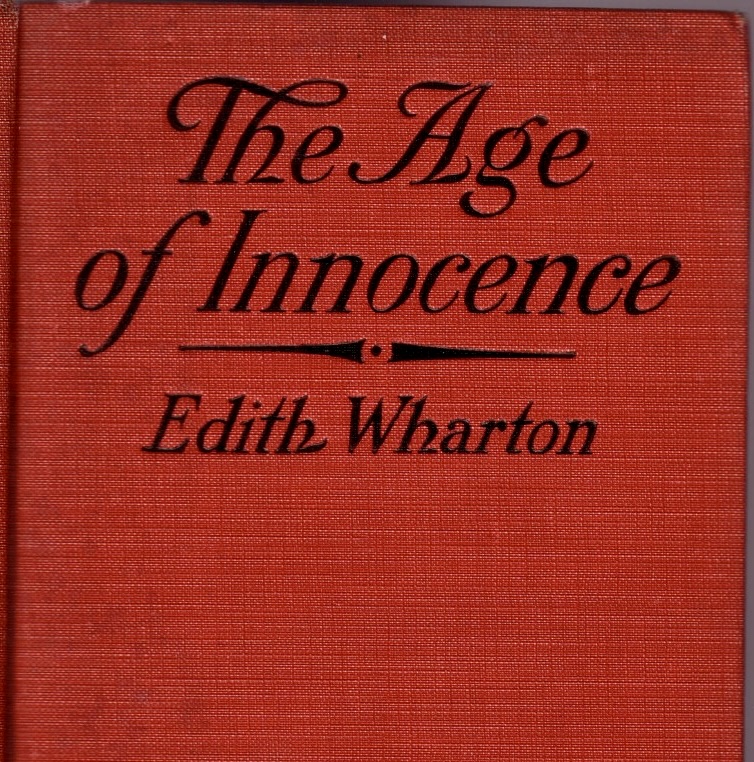
dith Wharton’s The Age of Innocence is the story of a society in transition. It depicts the struggle of late nineteenth-century New York Society to come to terms with the tremendous social, cultural and historical change taking place during this period.
But, this novel isn’t just a relic of the past.[1] It may be set at the turn of the last century, but at its heart The Age of Innocence is about dealing with the chaos and uncertainty of a changing world. And that’s something we can all relate to… especially these days.
Though The Age of Innocence has never itself been banned. It’s precisely the struggle with a changing world that has resulted in the recent surge of book banning, fueled by political special interest groups. And, it has reached the point of Republican members in congress proposing legislation for a nationwide book ban, restricting books taught in schools across the country to those on a specified list.
The political ideology behind this book banning contends America is teetering on “’the brink of destruction’ because it has been ‘steadily ruined’ by a misguided focus on equality and liberal individualism.”[2] Shifts in American culture that reflect LGBTQ+ rights, for example. Or Black Lives Matter protests. Or the Me Too Movement.
The books being targeted for banning make their fear of societal shift toward a more diverse culture abundantly clear. Because, the lion’s share of books being challenged or banned feature people of color, or LGBTQ+ characters.[3] With titles depicting topics that young people confront in the real world right alongside them – books addressing issues like sexual violence, mental health concerns, and substance abuse.[4]
One of the main objectives of this political ideology is to “restore” our country to so-called “traditional social values.”[5] You know, those that kept the LGBtQ+ community in the closet, the Black community under the thumb of Jim Crow laws, and women “barefoot and pregnant” as the saying goes. And, this inability to come to terms with societal transition is what makes Wharton’s work as relevant as when it was written.
Enthusiastically Immersed
In Anthropology
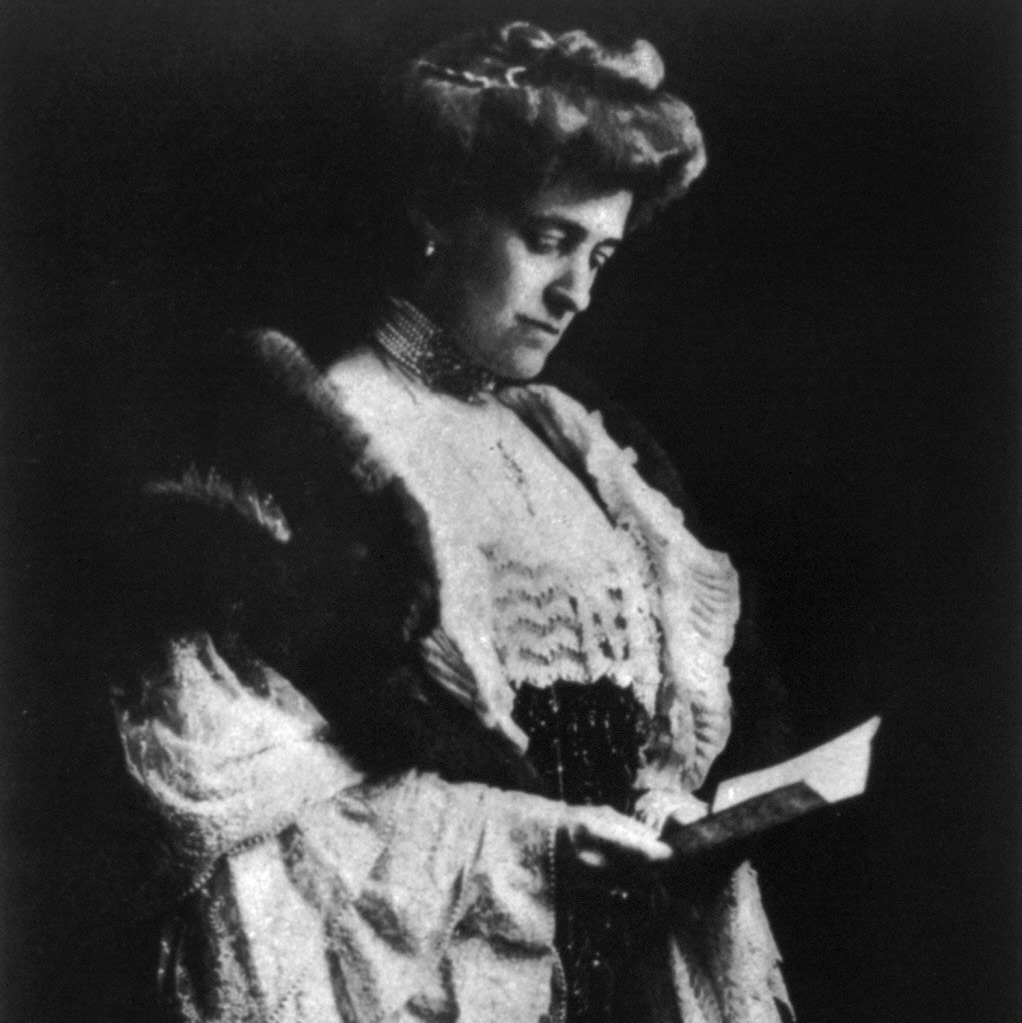
Throughout her life, Wharton was a voracious reader. And, she came of age during the period when groundbreaking thinker Emile Durkheim was making significant contributions to sociology, as well as anthropology – a field Wharton enthusiastically immersed herself in.[6]
She was especially interested in ethnographies, “the study and recording of human cultures.”[7] So, it’s no surprise that Durkheim’s theories are reflected in The Age of Innocence. Specifically, the concepts embodied by May Welland, her fiancé Newland Archer, and Ellen Olenska, which we’ll unpack those along the way.

Not That Kind Of
Island Community
Wharton’s Old New York Society constitutes what historian Robert Wiebe refers to as an “island community” – one of the small, self-contained societies that comprised American culture through the late nineteenth century.[8] Island communities are typically homogenous, with members living largely amongst themselves. Significantly, Wiebe also points out that they are intentionally designed to preserve exclusiveness.[9]
The first piece of information Wharton imparts about Old New York refers to a splendid new Opera House, one on par with those in European capitals. Society’s conservatives, however, prefer to “reassemble” each winter at the old Academy, despite its age and limited capacity.[10] In fact, its modest size is precisely why it is “cherished.”[11]
The old Opera House is so tiny and inconvenient that it, quite conveniently, keeps out the “new people,” nouveaux riches, the likes of Andrew Carnegie, Jay Gould or Cornelius Vanderbilt. [12] Clearly, maintaining “old money’s” sameness is the larger concern, with New York Society preferring to attend a venue with “shabby red and gold boxes,” in order to maintain it.[13]
In this contemporary reading, the old Opera House signifies the world that the political ideology behind book banning is attempting to hold onto. The new Opera House is, of course, the changing and more diverse world adherents of this ideology are struggling with. And, the “new people” they’re trying to keep out are those who have anything to do with diversity… people of color, the LGBTQ+ community, and women who expect equal treatment.

What’s A
Segmentary Society?
The Island Community is a form of what Durkheim refers to as a “segmentary” society. Which denotes sameness, in the sense of a whole comprised by a collection of replicated units – rather like an orange.[14] In The Age of Innocence, the proverbial orange consists of an assembly of uniform bodies called “clans.”[15]
Durkheim contends that, due to a segmentary society’s uniformity, the unanimous acceptance of common beliefs and practices becomes particularly intense, to the point of being coercive to the individual member. The bond between kinsmen and neighbors no longer stems from personal affection, common interest, or even practical necessity, but an inexplicable significance ascribed to the tie itself.[16]
When this situation is at its most extreme, individual personalities vanish, subsumed by the “collective or common consciousness.”[17] Members no longer function as individuals, but rather as collective beings.[18]
We see evidence of such conformity in news reports these days. For example, Republican congressional members who vehemently oppose policies set forth by the Trump administration in private. Yet, lavish profuse praise on those very same policies in lock-step with the president.

What Is
Mechanical Solidarity?
Bearing in mind conformative action like that noted above, Durkheim considers segmentary societies to be the “home par excellence of mechanical solidarity.”[19] The term mechanical refers to “the cohesion that links together elements of raw materials.”[20]
Which results in the “a machine where all parts are similar, and perform identical or highly analogous tasks, collectively forming a robust whole.”[21]
Durkheim associates mechanical solidarity with pre-industrial society, and declares a shift away from mechanical solidarity to be a “law of history.”[22] He states that when the way people are connected to one another changes, it’s inevitable that the structure of society will also change. [23]
Late nineteenth-century New York is characterized by a tremendous amount of development. The Brooklyn Bridge, which literally changes the face of New York, is constructed during this period. The ground-breaking use of steel cables in the bridge’s construction facilitates the skyscrapers of future generations. And, the telephone makes it possible to carry on a conversation with someone across the Atlantic.[24]
Use of such industrial materials and processes also makes Archer’s “new dodge” of phoning long distance possible, something that becomes commonplace by the end of the novel.[25]
In addition, Archer mentions the musical and theatrical clubs that are “coming into existence,” establishments where working actors, artists and writers, seen as common by Society, congregate.[26]
Not to mention the fact that during the period when Wharton’s work takes place, New York’s population more than triples. It’s important to note that this is primarily due to an influx of immigrants, many of whom have come to this country to work as laborers.[27]
A topic that undoubtedly rings a bell these days.
What Is
Organic Solidarity?
The bounds of New York Society’s compact little circle are clearly being stretched, both physically and demographically, whether they like it or not. With such expansion, comes change. And consequently, the transition Durkheim indicates. Wharton’s Age of Innocence reflects such a shift. In this case, toward what Durkheim refers to as “organic solidarity.”[28]
As insinuated above, organic solidarity is associated with industrialized society, and by the end of Wharton’s book, industrialization has indeed taken hold. Unlike mechanical solidarity, organic solidarity functions on parts that are different in kind. It’s the type of solidarity that welcomes books about diverse people in classrooms and libraries.
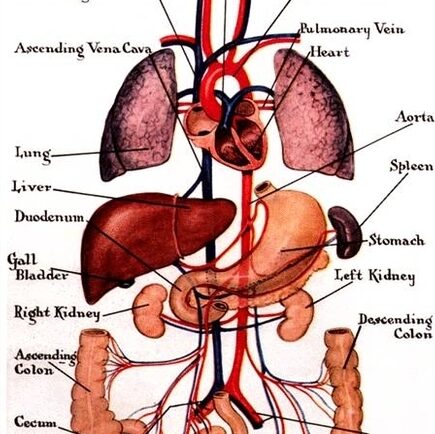
Durkheim likens this type of solidarity to the physical construction of higher animals. It refers to the way each organ (hence the name) remains its own entity as it functions within a larger whole.[29] This dynamic parallels Durkheim’s contention that industrialized societies include greater divisions of labor, which results in increasingly complex social structures.
With the industrialization and mechanization that took place in the late nineteenth century comes specialization and compartmentalization of the work in question. This, in turn, brings about interdependency.[30]
For example, in the days of the craft system, a single cobbler is capable of producing a pair of shoes. He has all the skill and knowledge necessary to do so. In the industrialized, mechanized world of assembly lines, however, each employee only knows how to perform a single facet of the shoemaking process.
One worker stitches the leather together, another attaches the buckles, and yet another line worker affixes the soles. But, no individual employee can produce an entire shoe. It takes all of them, and this type of interdependency is ultimately reflected in society at large.
That said, Durkheim goes on to say that individualism is intrinsic to organic solidarity. This type of unity is only possible if members of the society in question have “spheres of action” distinct to each of them.[31] So, unlike mechanical solidarity, groups are no longer based on ancestral relationship, but according to the social activities they participate in.[32]
Needless to say, Wharton’s characters do not labor. But, the effects of industrialization do, however, percolate their way into the upper echelons of society. Legal firms and businessmen begin to specialize. Bankers are no longer simply bankers, but brokers, financiers, or commercial agents, with professional associations organized around increasingly precise functions.[33]
In this century, the internet and social media changed the way we’re connected to each other. Consequently, we’re exposed to a wider variety of individuals than ever before, opening the door to the diversity and societal change that conservative politics is struggling with.
May Welland:
Avatar Of Mechanical Solidarity
The inevitable societal shift from mechanical to organic solidarity Durkheim indicates plays out within The Age of Innocence. The work opens at the old Academy, a location, as previously noted, chosen for the insularity that it provides.
And, as the story unfolds, New York is depicted as being divided into the Mingott and Mason “clan,” and the Archer-Newland-van der Luyden “tribe,” for as far back as anyone could remember.[34] The island community of Old New York Society clearly functions within the social structure of mechanical solidarity.
As mentioned above, within mechanical solidarity, individual personality frequently becomes subsumed by the collective consciousness. And, the circumstances of May Welland’s life have shaped her in such a way that she embodies Old New York Society and its mechanical solidarity.
In the early pages of Wharton’s work, Newland Archer describes his fiancé as a “product of the social system that he belonged to and believed in.”[35] Which is precisely what he is looking for in a potential wife – at least initially.
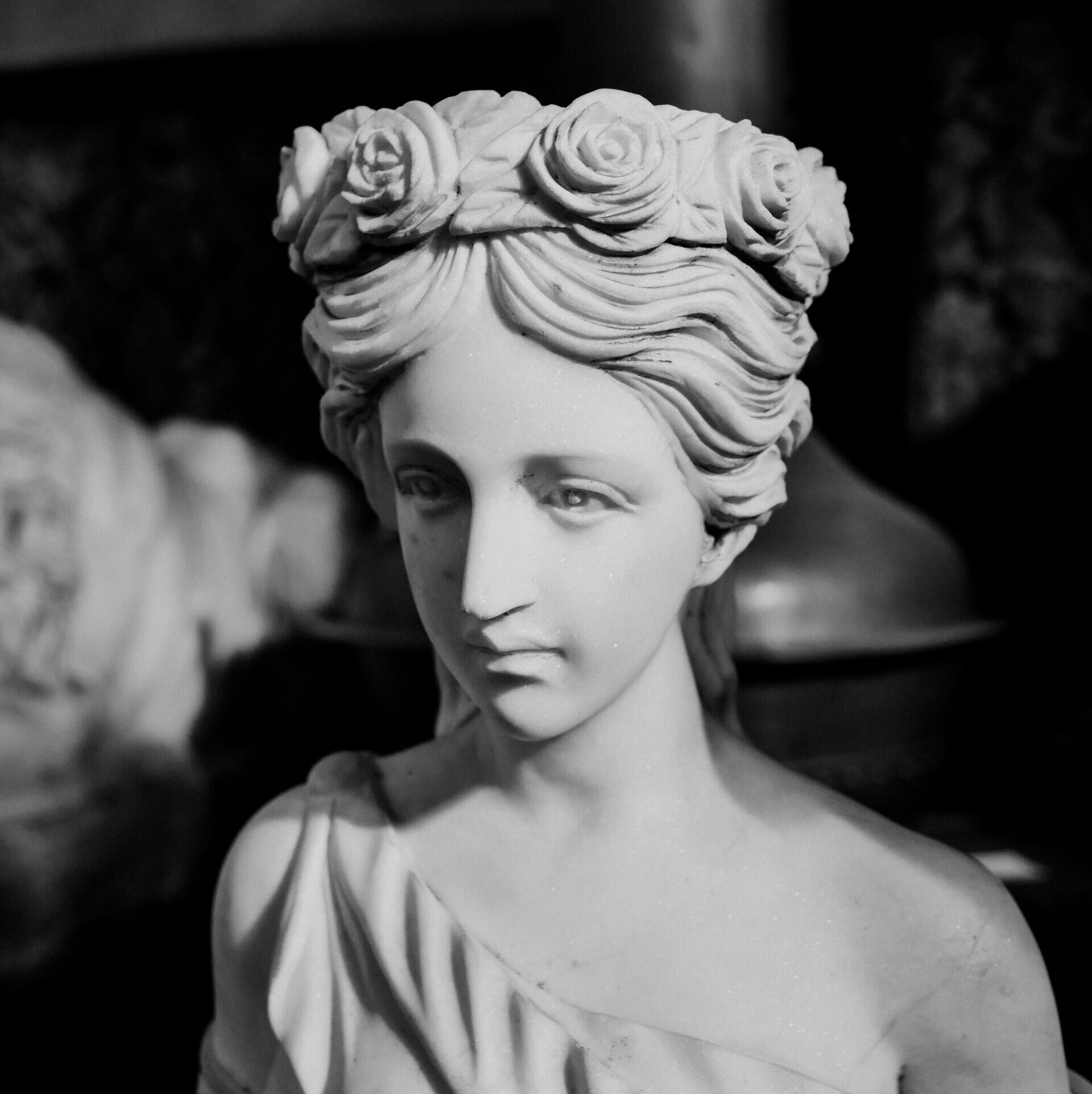
Having been raised within the constructs of mechanical solidarity, May is essentially devoid of personhood. Archer describes her face as “representing a type rather than a person, as if she might have been chosen to pose for a Civic Virtue or a Greek Goddess.”[36]
This depiction not only implies a lack of individuality, with its allusion to posing for a statue, it negates her humanness.
The parallel Archer draws between May and the Kentucky cave-fish also nullifies her humanness. Having learned about the “Amblyopsis spelaea” (whose sightless eyes have stopped developing as a result their environment) in his scientific reading, Archer begins to realize that May may have ceased to develop the metaphoric eyes necessary to see beyond their compact little circle. [37]
After May’s death, as Archer contemplates the photograph of her that has graced his desk throughout their marriage, we come to realize the truth of this statement. While Archer is considering their life together, he comments that at her passing, May was very much the same woman as the one in the photograph.
Although he honestly mourns her, Archer acknowledges May’s lack of imagination and the fact that, in many ways, she remained “incapable of growth.”[38] Archer’s observations may be accurate, but her failure to evolve is not due to a lack of imagination. May’s inability to “see” stems from her status as a replicated segment of the collective, rather than an individual woman.
Archer goes on to say that over the course of May’s life, “her immediate horizon [remained] unaltered,” and so it has.[39] May’s identity remains synonymous with the collective consciousness of New York Society to the end of her days. He reveals that May faced death with a sense of serenity, assured in the notion that he:

would continue to inculcate in [their eldest son] Dallas the same principles and prejudices that had shaped his parents’ lives, and that Dallas in turn (when Newland followed her) would transmit the sacred trust to little Bill.[40]
May is content at the moment of her passing, certain that although she may be dying, the collective consciousness will continue within their son, little Bill.
We’re seeing the push for a return to this dynamic with the so-called “tradwife,” grounded in traditionalist ideas that essentialize the role of women to spouses and mothers. Currently an internet subculture, it’s being promoted by adherents of the conservative political ideology mentioned above.
And they’re advocating for it despite significant evidence that the expectation to conform to predefined roles can be damaging to psychological well-being no matter which side of this gender-based equation you happen to be on. It’s just as psychological detrimental to men as it is to women.[41]
Advocates pushing for a return to this way of life are clearly struggling with a society where a woman can do things she wasn’t allowed to do in years past, like have a bank account without a husband’s permission, get a credit card in her own name… or vote.

Ellen Olenska:
Avatar Of Organic Solidarity
The Countess Ellen Olenska is May’s cousin, and her character is a breach in New York Society’s mechanical solidarity, paving the way for a transition to the organic solidarity of industrialized society. Ellen exhibits the individualistic thinking intrinsic to organic solidarity.
Bold since childhood, she prefers to “make [her] own fashion,” rather than conform to conventional standards of style. Ellen lives in a “funny house,” one eclectically decorated, with an intimate atmosphere – unlike the staid tuftings and excessive gilt of the Welland abode.[42] And, much to the Family’s chagrin, Ellen lives in the middle of “des quartiers excentriques,” the socially ambiguous bohemian district, which may be respectable, but is certainly not fashionable. [43]
Ellen explicitly talks about her individualistic inclinations in a statement regarding her relationship with the Family:
They’re all a little vexed with me for setting up for myself—poor Granny especially. She wanted to keep me with her; but I had to be free.[44]
Ellen clearly prefers an independent life, and her family reacts with a response you’d expect from a mechanical solidarity. And, that is, pressure to return to the collective – a strategy led by the clan’s matriarch.
But, Ellen puts it in no uncertain terms, she has to be free. Conveying the very essence of individualism, Ellen also declares that one of the things she likes best about her house is being alone in it. She further states:
real loneliness is living among all these kind people who only ask one to pretend![45]
Ellen’s remark is a direct indictment of her experience with Old New York and mechanical solidarity.
And, her motivation for returning to New York is nothing less than a working definition of organic solidarity:
New York simply meant peace and freedom to me: it was coming home.
And I was so happy at being among my own people that everyone I met
seemed kind and good, and glad to see me.[46]
On the surface, a remark Archer makes about allying himself with one of his own kind, and Ellen’s comment regarding being among her own people appear to convey the same message. Though the distinction is subtle, upon closer inspection, the two statements connote very different ideas.
As mentioned above, the phrase articulated by Archer refers to sameness, and the importance of his tie to the collective. Being among one’s own people, on the other hand, suggests belonging to a group comprised of individuals.
The fact that Ellen goes on to say how pleased she was that everyone seemed “kind and good, and glad to see her” upon her arrival shows that her bond to them is not founded on a tie to the collective. But rather, personal affection for each of them, a type of unity absent from mechanical solidarity.

A Polluting Person
Shortly after Ellen arrives, Archer comes to realize that she has:
stirred up old settled convictions and set them drifting dangerously through his mind.[47]
Consequently, and very likely for the first time, he takes a good look at New York’s compact little circle as an individual, rather than one of the collective. This quality deems Ellen, what anthropologist Mary Douglas refers to as, a “polluting person,” and therefore dangerous.[48]
A polluting person is always wrong, having acquired some unacceptable condition, or crossed some societal line that should not be crossed… both of which apply to Ellen.[49] Given her time abroad and the habits she acquired there, Ellen is now perceived as foreign.
The seductive nature of Ellen’s foreignness can be seen in the reactions of Lawrence Lefferts, Julian Beaufort, and most importantly, Newland Archer. She unwittingly commits several infractions: wearing the wrong fashions to the Opera, seeking out conversation partners at social gatherings rather than waiting for them to approach her, and receiving the very “common” Mrs. Struthers.
Her relationship with Archer however, crosses a critical boundary. One that places her between and May (the embodiment of mechanical solidarity). This triggers what is known as a “repressive sanction.” [50] And, Ellen comes to realize that her understanding of family unity is far different than the mechanical solidarity her clan functions within.

Repressive Sanction
Mechanical solidarity is maintained through sanctions. And, a repressive sanction relates to moral rules, as opposed to criminal action. While penalties for crime are administered by specific types of individuals, such as police officers and judges, this type of injunction is applied collectively and without distinction.
A prime example of repressive sanction is the tribal rally that takes the shape of May’s farewell tribute to Ellen. Repressive sanctions are not punishments in the strictest sense of the word.
They are not meant to do harm, though punitive action remains the compelling force behind a sanction. Rather, repressive sanctions are intended to restore society to a previous state, in this case, a time before Ellen’s return from Europe.
Archer remarks that this event is:
to show me…what would happen to me— and a deathly sense of the superiority of implication and analogy over direct action, and of silence over rash words… [51]
And, he is absolutely correct. The tribal rally around May has as much to do with bringing Archer back into the collective, as it does with expelling Ellen from it.
Ellen is far too individualistic to conform to the collective consciousness. This alone disrupts the cohesiveness of Old New York’s compact little circle, which makes her a polluting person, and as such, dangerous.
Consequently, in the face of a perceived danger, the collective is compelled to close ranks, which explains why: [52]
There were certain things that had to be done, and if done at all, done handsomely and thoroughly; and one of these, in the old New York code, was the tribal rally around a kinswoman about to be eliminated from the tribe.[53]
Needless to say, this only works within a society that functions on sameness, like that of mechanical solidarity, otherwise complete fusion is not possible.[54]

Not Just
In Wharton’s Book
We saw a version of repressive sanction during the McCarthy era. Individuals associated with labor unions (a perfect example of post-industrial organic solidarity) were blacklisted, a form of exile that made it impossible for them to get jobs.[55]
It’s the same type of life-destroying pressure to conform that Newland Archer is threatened with. Intended not only to penalize the immediate subject, but also send a message beyond those directly involved.
And, these days, we see adherents to the political ideology behind book banning claim that works about people of color, contain LGBTQ+ characters, or address difficult moments in our history are somehow “polluting.”
Phrases like “sexualization of children” are trigger words. And, as author Angie Thomas has observed, they’re often used to discredit works that don’t even contain sexual content (which has happened to at least one her bestselling books).[56]
These books, (and by extension the people represented in them), are deemed polluting.
Not because the books are inaccurate. But because they don’t depict our nation and its history from a perspective of sugarcoated sameness.
As Archer is prompted to “take a good look at New York’s compact little circle” after meeting Ellen, reading books about folks with lives different than our own engenders empathy and critical thinking.
They motivate us to “take a good look” at the world around us. And, help us realize that it’s much larger than the whitewashed, uniform version the mechanical solidarity of past years has presented us with.
So, they’re banning these books the way Old New York Society exiled Ellen. In an effort to drag society back to a homogenous state that functions on the conformity of mechanical solidarity.
And yes, there’s a message alerting teachers and librarians to what will happen if they fail to comply. One delivered by perpetrators of the online harassment, intimidation, and threats of physical violence that have already been levied at those who refuse to fall in line.[57]

Newland Archer:
Avatar of Anomie
Archer was, of course, born into and raised within mechanical solidarity, with its intrinsic shared beliefs, norms and values. All parties involved adhere to the same rules. Everyone is very clear about what the rules are. And, as exemplified above… even more certain about happens if the rules are broken.
A longing for definite lines and clear concepts is inherent to the human condition. With a shift toward a more individualistic, organic solidarity, the powerful bond of shared beliefs understandably weakens.
Consequently, when societal holds loosen, many who have lived a regimented life are left with a sense of normlessness and disorder. This state is what Durkheim refers to as “anomie,” which Wharton’s character Newland Archer embodies.[58]
And, anomie is precisely what adherents of the political ideology behind book banning are experiencing – this sense of normlessness, and disorder.
We know Archer is experiencing anomie because of observations like this one. In the midst of one of his many conversations with Ellen (who I remind you, signifies organic solidarity), Archer notes that conversing with her makes him look at New York objectively:
Viewed thus, as through the wrong end of a telescope, it looked disconcertingly small and distant. [59]
This metaphor signifies dissociation from the collective. The smallness of New York indicates its lack of importance. No sooner does he step outside Ellen’s door, however, than:
New York again [becomes] vast and imminent, and May Welland the loveliest woman in it.[60]
Away from Ellen’s influence, Archer gravitates back towards what he has always known, wavering that indicates he is clearly in the throes of anomie.

Coming Out
The Other Side
Archer’s indecision about whether to stay with May (within the mechanical solidarity she represents) or follow Ellen (and the organic solidarity she embodies) to Paris, goes on for quite some time.
But, ultimately Archer foregoes pursuing Ellen. And, she returns to Europe in order to avoid being an intrusive influence between him and May. It appears that Old New York Society’s mechanical solidarity remains intact, but such is not the case.
This assertion may seem to conflict with the fact that Ellen leaves New York, and Archer stays with May, becoming the father of three. But, their decisions weren’t exacted through forced compliance to mechanical solidarity. Neither Ellen nor Archer’s choices are the result of a compulsion to conform to the collective.
Organic solidarity may be grounded in individuality, but that doesn’t preclude making concessions for the greater good. Or, restricting one from making choices based on how those choices will affect others.
Though Ellen considers persons within the collective when deciding to let Archer go, her tie to the collective itself is not what she thinks about. Rather, her relationship with specific individuals, and how their lives would be impacted by her choice, guides her decision.
Concerning Archer’s decision not to follow Ellen to Paris, organic solidarity is not without a sense of duty.[61] But, unlike in mechanical solidarity, duty is not an imposed obligation.
Rather, it is a loyalty to responsibilities associated with a voluntary act.[62] Archer remains in New York, not out of allegiance to the collective itself, but from a freely chosen moral obligation to persons within the collective… namely May.
And, he’s found an anchor in personal honor, one which cannot be understood by means of mechanical solidarity. Therefore, it’s something he could never have discovered on his own. Archer needed Ellen, who “[opens his] eyes to things [he’d] looked at so long that [he’d] ceased to see them,” to discover an individual sense of dignity. [63]

A World Where Diversity
Is Not A Dirty Word
Like today’s Millennials, Gen Z, and all the generations who come after, the children of Newland and May Archer represent the future. Archer describes their firstborn, Dallas, as “[belonging] body and soul to the new generation,” one absent the secrecy and aloofness of days gone by. [64]
His is a generation that exhibits the “self-confidence that [comes] with looking at fate not as a master but as an equal,” the individualism inherent in the organic solidarity of this new era. [65]
Newland and May’s second child, Mary “[holds] more tolerant views.”[66] As symbolized by the current fashion of a larger waistline, she also “[lives] a larger life” than May. [67] In this regard, Mary shines a light on the fact that this “new order” is more than simply change for the sake of change. But, as Archer significantly points out, “there is good in the new order too.”[68]
And like today’s younger generations, little Bill, represents the hope for a world where “all the social atoms [spin] around on the same plane,” a more progressive, equitable and integrated world – where diversity is not a dirty word. [69]

Stuck In Anomie
Like Archer, “anomie” is precisely what adherents of the political ideology behind book banning are experiencing. A sense of normlessness, and disorder.
But, when you’ve benefited from the norms of the previous structure, and your identity is wrapped around being a powerful member of the majority community, transition feels like a loss of power rather than an opportunity to grow as a human being.
So, unlike Archer, who engages the change and finds a sense of duty, honor and stability that comes with a more inclusive society, they close ranks and insist on dragging the whole of society back to an earlier age. One that kept the Black community under the thumb of Jim Crow laws, members of the LGBTQ+ community in the closet, and women “barefoot and pregnant.”

In Conclusion
Edith Wharton’s The Age of Innocence is a story of transition. Which is why it continues to be relevant more than 100 years after it was written. Because, as the Greek philosopher Heraclitus told us over 2500 years ago, “the only constant in life is change.”[70] Which is something we can all relate to… most of us, anyway.
Pair this with
Edith Wharton:
First Woman To Win
A Pulitzer Prize For Fiction

Share This Post, Choose A Platform!
Endnotes:
[1] Foca, Anna. “The Age of Innocence.” Britannica.com https://www.britannica.com/topic/The-Age-of-Innocence
[2] O’Leary, Alison. “Underwtand the MAGA Agenda: Project 2025 and Government Reform.” December 5, 2025. GovFacts.org. https://govfacts.org/accountability-ethics/efficiency/government-reform/
[3] “Most banned books feature people of color and LGBTQ+ people, report finds.” Feb 27, 2025. The Guardian. https://www.theguardian.com/us-news/2025/feb/27/banned-books-people-of-color-lgbtq
[4] “Banned in the USA: Beyond the Shelves.” November 1, 2024. PEN America. https://pen.org/report/beyond-the-shelves/
[5] Raimondo, Justin. Reclaiming the American Right: The Lost Legacy of the Conservative Movement. Burlingame, California: Center for Libertarian Studies, 1993.
O’Leary, Alison. “Understand the MAGA Agenda: Project 2025 and Government Reform.” December 5, 2025. GovFacts.org. https://govfacts.org/accountability-ethics/efficiency/government-reform/
[6] Saunders, Judith P. “Portrait of the Artist as Anthropologist. Edith Wharton and The Age of Innocence.” Interdisciplinary Literary Studies, Vol. 4, No 1 (Fall 2002), Pg 86.
[7] Howell, Signe. “Ethnography.” n The Open Encyclopedia of Anthropology, edited by Felix Stein. Facsimile of the first edition in The Cambridge Encyclopedia of Anthropology, 2018. https://www.anthroencyclopedia.com/entry/ethnography
[8] Wiebe, Robert H. The Search for Order: 1877-1920. New York: Hill and Wang, 1967. Pg xiii.
[9] Wiebe, Robert H. The Search for Order: 1877-1920. New York: Hill and Wang, 1967. Pg 2-3.
[10] Wharton, Edith. Age of Innocence. Oxford: Oxford UP, 2008. Pg 3.
[11] Wharton, Edith. Age of Innocence. Oxford: Oxford UP, 2008. Pg 3.
[12] Wharton, Edith. Age of Innocence. Oxford: Oxford UP, 2008. Pg 3.
[13] Wharton, Edith. Age of Innocence. Oxford: Oxford UP, 2008. Pg 3.
[14] Durkheim, Emile. The Division of Labor in Society. Trans. by George Simpson. New York: Simon and Schuster, 1997. Pg 127.
[15] Durkheim, Emile. The Division of Labor in Society. Trans. by George Simpson. New York: Simon and Schuster, 1997. Pg 126.
[16] Durkheim, Emile. The Division of Labor in Society. Trans. by George Simpson. New York: Simon and Schuster, 1997. Pg 130;
Geertz, Clifford. The Interpretation of Cultures. (New York: Basic Books, 1973). 258-259.
[17] Durkheim, Emile. The Division of Labor in Society. Trans. by George Simpson. New York: Simon and Schuster, 1997. Pg 39, 84.
[18] Durkheim, Emile. The Division of Labor in Society. Trans. by George Simpson. New York: Simon and Schuster, 1997. Pg 85.
[19] Durkheim, Emile. The Division of Labor in Society. Trans. by George Simpson. New York: Simon and Schuster, 1997. Pg129.
[20] Durkheim, Emile. The Division of Labor in Society. Trans. by George Simpson. New York: Simon and Schuster, 1997.Pg 129.
[21] “Mechanical Solidarity.” Psychological Scales. https://scales.arabpsychology.com/trm/mechanical-solidarity/
Durkheim, Emile. The Division of Labor in Society. Trans. by George Simpson. New York: Simon and Schuster, 1997. Pgs84-85.
[22] Durkheim, Emile. The Division of Labor in Society. Trans. by George Simpson. New York: Simon and Schuster, 1997. Pg 126.
[23] Durkheim, Emile. The Division of Labor in Society. Trans. by George Simpson. New York: Simon and Schuster, 1997. Pg 126.
[24] Haw, Richard. The Brooklyn Bridge: A Cultural History. New Brunswick: Rutgers UP, 2005. Pg 108-109.
[25] Wharton, Edith. Age of Innocence. Oxford: Oxford UP, 2008. Pg 96.
[26] Wharton, Edith. Age of Innocence. Oxford: Oxford UP, 2008. Pg 73.Haw, Richard. The Brooklyn Bridge: A Cultural History. New Brunswick: Rutgers UP, 2005. Pg 90.
[27] Haw, Richard. The Brooklyn Bridge: A Cultural History. New Brunswick: Rutgers UP, 2005. Pg 91.
[28] Durkheim, Emile. The Division of Labor in Society. Trans. by George Simpson. New York: Simon and Schuster, 1997. Pg 84.
[29] Durkheim, Emile. The Division of Labor in Society. Trans. by George Simpson. New York: Simon and Schuster, 1997. Pg 85.
[30] Kivisto, Peter. “Industrial Society.” Encyclopedia of Social Theory, Volume 1. Ed. by George Ritzer. (London: Sage Publications, 2005), 404.
[31] Durkheim, Emile. The Division of Labor in Society. Trans. by George Simpson. New York: Simon and Schuster, 1997. Pg 85.
[32] Durkheim, Emile. The Division of Labor in Society. Trans. by George Simpson. New York: Simon and Schuster, 1997. Pg 132.
[33] Wiebe, Robert H. The Search for Order: 1877-1920. New York: Hill and Wang, 1967. Pg 123.
[34] Wharton, Edith. Age of Innocence. Oxford: Oxford UP, 2008. Pg 23.
[35] Wharton, Edith. Age of Innocence. Oxford: Oxford UP, 2008. Pg 30.
[36] Wharton, Edith. Age of Innocence. Oxford: Oxford UP, 2008. Pg 132.
[37] “Northern Cavefish.” Indiana Division of Fish and Wildlife’s Animal Information Series. http://www.in.gov/dnr/fishwild/files/fw-northern_cavefish.pdf
[38] Wharton, Edith. Age of Innocence. Oxford: Oxford UP, 2008. Pg 244.
[39] Wharton, Edith. Age of Innocence. Oxford: Oxford UP, 2008. Pg 244.
[40] Wharton, Edith. Age of Innocence. Oxford: Oxford UP, 2008. Pg 244.
[41] Cieslik, Emma. “The Return of the Tradwife Gospel.” Ms Magazine. 9/24/2025. https://msmagazine.com/2025/09/24/erika-charlie-kirk-tradwife-religion-women/
Travers, Mark. “A Psychologist Esplains The Dangers Of The ‘Tradwife’ Movement.” Forbes. Jan 6, 2024. https://www.forbes.com/sites/traversmark/2024/01/06/a-psychologist-explains-the-dangers-of-the-tradwife-movement/
[42] Wharton, Edith. Age of Innocence. Oxford: Oxford UP, 2008. Pg 52;
Wharton, Edith. Age of Innocence. Oxford: Oxford UP, 2008. Pg 51
[43] Wharton, Edith. Age of Innocence. Oxford: Oxford UP, 2008. Pg 52.
[44] Wharton, Edith. Age of Innocence. Oxford: Oxford UP, 2008. Pg 54.
[45] Wharton, Edith. Age of Innocence. Oxford: Oxford UP, 2008. Pg 54.
[46] Wharton, Edith. Age of Innocence. Oxford: Oxford UP, 2008. Pg 122.
[47] Wharton, Edith. Age of Innocence. Oxford: Oxford UP, 2008. Pg 30.
[48] Douglas, Mary. Purity and Danger: An Analysis of Concept of Pollution and Taboo. (New York: Routledge, 2002), 140.
[49] Douglas, Mary. Purity and Danger: An Analysis of Concept of Pollution and Taboo. (New York: Routledge, 2002), 140.
[50] Durkheim, Emile. The Division of Labor in Society. Trans. by George Simpson. New York: Simon and Schuster, 1997. Pg 29.
[51] Wharton, Edith. Age of Innocence. Oxford: Oxford UP, 2008. Pg 235.
[52] Durkheim, Emile. The Division of Labor in Society. Trans. by George Simpson. New York: Simon and Schuster, 1997. Pg 29
[53] Wharton, Edith. Age of Innocence. Oxford: Oxford UP, 2008. Pg 234.
[54] Durkheim, Emile. The Division of Labor in Society. Trans. by George Simpson. New York: Simon and Schuster, 1997. Pg 59.
[55] “CIO Rightists Oust MINE-MILL, UOPWA.” Daily Worker. February 16, 1950. https://www.peoplesworld.org/article/mccarthyism-takes-over-the-u-s-labor-movement/
[56] “St. Louis County Library Presents #1 Bestselling Young Adult Author Angie Thomas.” September 8, 2025.
[57] Katie McLain Horner. “A Crisis of Violence and Abuse, and More Library News.” Book Riot. Nov. 15, 2024. https://bookriot.com/a-crisis-of-violence-and-abuse/
[58] Ryan, Michael. “Anomie.” Encyclopedia of Social Theory, Vol. 2. Ed. by George Ritzer. (London: Sage Publications, 2005), 16; Douglas, 200.
[59] Wharton, Edith. Age of Innocence. Oxford: Oxford UP, 2008. Pg 54.
[60] Wharton, Edith. Age of Innocence. Oxford: Oxford UP, 2008. Pg 56.
[61] Durkheim, Emile. The Division of Labor in Society. Trans. by George Simpson. New York: Simon and Schuster, 1997. Pg 173-74.
[62] Durkheim, Emile. The Division of Labor in Society. Trans. by George Simpson. New York: Simon and Schuster, 1997. Pg 184.
[63] Wharton, Edith. Age of Innocence. Oxford: Oxford UP, 2008. Pg 53.
[64] Wharton, Edith. Age of Innocence. Oxford: Oxford UP, 2008. Pg 250.
[65] Wharton, Edith. Age of Innocence. Oxford: Oxford UP, 2008. Pg 251.
[66] Wharton, Edith. Age of Innocence. Oxford: Oxford UP, 2008. Pg 245.
[67] Wharton, Edith. Age of Innocence. Oxford: Oxford UP, 2008. Pg 245.
[68] Wharton, Edith. Age of Innocence. Oxford: Oxford UP, 2008. Pg 245.
[69] Wharton, Edith. Age of Innocence. Oxford: Oxford UP, 2008. Pg 248.
[70] “Heraclitus.” Stanford Encyclopedia of Philosophy Archive.
https://plato.stanford.edu/archives/spr2019/entries/heraclitus/
Images:
The Only Constant In Life Is Change: 1st edition cover of The Age of Innocence.
Wharton and Durkheim: National Women’s Hall of Fame.
Not That Kind of Island Community: Photo by Esrael Nate on Unsplash
What’s A Segmentary Society?: Photo by Razieh Bakhtom on Unsplash
Mechanical Solidarity: ET Engineering Technology. https://engineeringtechnology.org/equipment-and-machine-elements/linkages/
Organic Solidarity: https://graphdiagram.com/human-body-organ-locations/
May Welland: Avatar Of Mechanical Solidarity: Photo by Gustavo Alejandro Espinosa Reyes on Unsplash
Ellen Olenska: Avatar Of Organic Solidarity: Photo by Daria Magazzu on Unsplash
A Polluting Person: Photo by Peter Forster on Unsplash
Repressive Sanction: Photo by lhon karwan on Unsplash
Not Just In Wharton’s Book: Photo by Bradrey Nassel on Unsplash
Newland Archer: Avatar of Anomie: Photo by Joel Naren on Unsplash
Coming Out The Other Side: Photo by Wout Vanacker on Unsplash
A World Where Diversity Is Not A Dirty Word: Photo by Drew Beamer on Unsplash
Stuck In Anomie: Photo by Stefano Pollio on Unsplash
In Conclusion: Photo by Patrick Hendry on Unsplash

Share This Post, Choose a Platform!


Stay in the know about what’s in our ever-growing treasure trove of literary goodness. And, get your free Discover Everything a Book Has to Offer packet.













Related Posts

Albert Einstein is literally the face of the STEM education so highly regarded in society today. A lot of us would be shocked to discover that he actually championed a liberal arts education.... Read More

Access to diverse books is critical to a healthy democracy. So vote for the right to read and help keep our democracy functioning.... Read More

In this installment of our Power of Books Author Series, we talk with Edward Underhill about the importance of LGBTQIA representation, and joy as a form of resistance.... Read More

What actually happens when young people read disturbing books? It isn't the poppycock book banners have been trying to feed you. Learn more here.... Read More