
Aphorisms and Idioms: When Pigs Fly
 W
W
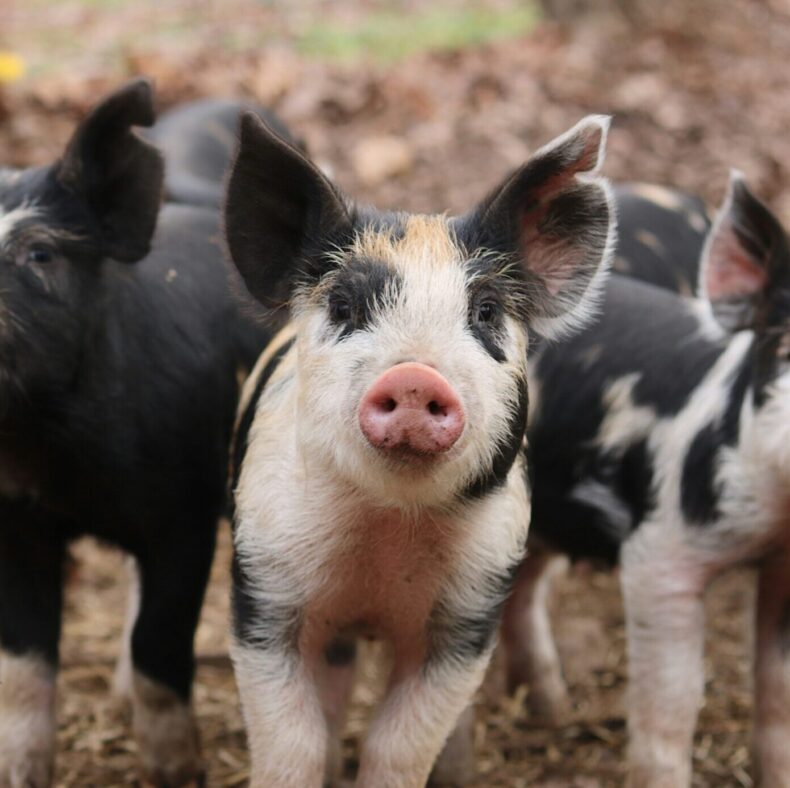
hen pigs fly. That’s when your outdoor-averse, girly-girl friend with the sparkly pink fingernails will go survival camping with you. That’s also when your dog will stop chasing the neighbor’s cat. And when your penny-pinching boss will give you a sizable bonus.
This idiom is a perfect example of an adynaton – what’s known as an “impossibility device.” That’s a figure of speech taken to such hyperbolic lengths as to insinuate complete impossibility (the opposite of “it’s a cakewalk”).[1] And it is indeed impossible for pigs to fly… at least those not generated by AI.
The notion of flying pigs to convey the idea of impossibility was first recorded in 1616 by English lexicographer John Withal when he wrote in his Latin-English dictionary “pigs fly in the ayre with their tayles forward.”[2]
You’ll also find a variation of the phrase in Lewis Carroll’s Alice’s Adventures in Wonderland, during an exchange between Alice and the Duchess:
“Thinking again?” the Duchess asked, with another dig of her sharp little chin.
“I’ve a right to think,” said Alice sharply, for she was beginning to feel a little worried.
“Just about as much right,” said the Duchess, “as pigs have to fly …”[3]
And then… there’s John Steinbeck’s Pigasus.
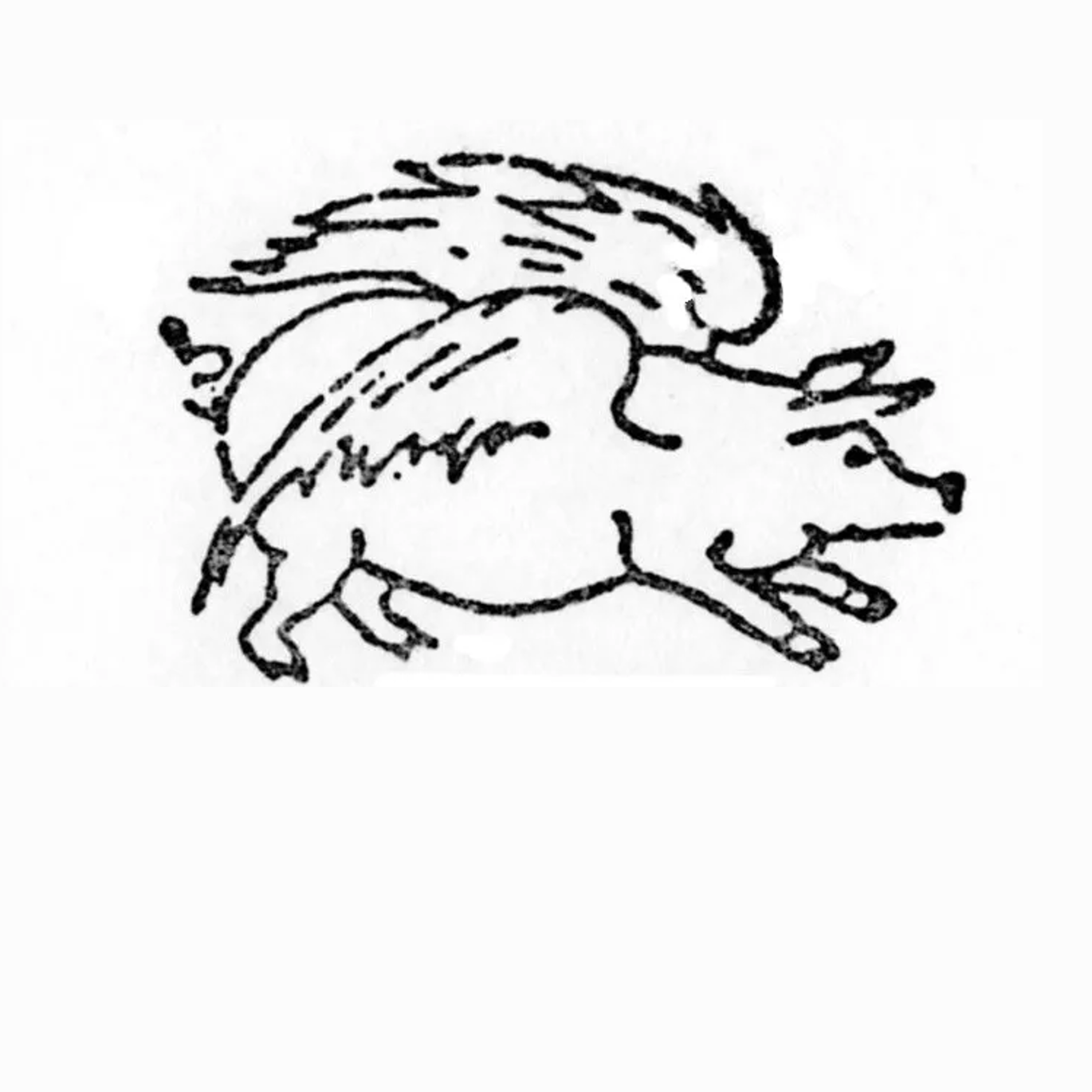
John Steinbeck’s
Pigasus
Steinbeck used a form of the idiom “when pigs fly” as a symbol of himself throughout his career. According to his wife Elaine, it became a trademark of sorts:
After his signature on letters or inside his books, he would draw a fat little pig with wings, and lettered his name, Pigasus.[4]
But Steinbeck turned the idiom inside out to mean “earthbound but aspiring.” Elaine Steinbeck goes on to explain that:
the little pig said that man must try to attain the heavens even though his equipment be meager. Man must aspire though he be earth-bound.[5]
This theme of human imperfection combined with caring and striving despite our flawed nature, was more than just a personal philosophy for Steinbeck. And it did more than permeate his works. It fueled his very reason for being a writer.[6]
Steinbeck was most at home with people who worked with their hands, “workers in a fish-canning factory, ranch hands, apple pickers and paisanos.”[7] And he was known for “zealously guarding his privacy,” dodging interviews, and shunning award ceremonies. [8]
So, it’s easy to think that he would only speak in public “when pigs fly.” But his earthbound aspirations earned him a Nobel Prize. And he did appear publicly to deliver an acceptance speech to an audience chockful of prominent individuals. Bearing this in mind, there’s still hope for that bonus from your tightwad boss.
Be Sure To Check Out More
Aphorisms And Idioms Here.

See Below For Related Posts
Share This Post, Choose A Platform!
Endnotes:
[1] Stephen Cushman, Clare Cavanagh, Jahan Ramazani, Paul Rouzer. The Princeton Encyclopedia of Poetry and Poetics. Fourth Edition. Princeton University Press, 2012. Pg 9.
[2] Johnson, Adam. “When Pigs Fly: Meaning, Usage, and Origin.” EnglishUp. April 21, 2023. https://keepenglishup.com/when-pigs-fly/
[3] Carroll, Lewis. Alice’s Adventures in Wonderland. Archive.org Pg 55. https://dn790000.ca.archive.org/0/items/AlicesAdventuresInWonderland/alice-in-wonderland.pdf
[4] “Pigasus.” Center for Steinbeck Studies. https://www.sjsu.edu/steinbeck/resources/biography/pigasus.php
[5] “Pigasus.” Center for Steinbeck Studies. https://www.sjsu.edu/steinbeck/resources/biography/pigasus.php
[6] Richardon, Bailey. “John Steinbeck’s ‘Pigasus’” ArtDogs. February 23, 2024. https://artdogs.substack.com/p/john-steinbecks-pigasus
[7] Whitman, Alden. The New York Times. Dec. 21, 1968. https://www.nytimes.com/1968/12/21/archives/john-steinbeck-dies-here-at-66-john-steinbeck-nobelprize-winning.html
[8] Whitman, Alden. The New York Times. Dec. 21, 1968. https://www.nytimes.com/1968/12/21/archives/john-steinbeck-dies-here-at-66-john-steinbeck-nobelprize-winning.html
Images:
When Pigs Fly: Photo by Emma Shappley on Unsplash
Steinbeck’s Pigasus: Center for Steinbeck Studies. https://www.sjsu.edu/steinbeck/resources/biography/pigasus.php

Share This Post, Choose a Platform!

Stay in the know about what’s in our ever-growing treasure trove of literary goodness. And, get your free Discover Everything a Book Has to Offer packet.











Related Posts

Starting over with “a clean slate” is thought to be the oldest known idiom. It means a fresh beginning, one free of past mistakes or failures. And It originated in The Code of Hammurabi.... Read More

Several idioms encourage us to be “nice,” including the adage “it’s nice to be important, but more important to be nice.” But “being nice” wasn’t always seen as a virtue. So what did it originally mean? And when did its meaning change? ... Read More
It’s impossible to literally “lift ourselves up by our bootstraps.” And yet, the phrase is commonly used to encourage us to power through challenges with hard work. So how did an impossible task become a call for individual grit? ... Read More

Being able to read between the lines is a valuable skill. And this idiom has roots in the centuries-old world of secret communication. How can reading between the lines benefit you?... Read More